Critically Endangered
Raorchestes marki
Raorchestes marki
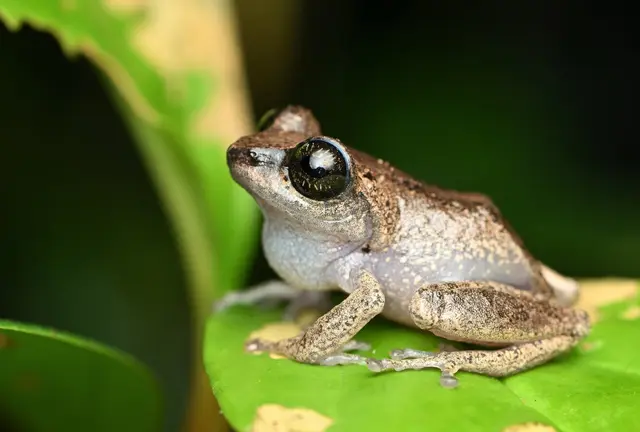
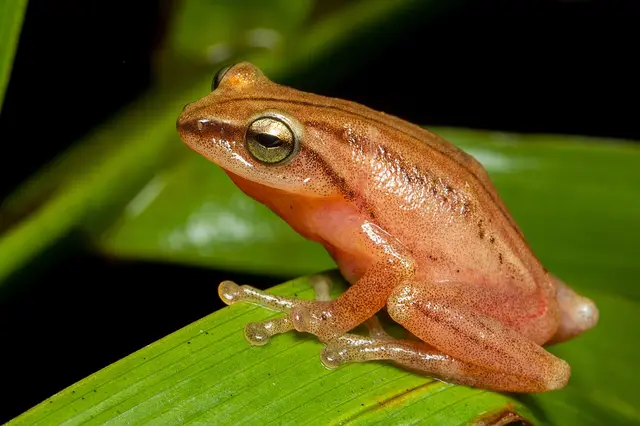
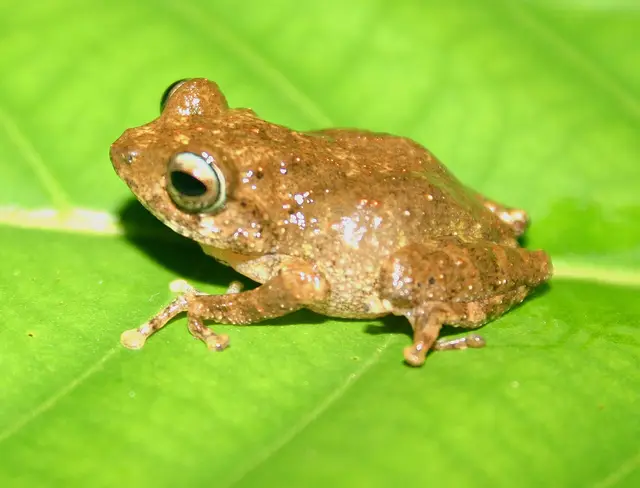
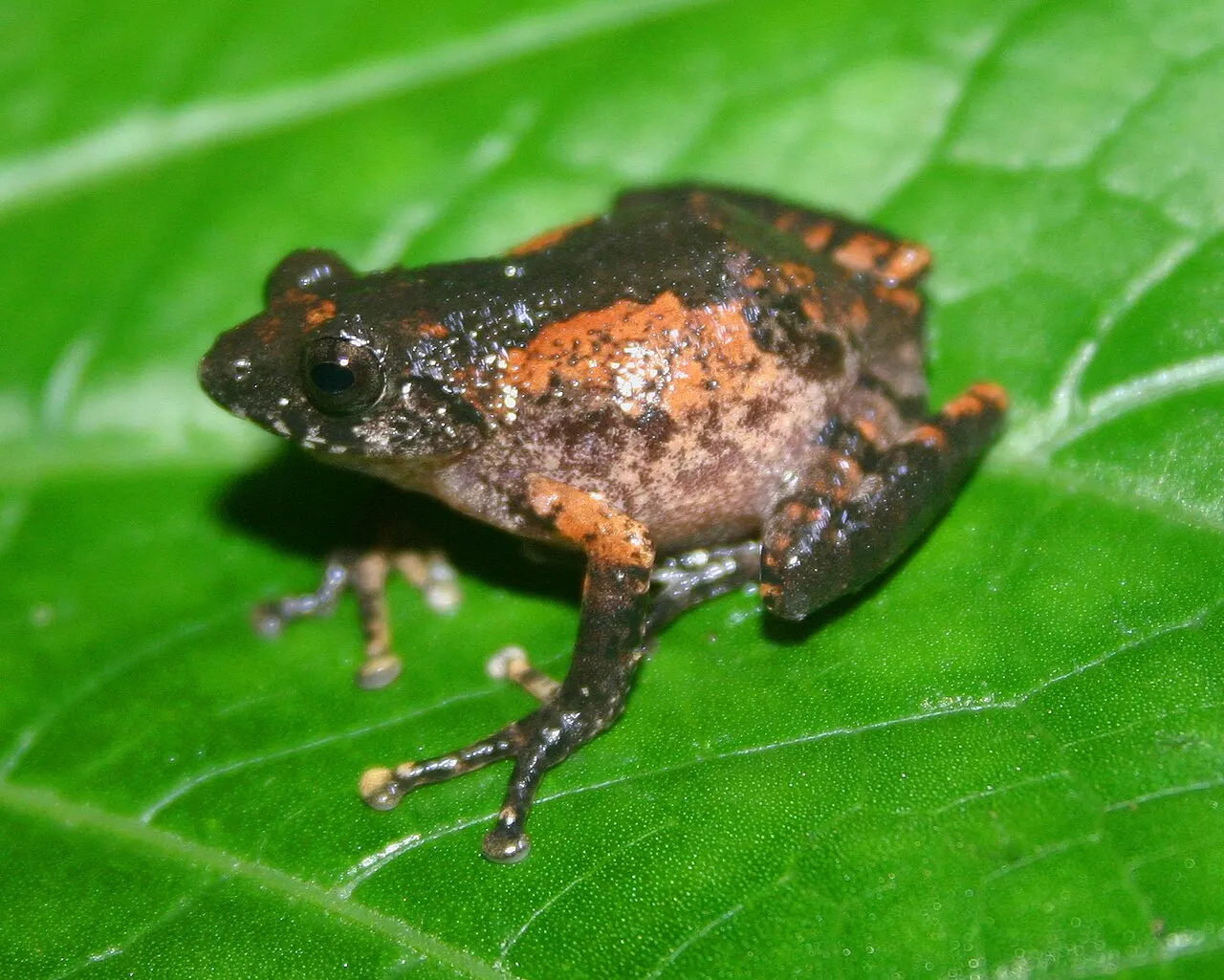
Mark's bush frog (Raorchestes marki) is a small bush frog known only from the Nelliampathi Hills of the Western Ghats in Kerala, India. The IUCN Red List rated it Critically Endangered in 2023, with a decreasing trend, because its known range is tiny and farming and tourism are eating into its forest.
How to recognise it
This is a small frog. Males measure 21 to 23 mm from snout to vent and females are larger, at 28 to 30 mm. The back is dark grey, with a brownish, slightly concave stripe running behind the eye.
It belongs to the family Rhacophoridae, the group of tree frogs and bush frogs. Like others in its genus it develops directly, so eggs hatch into tiny froglets and there is no free-swimming tadpole stage.
Discovery and name
Biju and Bossuyt described the frog in 2009 under the name Philautus marki, and it was later moved to the genus Raorchestes. The type specimen came from Kaikatti in the Nelliampathi Hills of Kerala. The name honours Mark Wilkinson of the Natural History Museum in London.
Where it lives
The frog was first known only from its type locality at Kaikatti, around 1,000 m up in Palakkad district. Later surveys added a few more spots in the same hills, including Anamada in 2018. Surveys in neighbouring areas have not found it. The Red List treats it as a single location and puts its extent of occurrence at just 46 square km, at roughly 600 to 1,000 m above sea level. Its habitat is disturbed evergreen forest patches, and it has also been found in coffee and tea plantations and by roadsides.
In the original description, males were found in the late evening rain on leaves about 1 m high, while females were on dead leaves on the ground. A survey of Parambikulam Tiger Reserve between April and July 2011 added another site, a patch of semi-evergreen forest on top of Vengoli Hill at about 1,120 m. Calling males there were seen among bushes and on tree bark, 1 to 2 m above the ground. The Red List assessment lists the frog in Kerala only and says the population size is unknown.
Pins are Wikidata “endemic to” fields. Orange dots, when present, are GBIF occurrence tiles — survey bias included.
Why it is in trouble
The assessment names small-holder farming and agro-industrial farming, each affecting more than half the range, along with tourism areas and recreational activities. It says the habitat area is still shrinking. The size of the impact is listed as unknown for most of these pressures, so the pace of loss is not well measured. Tourists may also be disturbing the frogs.
The assessment records that the frog is not known to occur in a protected area in its Nelliampathi range.
What is being done
The Red List calls for protection of the sites where the frog lives and of the habitat around them. The Vengoli Hill record lies inside Parambikulam Tiger Reserve, so at least one site sits within a reserve. The assessment lists no recovery plan or population monitoring programme, and it names research on threats, ecology and population size as needs.
Sources
Written for this catalog in our own words from the sources below, checked against them on 12 November 2026. Population figures are estimates and carry the year they were made. Status and assessment year: IUCN. 2026. The IUCN Red List of Threatened Species. Version 2026-1. iucnredlist.org.