Endangered
Pristimantis inusitatus
Pristimantis inusitatus
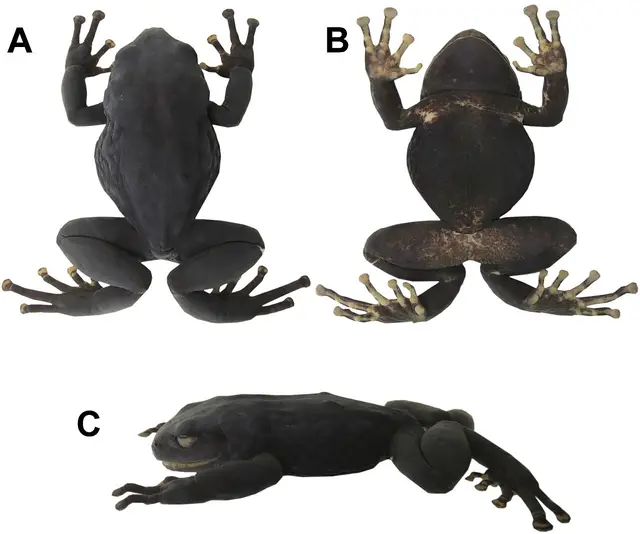
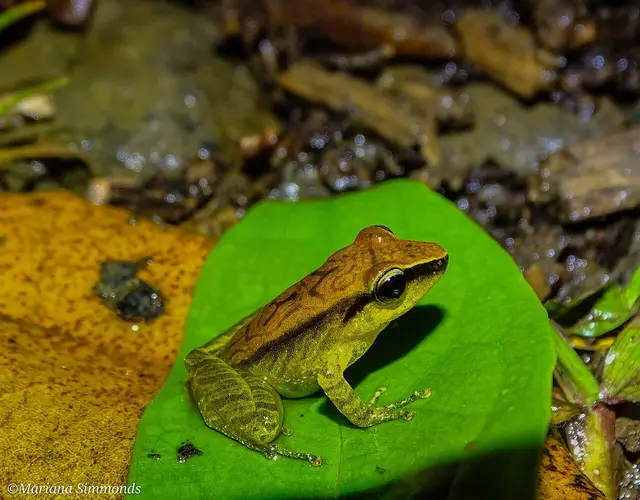
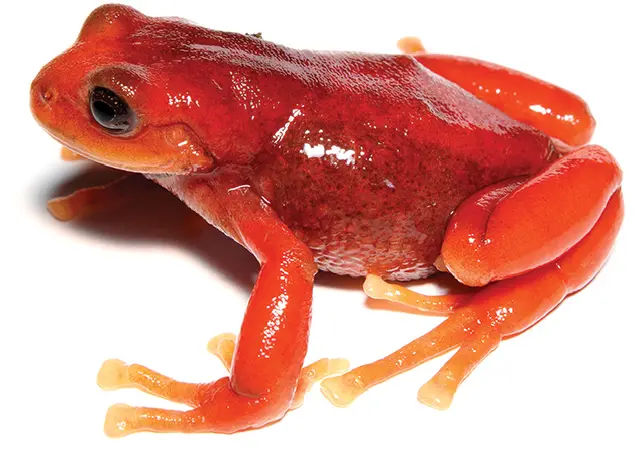
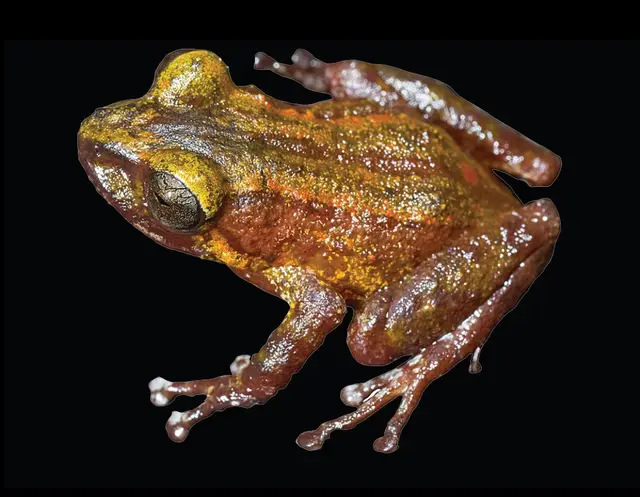
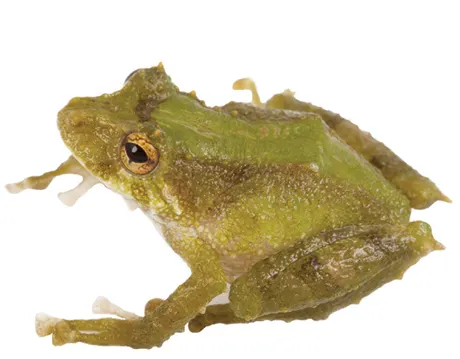
The barking robber frog (Pristimantis inusitatus) is a tiny frog with disc-tipped fingers and toes, living in cloud forest on the eastern slopes of the Andes in Ecuador. The IUCN assessed it as Endangered in 2022 because its range is small and its forest is being cleared. Its Latin name means rare or uncommon.
How to recognise it
Adults are small. Males measure about 15 to 23 millimetres from snout to vent and females 17 to 26. The snout is pointed and juts forward, the eardrum is clearly visible, and the fingers and toes end in broad discs. Skin on the back is smooth or finely granular, with large warts along the sides.
Colour differs between the sexes. Females are green on the back, while males range from green to pinkish brown with dark brown markings. The limbs show faint brown bars and the belly is white.
Where it lives
The species is found only in Ecuador. Most of the 84 records in GBIF (2026) come from Napo Province, with a few from Orellana, Pastaza and Pichincha. Many are from the Yanayacu research station area near Cosanga, and others come from Oyacachi and the Antisana Ecological Reserve.
It lives in cloud forest, where it has been found in low vegetation near streams. Sources give different elevation ranges. The IUCN gives about 1,890 to 2,900 metres, while a published summary gives 1,300 to 2,160 metres, and GBIF records span roughly 1,230 to 2,500 metres. The IUCN estimates its extent of occurrence at about 1,609 square kilometres and counts one to five locations.
Pins are Wikidata “endemic to” fields. Orange dots, when present, are GBIF occurrence tiles — survey bias included.
A rare frog from the start
Lynch and Duellman described it in 1980 as Eleutherodactylus inusitatus, from just three specimens collected at three separate places. It was later moved to the genus Pristimantis. Its calls, breeding and diet are poorly documented.
Why it is in trouble
The 2022 assessment records a continuing decline in the area and quality of its forest habitat. The pressures it lists are small-holder farming, grazing and ranching, housing, and unintentional small-scale harvest. The IUCN gives the population trend as decreasing. Earlier, in 2004, it was rated Vulnerable, so its status has worsened since then.
What is being done
At least part of the range lies inside a protected area, and the Red List lists site protection, site management and habitat protection as the actions that apply. The assessment calls for more work on population size, distribution and trends, threats, and life history and ecology.
Sources
Written for this catalog in our own words from the sources below, checked against them on 12 November 2026. Population figures are estimates and carry the year they were made. Status and assessment year: IUCN. 2026. The IUCN Red List of Threatened Species. Version 2026-1. iucnredlist.org.