Endangered
Rose's ghost frog
Heleophryne rosei
Rose's ghost frog, or Table Mountain ghost frog, is a frog in the family Heleophrynidae endemic to South Africa.
Appearance
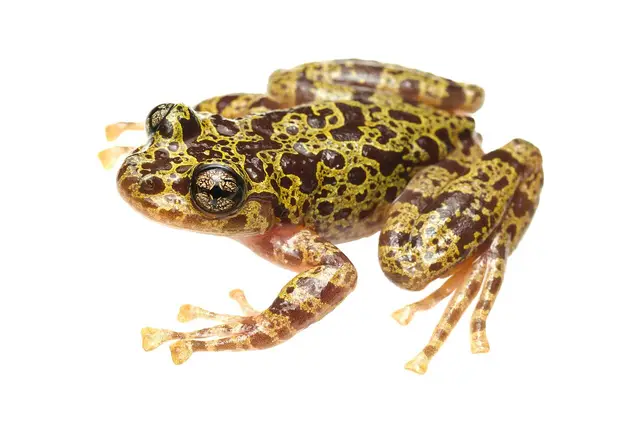
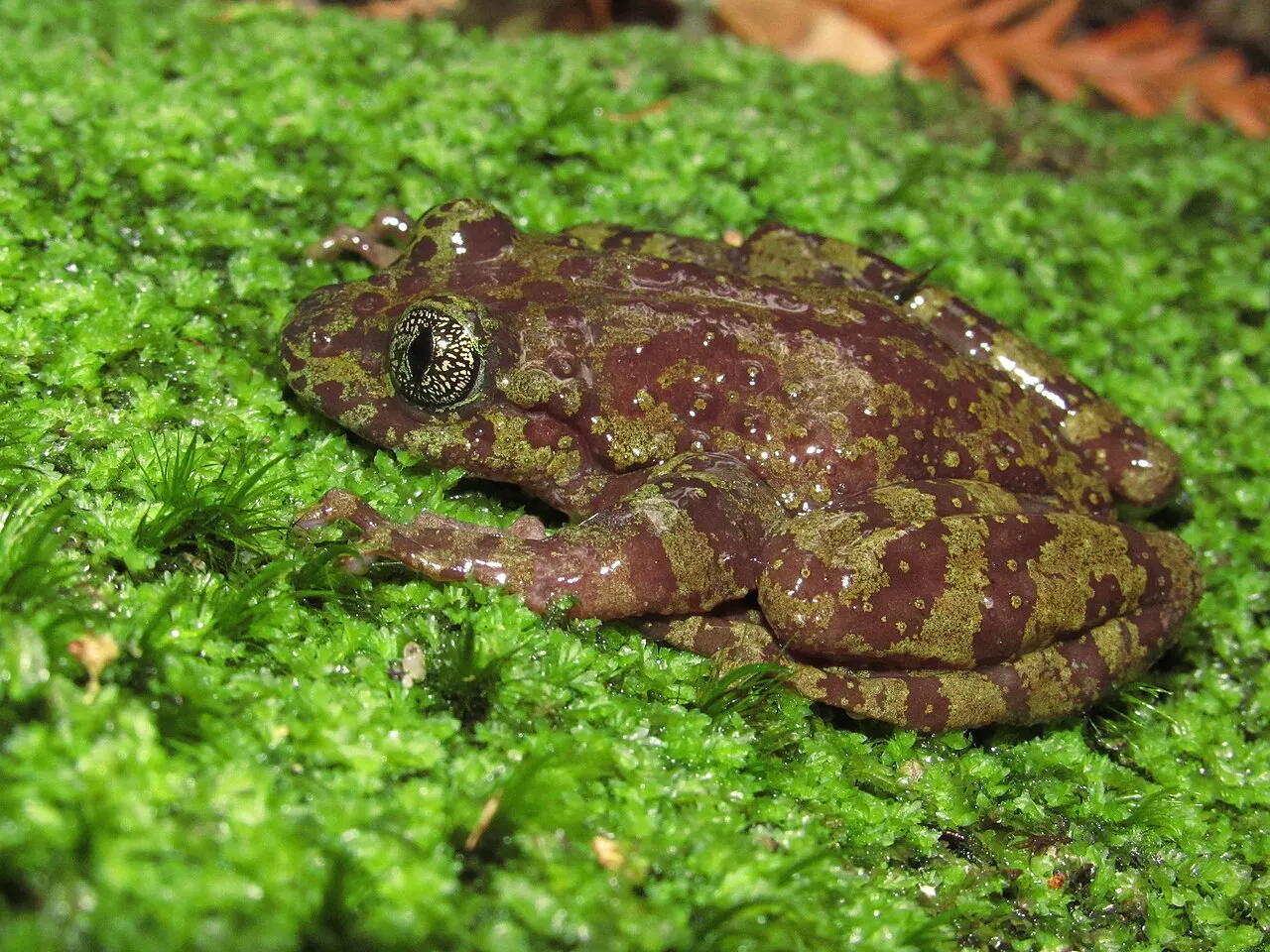
The colouration of adults is striking, often a pale green background with purple to brown blotches. The tadpole also has a large oral disc and is able to climb up wet vertical rock faces. It is a medium-sized species with purple or brown blotches on a pale green background and large discs on its fingers and toes.
This is a moderately sized frog, with the larger female up to 60 mm (2.4 in) and the smaller male up to 50 mm (2.0 in) in length.
Range and habitat
This species is known only from the southern, eastern, and marginally western slopes of Table Mountain in Cape Town. The typical habitat of this frog includes moist, forested gorges, with vertical rock faces to more exposed streams surrounded by dense marginal vegetation, the latter habitat usually found at higher altitudes. Tadpoles require year-round supply of water whereas adults can stray away from streams, even to be found in caves.
Pins are Wikidata “endemic to” fields. Orange dots, when present, are GBIF occurrence tiles — survey bias included.
Breeding
Breeding starts in November when the streams are low but the temperature is high.
In crisis
Because of its small range and changes in its habitat, this frog is listed as endangered by the International Union for Conservation of Nature. This species is listed as endangered by the International Union for Conservation of Nature (IUCN) and in the South African Red Data Book. The population is small, geographically restricted, and threatened by the plantations of pines on the mountain that cause the streams to dry up.
Chytrid fungus, collection, and wet-forest loss are the usual pressures on frogs with a high threat category.
Rose's ghost frog is Endangered on the IUCN Red List (assessed 2025, criteria B1ab(iii)). Confirm the official criteria and any later count on the assessment page.
Sources
Adapted from the English Wikipedia article on Rose's ghost frog (CC BY-SA 4.0; authors are listed in the article history; changes were made), Wikidata item Q2712058. Family and order context is original field-guide writing about the group, not a copied assessment of this one species. Not an IUCN assessment. Counts, when quoted, can change — confirm them on the recovery programme and on iucnredlist.org. Status and assessment year: IUCN. 2026. The IUCN Red List of Threatened Species. Version 2026-1. iucnredlist.org.