Critically Endangered
Isthmohyla tica
Isthmohyla tica
Starrett's treefrog (Isthmohyla tica) is a small stream-breeding frog of the mountain forests of Costa Rica and western Panama. The IUCN Red List rated it Critically Endangered in 2020, after many of its populations disappeared. A July 2026 description of a new look-alike frog may change what is known about its range.
How to recognise it
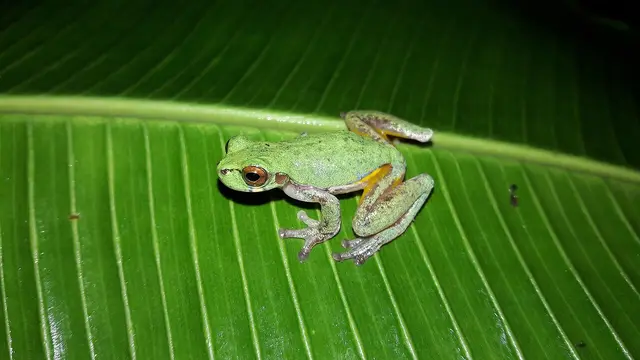
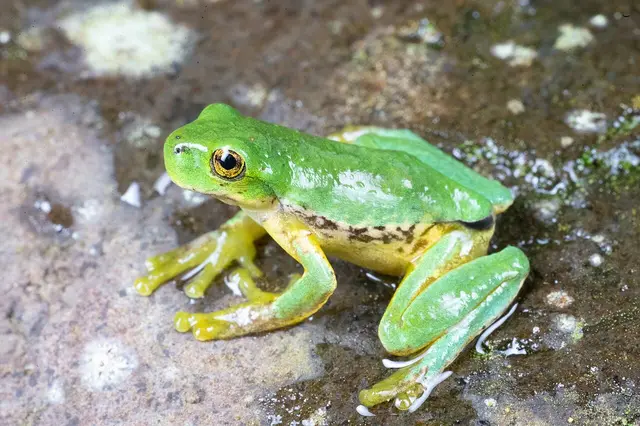
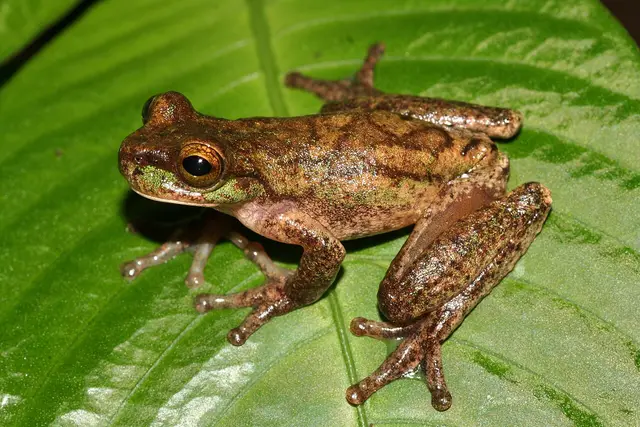
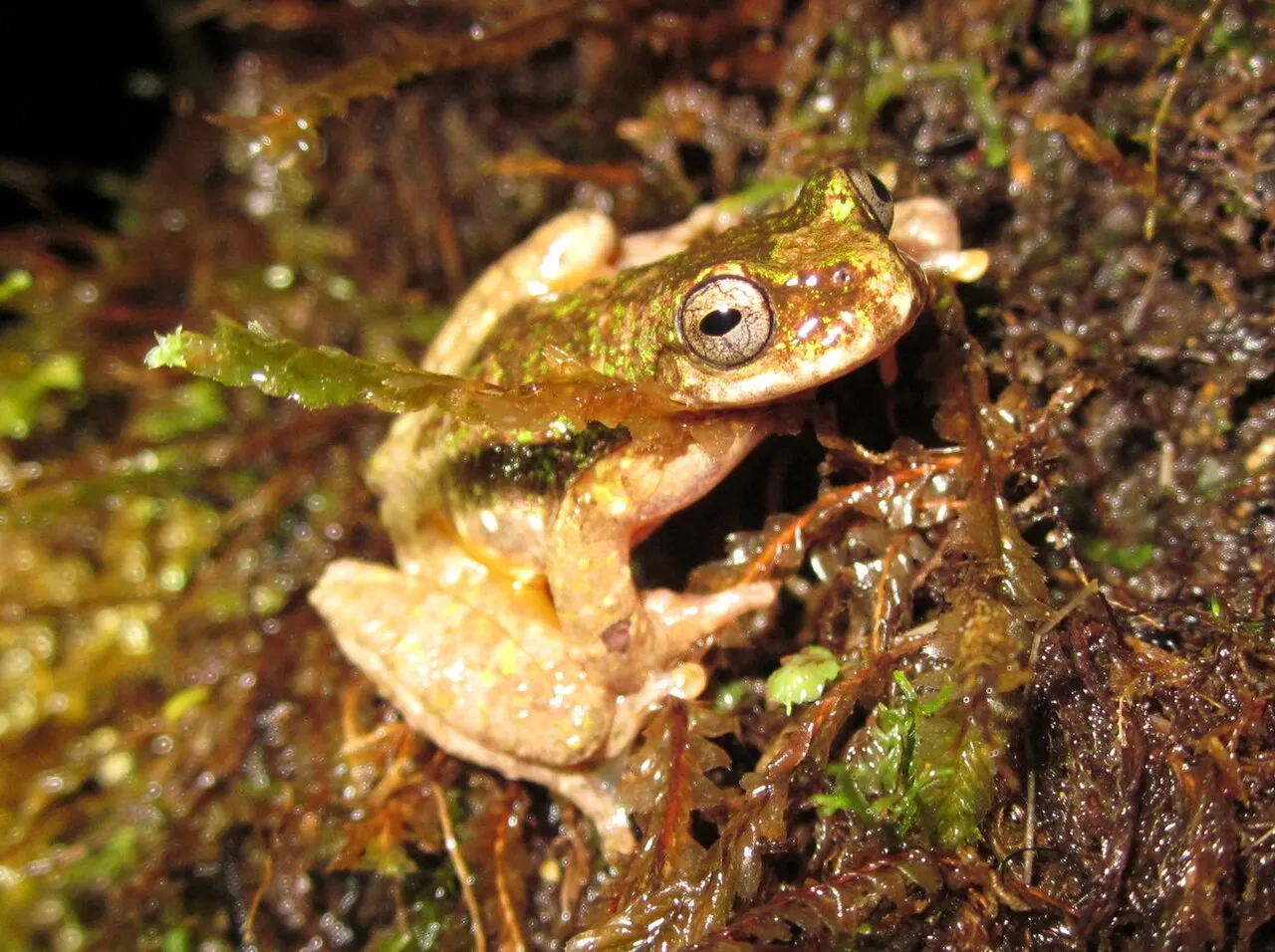
It is a modest-sized tree frog. Males measure about 29 to 34 mm from snout to vent and females about 34 to 42 mm. The back is mottled green and brown, often with bright green flecks. The flanks are brown with yellow mottling, the limbs carry dark bars and the belly is dingy white. The toes are about four-fifths webbed and both fingers and toes end in discs.
Tadpoles have a small, somewhat flattened body, a very long low-finned tail and a large oral disc that lets them cling to rocks in fast-flowing water.
Where it lives
The frog has been recorded in the Cordillera de Tilarán, Cordillera Central and Cordillera de Talamanca of Costa Rica, and in western Panama. It is reported from humid premontane and lower montane rainforest along streams, at roughly 1,100 to 1,650 m.
Because of the 2026 split described below, some older records and range descriptions may refer to the newly described frog instead.
Pins are Wikidata “endemic to” fields. Orange dots, when present, are GBIF occurrence tiles — survey bias included.
How it lives
It is active at night. Males call from vegetation overhanging the fastest stretches of a stream, about 1 to 3 m above the water. Females lay eggs under rocks in the stream, and the tadpoles develop there.
A species that got smaller
In July 2026, Costa Rican biologists described a new frog, Isthmohyla nacientes, in the journal Ichthyology & Herpetology. It lives near springs and streams in the Zona de Los Santos, in the districts of Dota, Tarrazú and León Cortés.
The team began searching in 2021 for Starrett's treefrog, which had not been recorded in the region since 1963, and at first thought they had found it. The call was the first clue that something differed, and the body shape also did not match. Genetic analysis confirmed a separate species.
The IUCN assessment dates from 2020, before the split, so it may include records that belong to the new frog. How the range and numbers of Starrett's treefrog change is not yet settled.
Why it is in trouble
Many populations of Starrett's treefrog have disappeared or collapsed, though some were later found again. The causes are not fully understood. Chytrid disease and climate change are both suspected, and habitat loss is a negative factor.
The IUCN's 2020 Critically Endangered listing rests on criterion C2a(i), which is about very small numbers of mature individuals in each subpopulation.
What is being done
The frog has been recorded in several protected areas. In May 2024 the Mohamed bin Zayed Species Conservation Fund gave a $25,000 grant to Wagner Chaves-Acuña, of an Argentine natural history museum, to study stream-dwelling Isthmohyla frogs in Costa Rica. The project includes assessing how severely the chytrid fungus affects them and describing species currently misidentified within the genus.
Sources
Written for this catalog in our own words from the sources below, checked against them on 12 November 2026. Population figures are estimates and carry the year they were made. Status and assessment year: IUCN. 2026. The IUCN Red List of Threatened Species. Version 2026-1. iucnredlist.org.