Endangered
Isthmohyla rivularis
Isthmohyla rivularis
Isthmohyla rivularis is a small tree frog of cloud forest streams in the mountains of Costa Rica and western Panama. It was feared extinct before a few were found again in 2007. The IUCN Red List assessed it as Endangered in 2020, with fewer than 2,500 mature individuals estimated.
How to recognise it
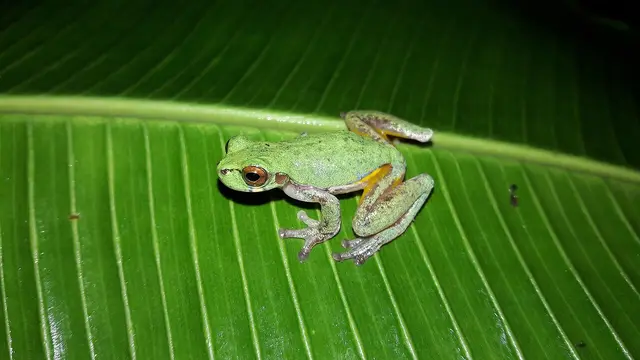
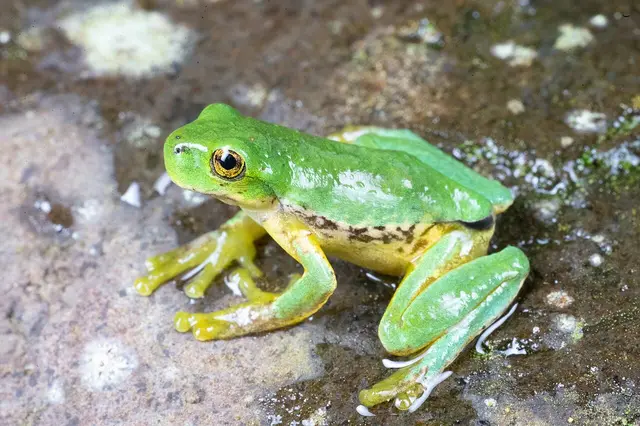
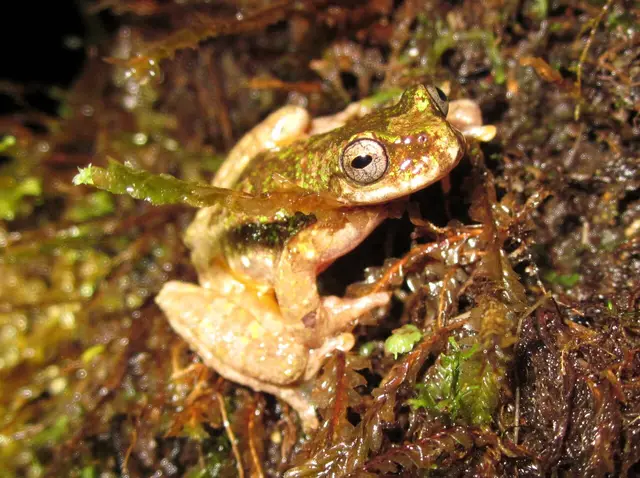
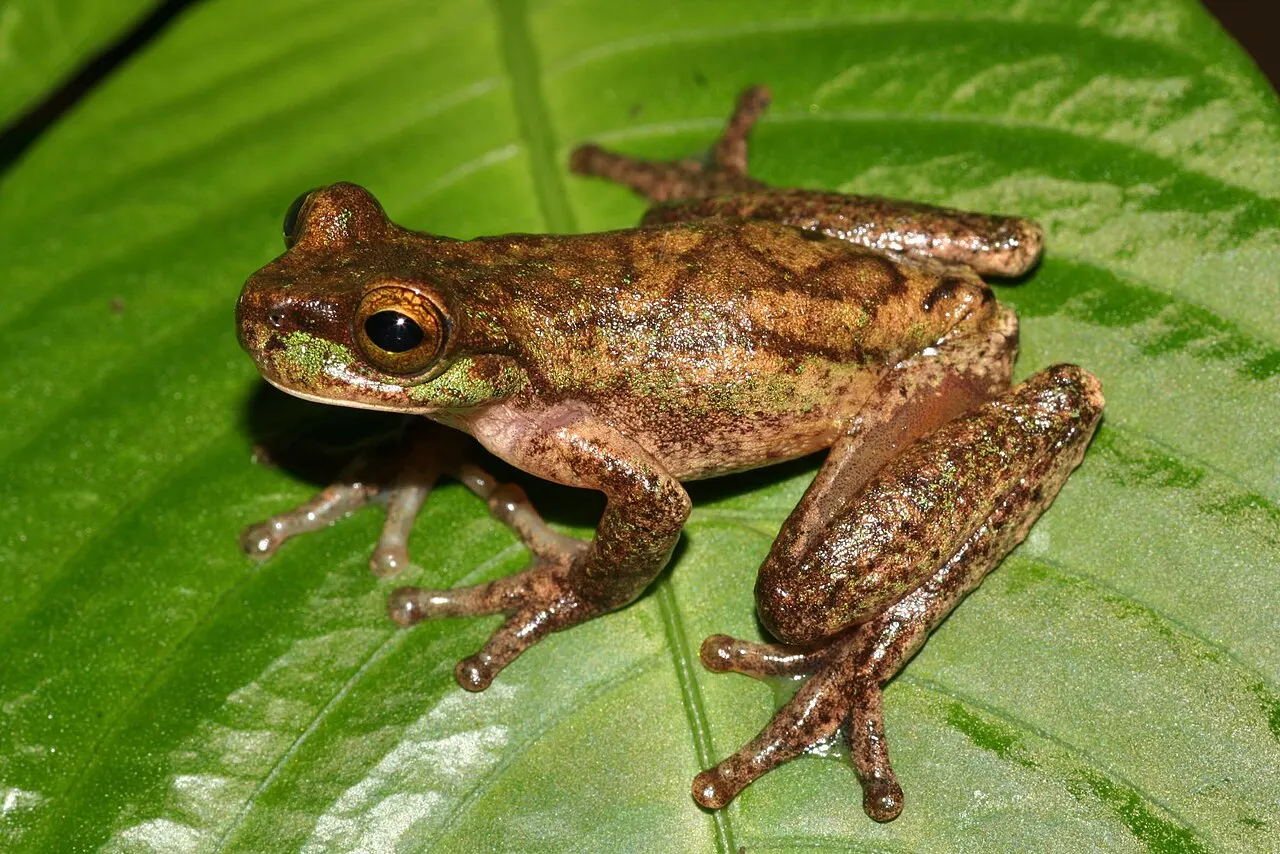
Males reach about 34 mm and females about 37 mm from snout to vent. The back runs from grey to light brown, usually with a thin dark line through the eye and other dark markings that vary. The flanks are often yellowish, and can look greenish or bluish. The iris is bronze with black netting. The fingers have large discs and are up to one-third webbed, and the toes are about two-thirds webbed.
A common name, American Cinchona Plantation treefrog, has been suggested, though the frog is mostly known by its scientific name.
Where it lives
It occurs in the Tilaran, Central and Talamanca cordilleras of Costa Rica and in adjacent western Panama. It lives along or in clear streams in lower montane and premontane rainforest, between about 1,210 and 2,040 m. The IUCN puts its extent of occurrence at about 9,374 square kilometres.
Pins are Wikidata “endemic to” fields. Orange dots, when present, are GBIF occurrence tiles — survey bias included.
How it lives
Males call from vegetation beside or hanging over fast-flowing streams, and the tadpoles grow up in the stream. The 2008 expedition team suggested that basking in the sun might warm a tree frog's skin enough to fight the chytrid fungus, though more cloud cover could limit that.
Why it is in trouble
The frog was once common in Monteverde and Tapanti in Costa Rica. It was last seen in Costa Rica in 1989 and in Panama in 1993, until its reappearance in 2007. Chytridiomycosis, the fungal skin disease that has hit many frogs in the region, is considered the main cause of the decline in Costa Rica, while logging and habitat loss hit Panama hardest. The IUCN also lists farming, small-holder grazing and agro-industry as threats.
In 2020 the IUCN estimated fewer than 2,500 mature individuals, with the largest subpopulation at most 250, and called the trend decreasing. Earlier assessments, in 2004, 2008 and 2010, rated the frog Critically Endangered.
What is being done
The IUCN notes that the species occurs in at least one protected area, and lists resource and habitat protection and site management as actions. A male was photographed in Monteverde Cloud Forest Preserve in 2007. In 2008 an expedition from the University of Manchester and Chester Zoo found another male calling and a pregnant female, the first seen there in about 20 years. The female was swabbed for chytrid and released.
Sources
Written for this catalog in our own words from the sources below, checked against them on 12 November 2026. Population figures are estimates and carry the year they were made. Status and assessment year: IUCN. 2026. The IUCN Red List of Threatened Species. Version 2026-1. iucnredlist.org.