Critically Endangered
Ambrosi's Cave Salamander
Speleomantes ambrosii
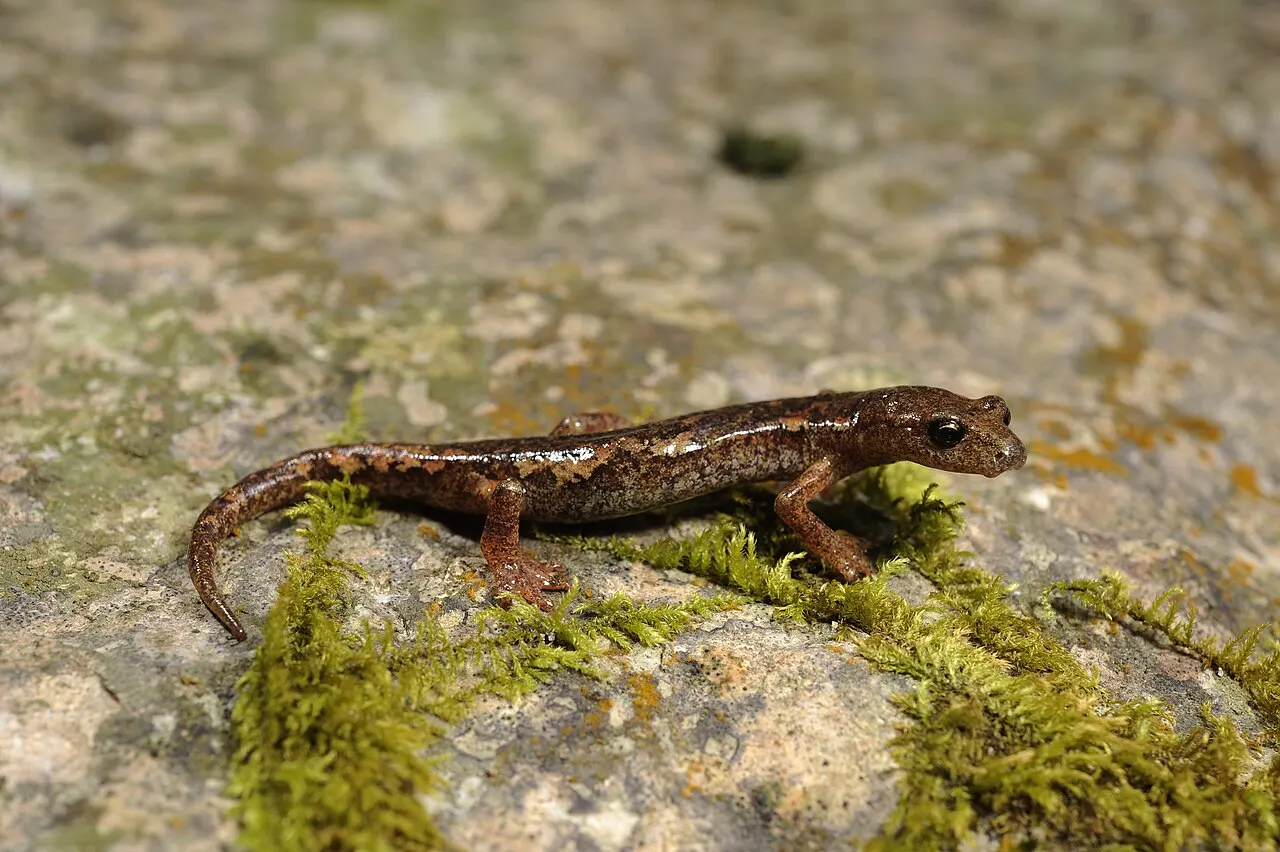
Ambrosi's cave salamander (Speleomantes ambrosii), also called the Spezia cave salamander, is a small amphibian found only in a corner of north-western Italy. The IUCN Red List classed it as Critically Endangered in 2022, with a decreasing trend. Despite the name, it lives well beyond caves, in damp forest and rock.
How to recognise it
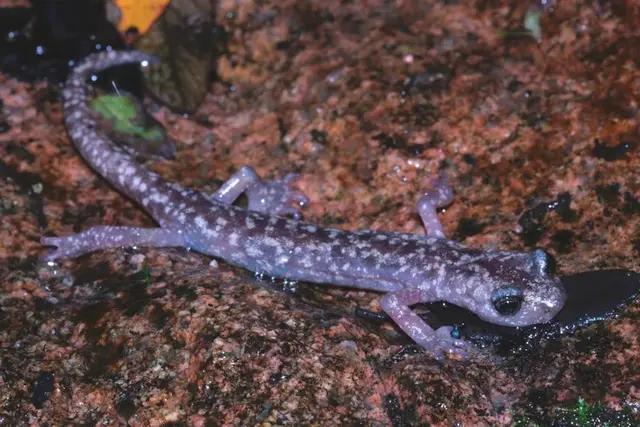
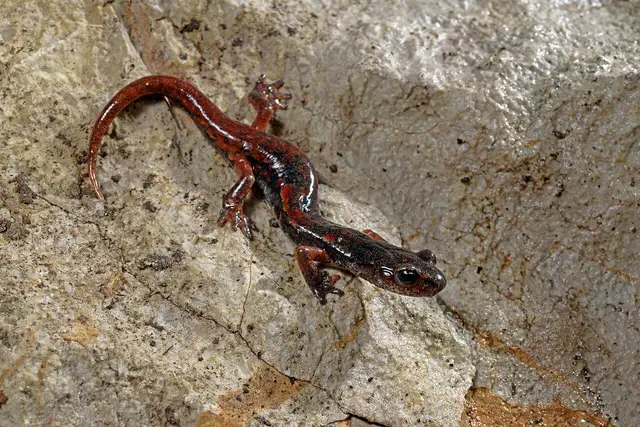
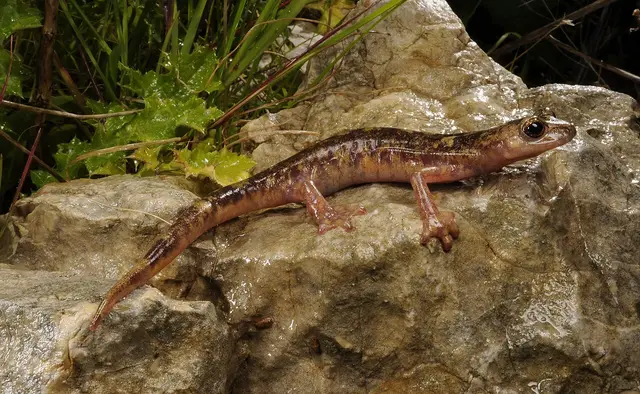
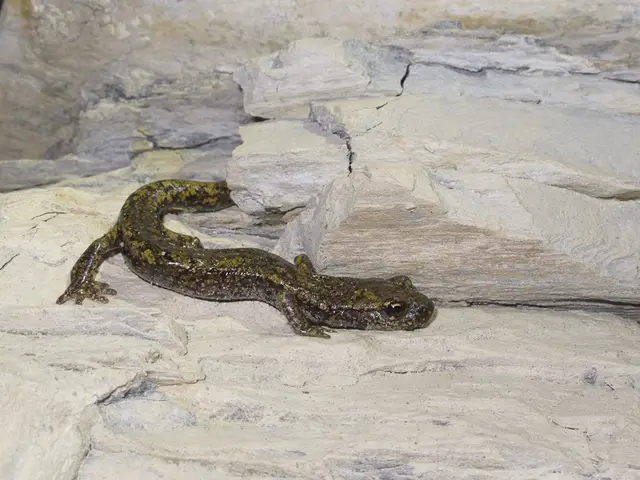
It's a stocky salamander about 12.5 cm long including the tail, with short limbs, pointed toes and a short tail. A ridge runs between the snout and each eye.
Colour varies a lot. Most animals are brown to black, marbled or streaked with grey, green, yellow, red or pink, though some are plain brown or black. The belly is dark with paler marks.
Where it lives
The species is found only in Italy, within the northern Apennines. The IUCN counts just two locations and puts its extent of occurrence at 861 square km. A 2023 genetic study in Ecology and Evolution recognises two subspecies, S. a. ambrosii and S. a. bianchii, and added 21 new cave salamander localities in the northern Apennines, which widened the known range of bianchii.
Habitat covers temperate forest, rocky ground, caves and other underground spaces. Reported upper elevations differ: one account gives 1,250 m, while the IUCN lists a limit of 2,300 m.
Its range touches two close relatives. In the south-east it reportedly hybridises with the Italian cave salamander (S. italicus). The 2023 study found a hybrid zone in Tuscany and Emilia-Romagna where S. ambrosii, S. italicus and Strinati's cave salamander (S. strinatii) all interbreed.
Pins are Wikidata “endemic to” fields. Orange dots, when present, are GBIF occurrence tiles — survey bias included.
How it lives
This is a nocturnal animal that likes moisture. In dry spells it retreats under stones and logs or into caverns. When conditions are damp it comes out on leaf litter near streams and on wet rock faces in wooded valleys.
Males reportedly reach maturity at about 4 years and females at about 5. After an elaborate courtship, the female lays a small clutch of eggs, each around 6 mm long, in a hidden spot and guards them. The eggs hatch straight into tiny salamanders, with no tadpole stage. Longevity is estimated at 17 years.
Why it is in trouble
The range is tiny and the population is shrinking. The IUCN assessment lists mining and quarrying as an ongoing but modest pressure, habitat shifting and alteration as an unquantified one, and records national use as pets or display animals with unknown impact.
The largest concern is a disease that hasn't been confirmed in Italy yet. The fungus Batrachochytrium salamandrivorans (Bsal) is lethal to many salamanders. A 2023 review in Acta Herpetologica found most Italian salamanders, and almost all the endemic ones, highly susceptible, while tests on skin swabs from two presumed outbreak sites came back negative. The IUCN scores Bsal as a future threat across the whole population.
What is being done
The species occurs in protected areas, including Cinque Terre National Park and the Apuan Alps Regional Park, and it is covered by international legislation. The IUCN lists site protection and management, invasive species control, habitat restoration and policy measures among the actions in place or needed.
Sources
Written for this catalog in our own words from the sources below, checked against them on 12 November 2026. Population figures are estimates and carry the year they were made. Status and assessment year: IUCN. 2026. The IUCN Red List of Threatened Species. Version 2026-1. iucnredlist.org.