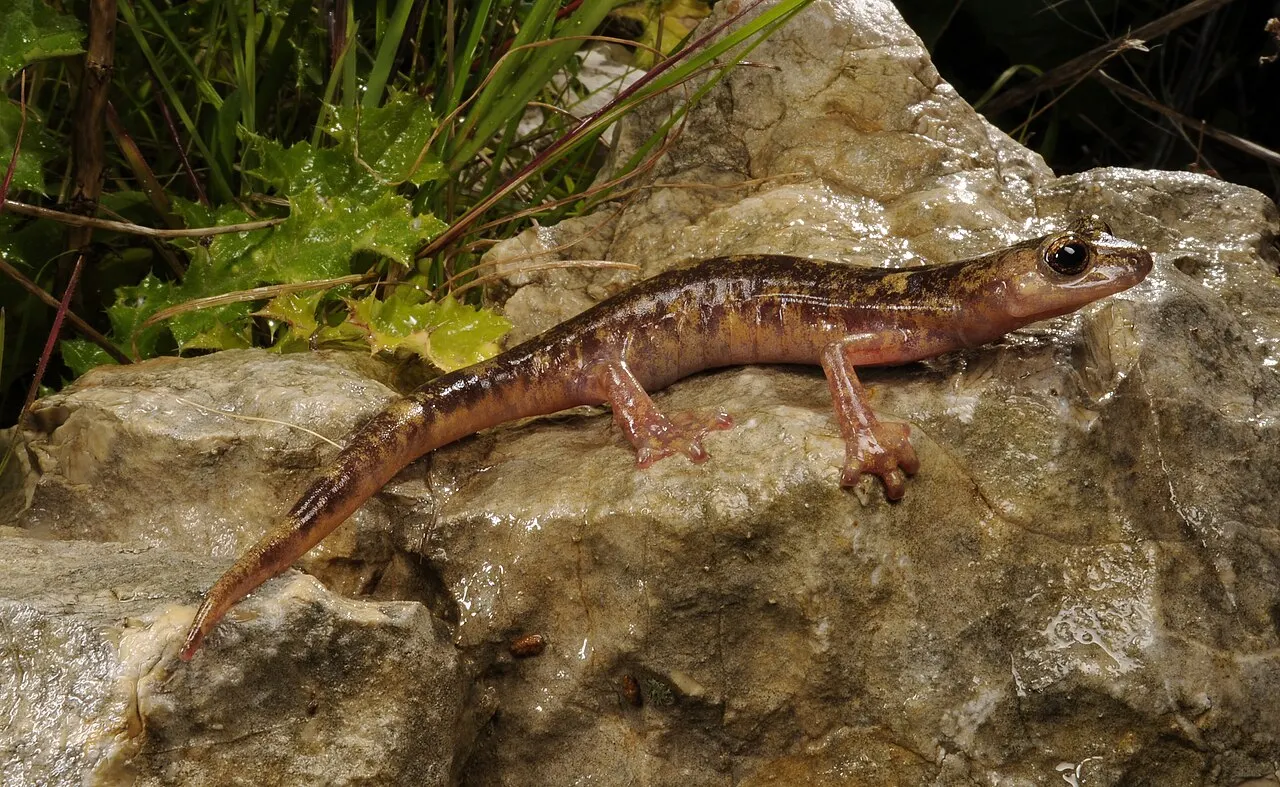
Endangered
Monte Albo Cave Salamander
Speleomantes flavus
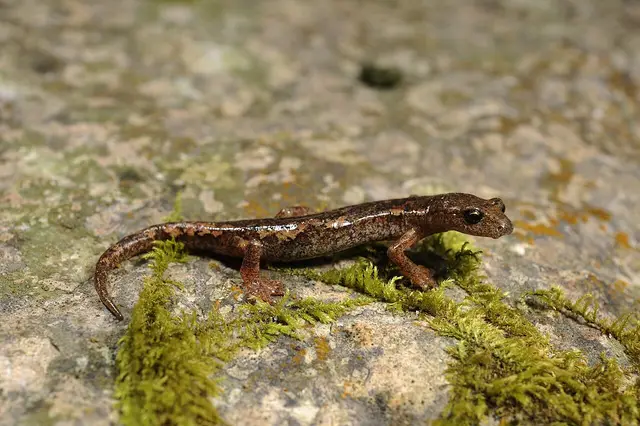
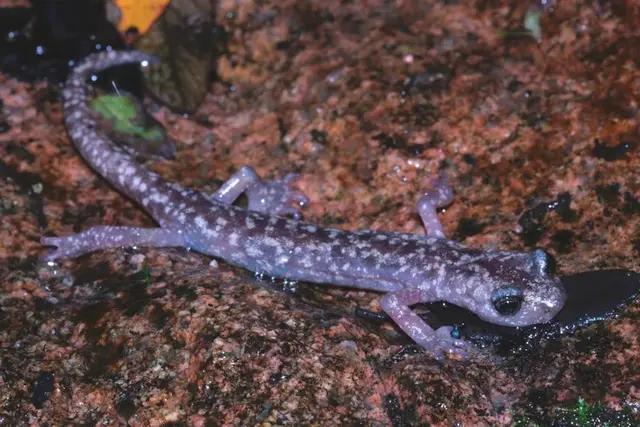
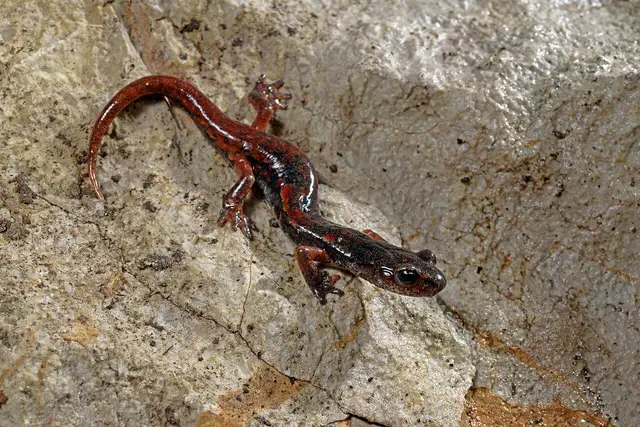
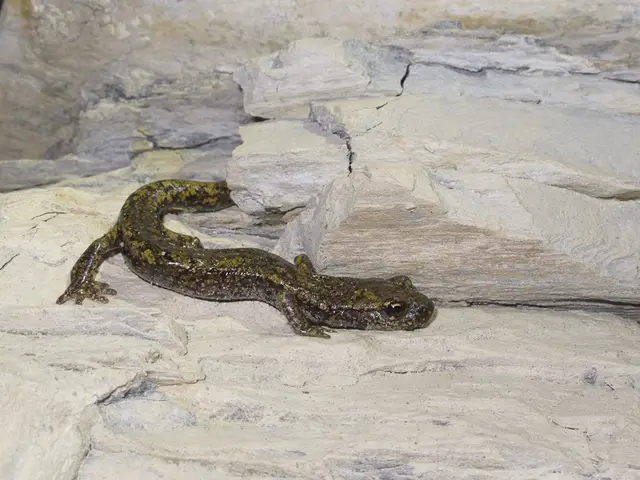
The Monte Albo cave salamander (Speleomantes flavus), also called Stefani's salamander, is found only on the Monte Albo massif in north-eastern Sardinia. The IUCN Red List rated it Endangered in 2024. It lives in caves, rock crevices and damp forest, and its whole range is small.
Names and classification
Stefani described the species in 1969 under the genus name Hydromantes, and older books and websites still use that name. It belongs to the family Plethodontidae, and its genus, Speleomantes, holds the only plethodontid salamanders in Europe. A 2025 study counts eight Speleomantes species, all of which live both on the surface and underground.
Where it lives
It occurs nowhere else in the world except the Monte Albo chain of north-eastern Sardinia. Records run from about 40 m above sea level to roughly 1,050 m.
The 2024 Red List assessment puts the extent of occurrence at about 110 square kilometres and counts three to five separate locations. The species uses temperate forest, rocky ground, caves and other underground spaces, often near streams, and favours places with a good cover of damp moss.
Pins are Wikidata “endemic to” fields. Orange dots, when present, are GBIF occurrence tiles — survey bias included.
How it lives
Cave salamanders in this group develop directly. Females lay a few eggs on land, and there is no tadpole stage. The Red List assessment records the species as not migratory.
A 2025 study by Coppari and Lunghi in the journal Subterranean Biology looked at what shapes how many Monte Albo salamanders turn up in caves. Air temperature, humidity and light inside the caves changed strongly with the season, and the salamanders tended to gather in the colder, damper parts not far from the entrance. It was the first study of what drives abundance, as opposed to simple presence, in this species.
Why it is in trouble
The Red List has listed this species at several levels. It was Near Threatened in 2004 and Vulnerable in 2006 and 2009, and it has been Endangered since 2022. An assessment from the mid-2000s saw no threats beyond some local habitat loss and called the species locally common. The 2024 assessment gives a decreasing trend and continuing loss of habitat area.
Listed pressures include quarrying and mining, housing and development, recreation and changes to the habitat. Collecting of animals and accidental harm are also listed.
What is being done
The species is on Appendix II of the Berne Convention and Annex IV of the EU Habitats Directive, and it occurs in at least one protected area. It has been recorded in the Sardinian geomining, historical and environmental park. The IUCN lists policy and legislation, site management and control of problem species among the actions that apply.
Sources
Written for this catalog in our own words from the sources below, checked against them on 12 November 2026. Population figures are estimates and carry the year they were made. Status and assessment year: IUCN. 2026. The IUCN Red List of Threatened Species. Version 2026-1. iucnredlist.org.
- IUCN Red List assessment, Speleomantes flavus (2024)
- IUCN Red List taxon API, assessment history (2004 NT, 2006 and 2009 VU, 2022 EN)
- IUCN species summary (Mediterranean amphibian assessment, mid-2000s)
- Coppari and Lunghi 2025, Seasonal abundance of the Monte Albo cave salamander, Subterranean Biology 51: 103-114
- Monte Albo cave salamander (encyclopedia article)
- Caudata.org species page
- Cialente et al. 2025, Acta Herpetologica (body condition of Speleomantes)