Endangered
Italian Cave Salamander
Speleomantes italicus
The Italian cave salamander (Speleomantes italicus) is a small, lungless salamander found only in the Apennine Mountains of Italy. It shelters in caves and rock crevices and hunts in the forest around them. The IUCN Red List classed it as Endangered in 2022, as a precaution against a salamander-killing fungus.
How to recognise it
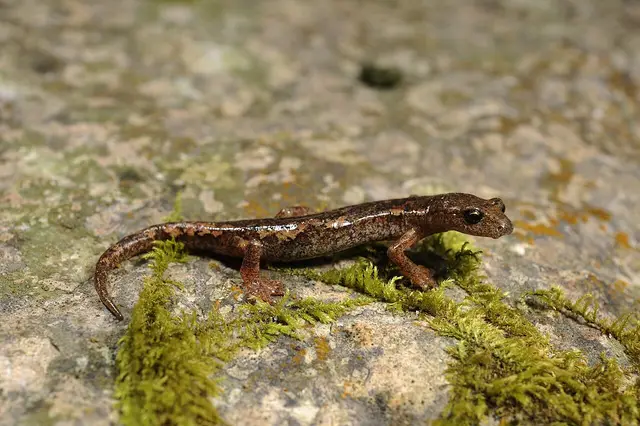
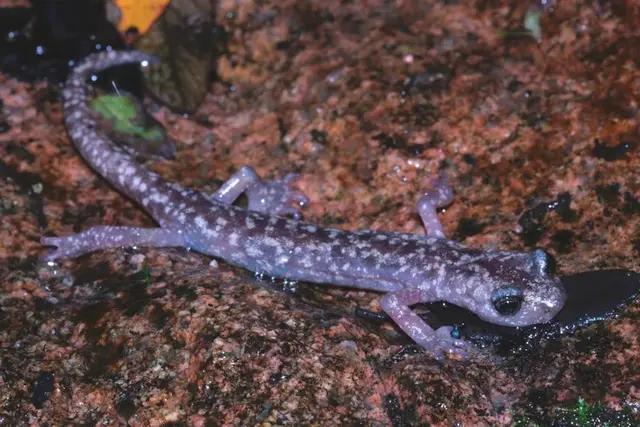
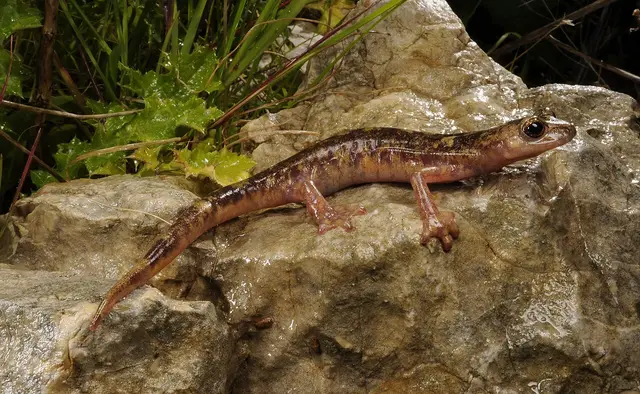
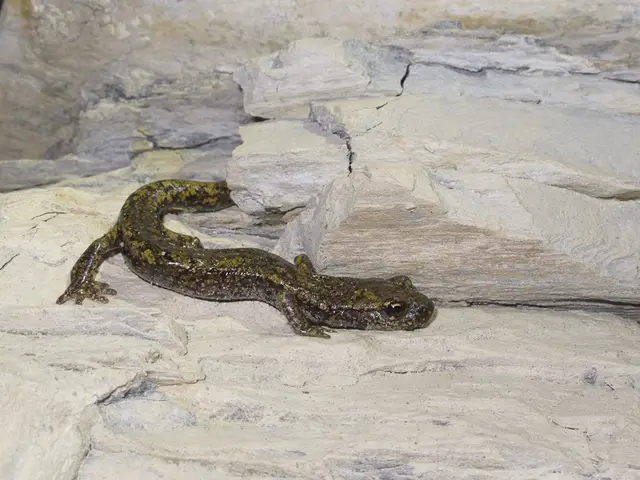
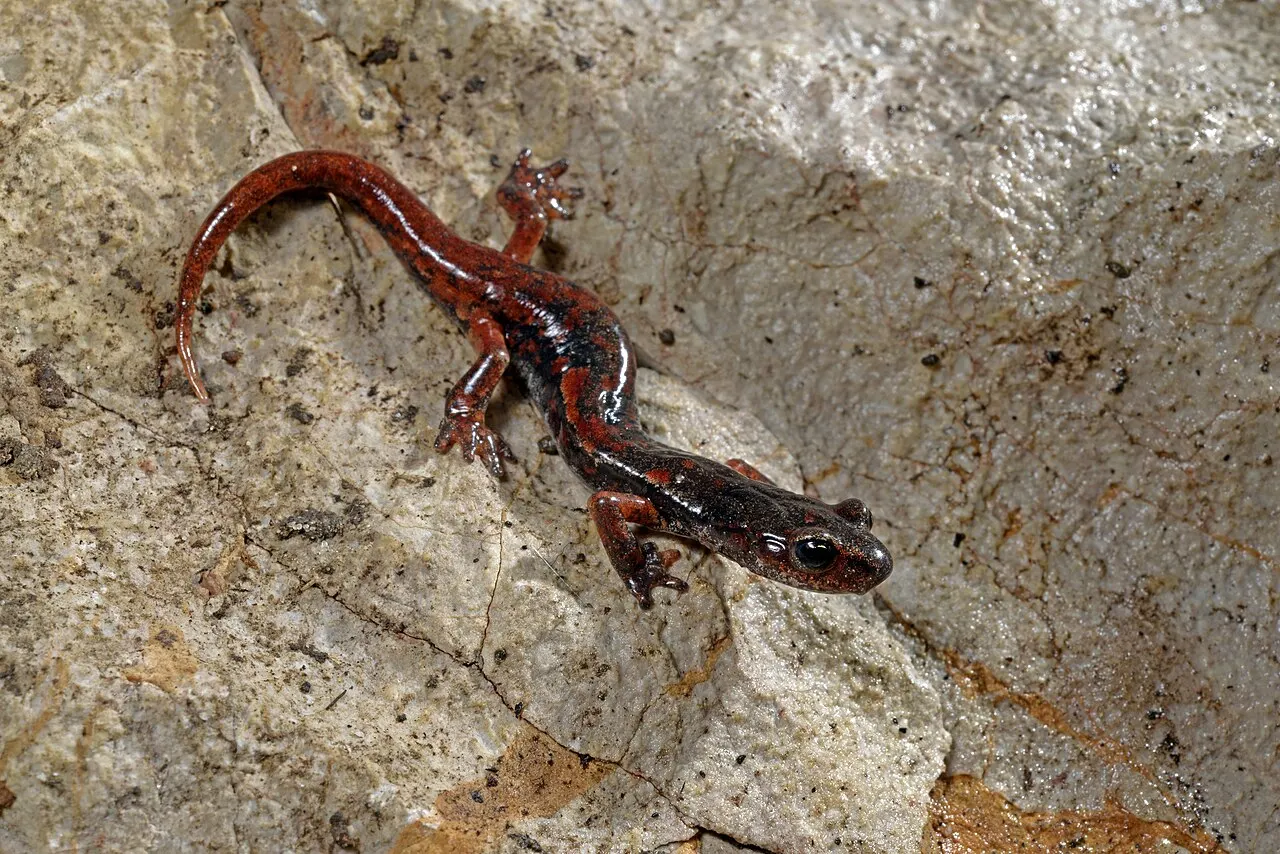
It's a slender salamander with short limbs, a broad head, prominent eyes and partly webbed feet. Adults reach about 12.5 cm including the short tail. The body is dark with mottled reddish or yellowish markings and a dark belly, and colour varies more in the north of its range, where it sometimes hybridises with Ambrosi's cave salamander (Speleomantes ambrosii).
Like other plethodontids it has no lungs and breathes through its skin, which is why it needs damp air.
Where it lives
The species is endemic to mainland Italy. Its range runs along the northern and central Apennines, from the provinces of Reggio Emilia and Lucca south to the province of Pescara. Records span from sea level to about 2,430 m, and the IUCN gives its extent of occurrence as roughly 25,900 square kilometres.
It uses humid rocky outcrops, caves and other underground spaces, temperate forest and, sometimes, rural gardens. Limestone country is typical, though it also turns up on sandstone and ophiolitic rock. A small introduced population is reportedly living in an old quarry near Holzminden in Germany.
Pins are Wikidata “endemic to” fields. Orange dots, when present, are GBIF occurrence tiles — survey bias included.
How it lives
This is a facultative cave species. It uses caves as a refuge from unsuitable weather and from predators, and it feeds both underground and on the surface. Hunting happens mostly in the dark, and prey is caught with a very fast tongue strike.
A year-round study of six cave populations, published in Scientific Reports in 2022, found salamanders in every month except January, with the most active animals in May. Across 31 prey categories, about 70% of the food items were flies, about 15% adult beetles and about 3% spiders. Diet and body condition differed a lot between populations, and animals in poorer microclimates fed less well.
Females lay a small clutch of eggs in a crevice. There is no aquatic larva: the eggs develop directly into miniature salamanders.
Why it is in trouble
Over much of its range the species is abundant, and the 2022 assessment gives its population trend as stable. The Endangered listing rests on criterion E, which looks at the modelled chance of extinction rather than counting losses. The assessment's modelling for the fungus Batrachochytrium salamandrivorans (Bsal) put the chance of extinction within five generations above 20%.
Bsal is a skin fungus that came to Europe from Asia and kills salamanders. A 2023 paper in Acta Herpetologica reports it spreading through Central Europe and reaching north-eastern Spain. Bsal had not been proven in Italian wild salamanders when that paper was written, but the listing is precautionary: two close relatives, Speleomantes genei and S. strinatii, are susceptible, and the Italian cave salamander itself hasn't been tested.
Local habitat loss is a smaller concern, including marble quarrying in the west of its range. Collection for the pet trade may also be a problem because the habitat is easy to reach, but the IUCN says that needs more research.
What is being done
The species is strictly protected under national and international law. It is listed on Appendix II of the Berne Convention and Annex IV of the EU Habitats Directive, and it occurs in protected areas, including Natura 2000 sites. The IUCN also records site management and control of problem species among actions in place or needed, and calls for a coordinated European approach to Bsal.
The 2023 Bsal paper by Dondero and colleagues calls for strict biosecurity rules on the international amphibian trade, plus hygiene measures during fieldwork, so that the fungus isn't carried into cave systems.
Sources
Written for this catalog in our own words from the sources below, checked against them on 12 November 2026. Population figures are estimates and carry the year they were made. Status and assessment year: IUCN. 2026. The IUCN Red List of Threatened Species. Version 2026-1. iucnredlist.org.
- IUCN Red List assessment, Speleomantes italicus (2022)
- Italian cave salamander (encyclopedia entry)
- Lunghi et al. 2022, trophic niche of subterranean populations of Speleomantes italicus, Scientific Reports
- Dondero et al. 2023, Bsal threats to Italian salamanders, Acta Herpetologica 18(1)
- IUCN Mediterranean species summary, Speleomantes italicus (2006)