Endangered
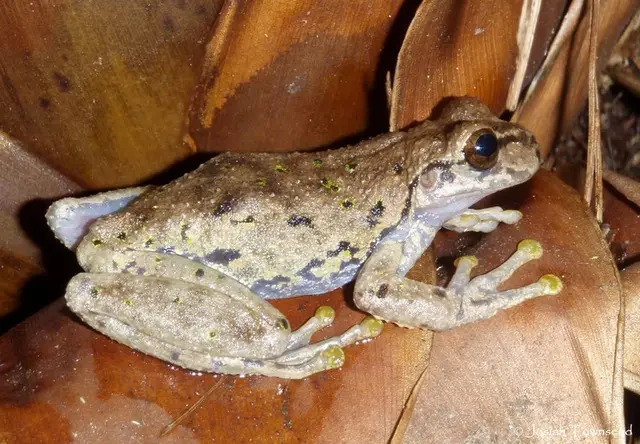
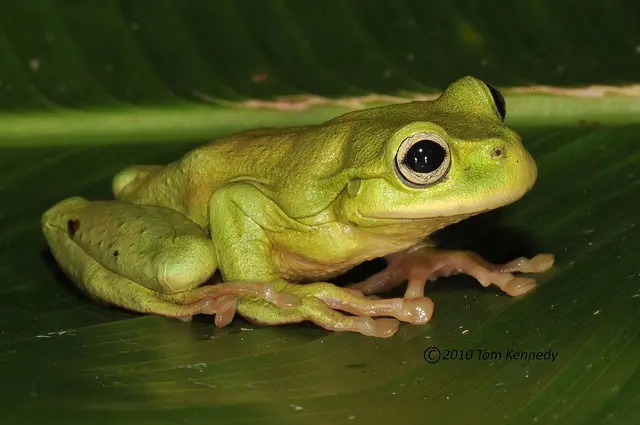
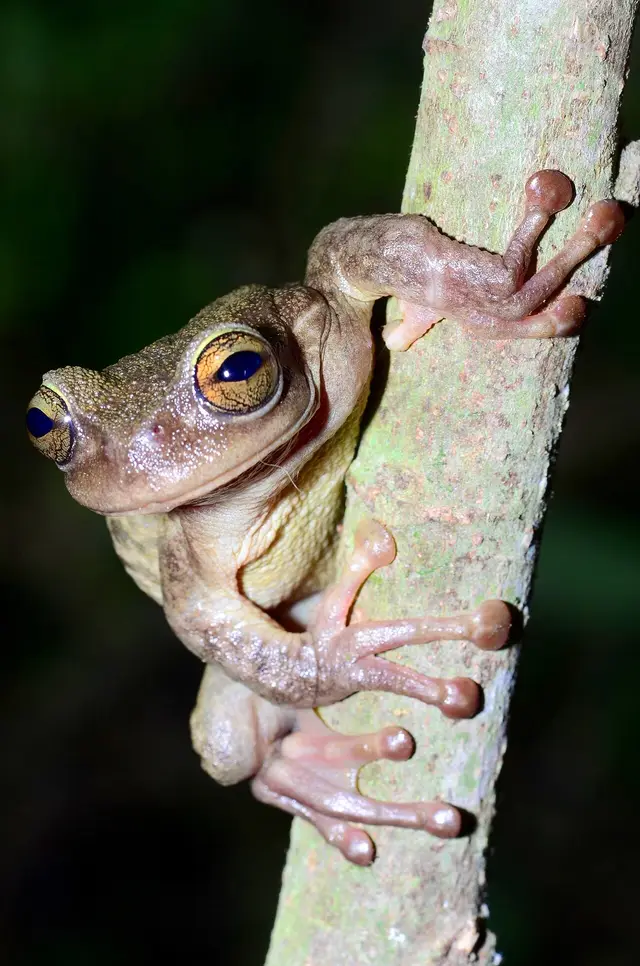
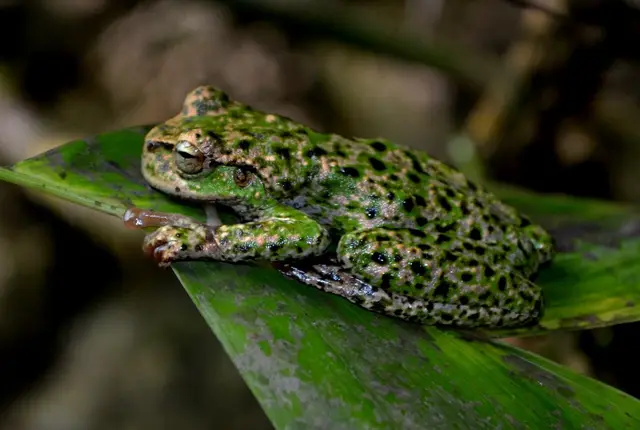
Plectrohyla quecchi
Plectrohyla quecchi
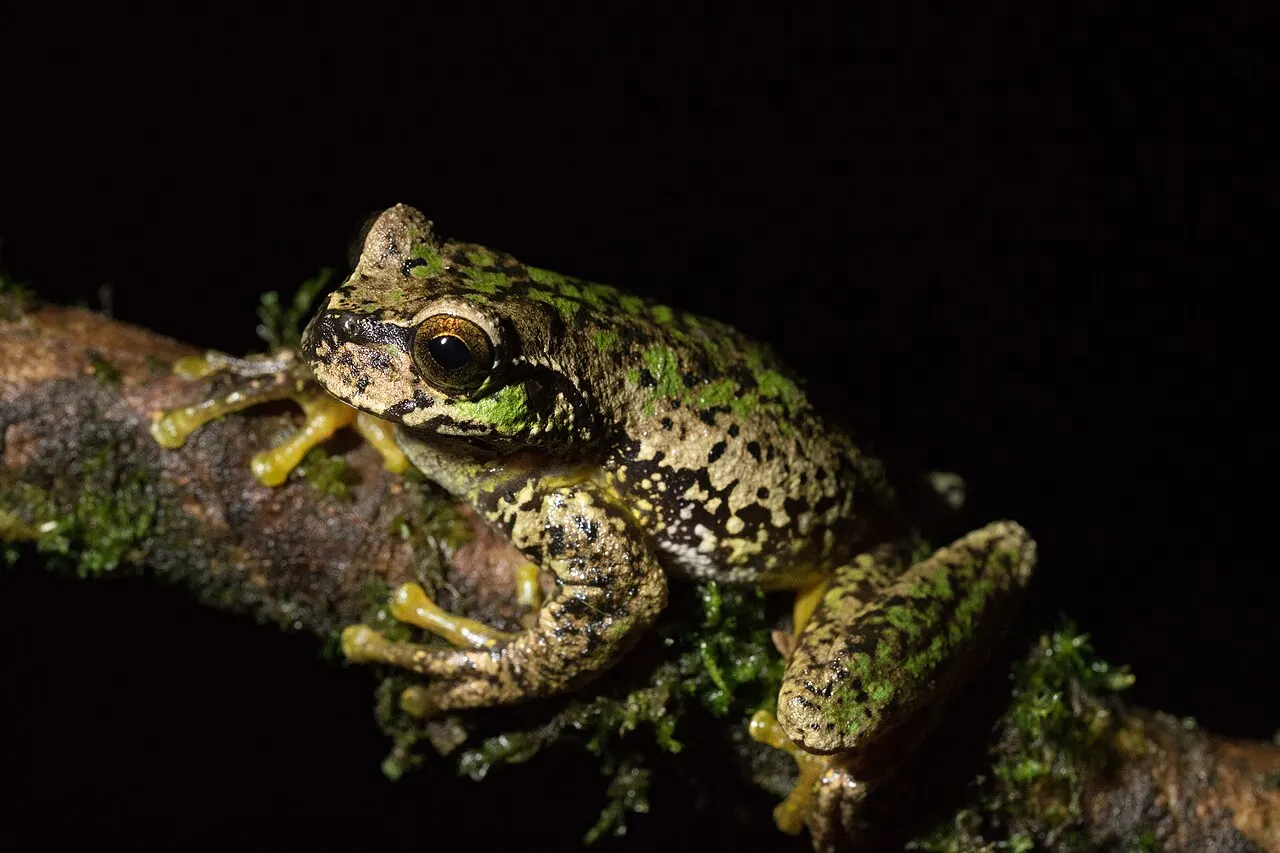
The Las Palmas spikethumb frog (Plectrohyla quecchi) is a stream frog found only in the cloud and moist forests of Guatemala. The IUCN Red List rated it Endangered in 2020 and estimates its population has lost about half its numbers. Habitat clearance and disease are suspected causes.
Where it lives
The species is endemic to Guatemala and was described by Stuart in 1942. The IUCN gives an extent of occurrence of about 4,644 square km, an elevation range of 615 to 1,850 m above sea level, and between one and five locations.
Its habitats are moist lowland and montane forest, including cloud forest, along permanent streams. A 2004 paper by Mendelson and colleagues reported surveys in 2002 and 2003 in the Sierra de las Minas, in Baja Verapaz, where the frog was usually most abundant in smaller tributaries of larger streams.
Pins are Wikidata “endemic to” fields. Orange dots, when present, are GBIF occurrence tiles — survey bias included.
How it lives
The stream frogs of the Sierra de las Minas, this species among them, typically lay their eggs in stream pools, such as splash pools below small waterfalls and between riffles, in the dry season from January to May. In the cool water, tadpoles may take more than a year to metamorphose, so tadpoles of several ages share a stream.
In December 2003 the survey team heard males calling at night and collected tadpoles from a small tributary. Such tributaries are often little more than trickles of water.
Why it is in trouble
At one Sierra de las Minas stream, the Rio Cafetal, the survey found this frog apparently gone, along with another Plectrohyla that had bred there in the 1970s, and found three other species much less abundant than before. A tadpole of a different frog at that stream carried the chytrid fungus, which has caused amphibian declines across the tropics. Cloud forest nearby was being replaced by plantations of leatherleaf fern grown under shade screens, and nitrogen levels in the stream were high for a tropical stream.
The IUCN estimates a population reduction of about 50 percent, judged from direct observation, habitat decline and effects such as pathogens and pollutants, and records a continuing decline. Its threat list includes agribusiness, small farms, shifting agriculture, housing, pesticides, drought, accidental harvest, chytrid fungus and (as a past impact) mining.
What is being done
The frog occurs in at least one protected area. The IUCN lists habitat protection and captive breeding as actions needed, and records no other measures in place.
Sources
Written for this catalog in our own words from the sources below, checked against them on 12 November 2026. Population figures are estimates and carry the year they were made. Status and assessment year: IUCN. 2026. The IUCN Red List of Threatened Species. Version 2026-1. iucnredlist.org.