Critically Endangered
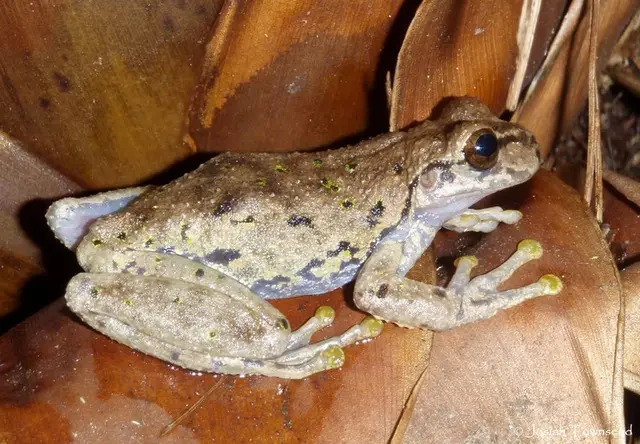
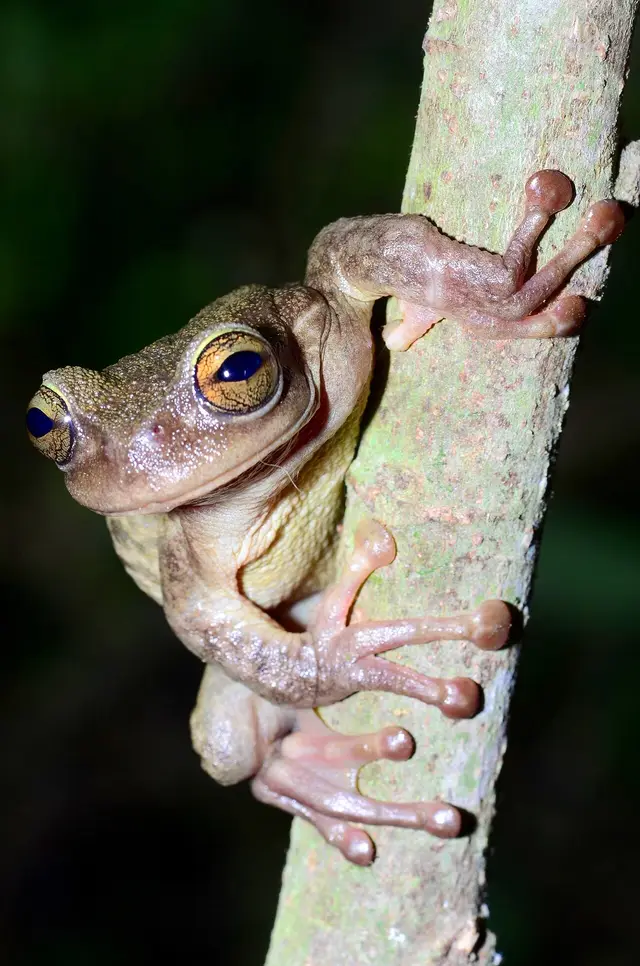
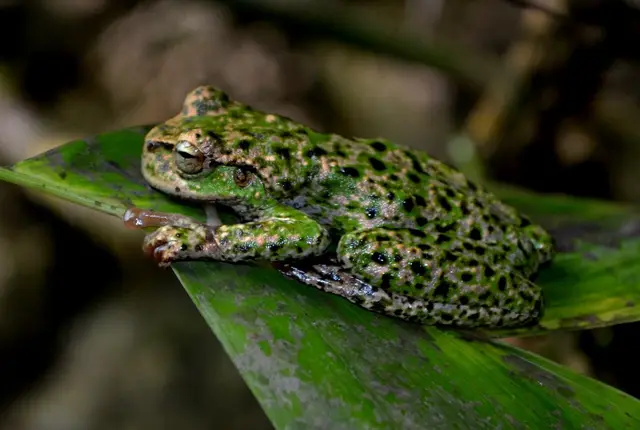
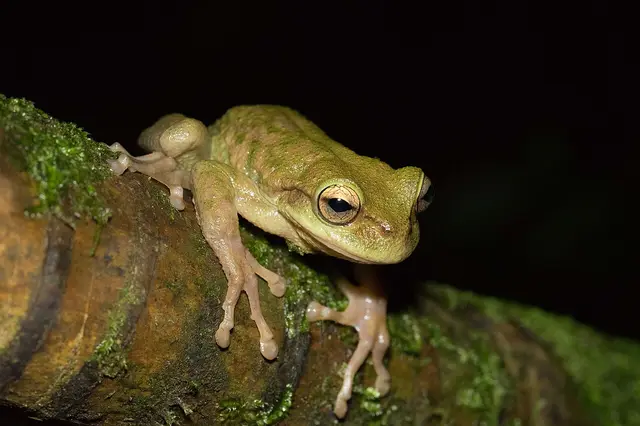
Plectrohyla exquisita
Plectrohyla exquisita
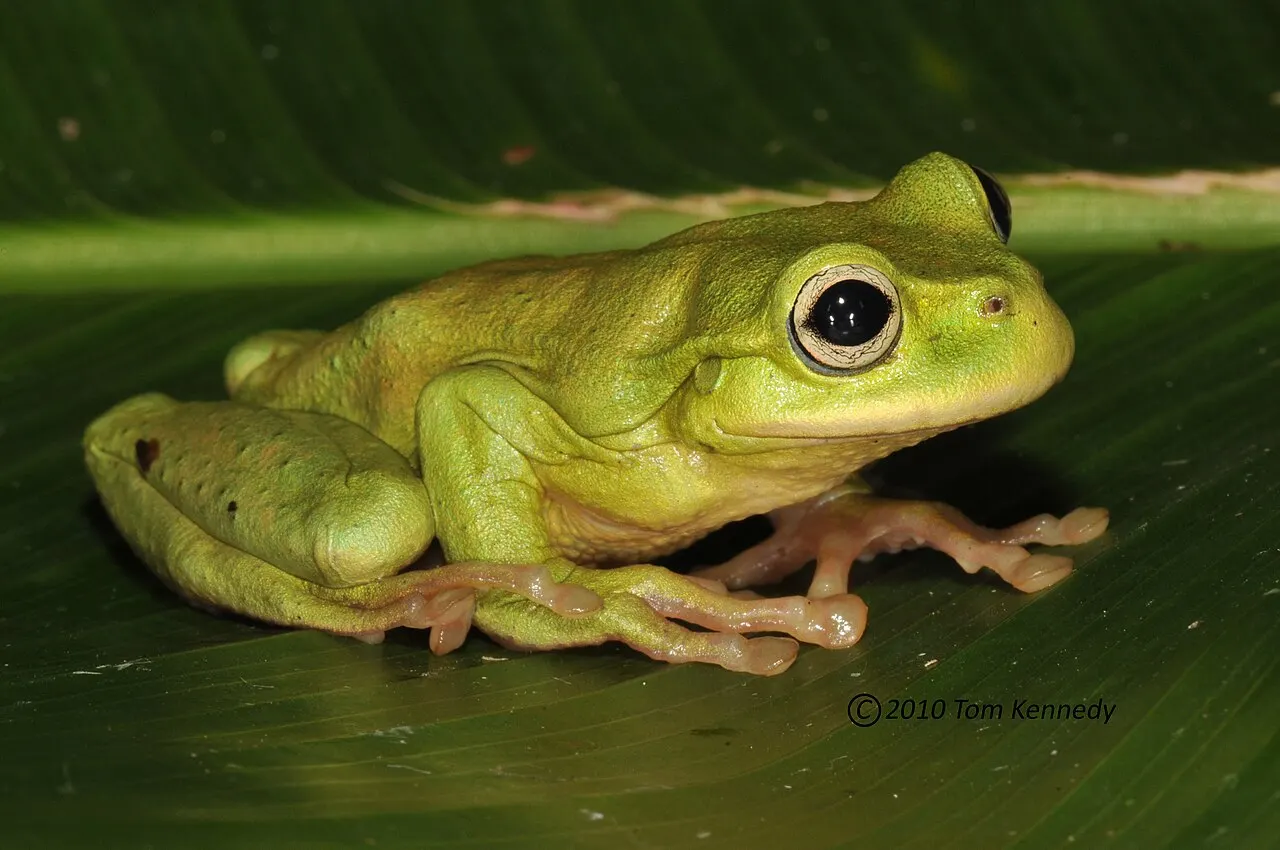
The exquisite spike-thumb frog (Plectrohyla exquisita) is a stream-breeding tree frog found only in the cloud forest of Cusuco National Park, in the Sierra de Omoa of northwestern Honduras. The IUCN rated it Critically Endangered in 2019, with a decreasing population in a single location and chytrid fungus a major concern.
How to recognise it
It reportedly grows to about the size of a fist, roughly twice the size of the Cusuco spike-thumb frog (Plectrohyla dasypus), which shares its forest. It has a bony spur on the hand, thought to be used in territorial fights. Adults live on low vegetation beside streams.
It was not recognised as a separate species until 1998, when McCranie and Wilson described it. Before that it had been confused with a relative, Plectrohyla teuchestes.
Where it lives
It is endemic to the Sierra de Omoa in Cortés Department, and its known range lies within Cusuco National Park. The IUCN counts a single location and lists elevations from 1,490 to 1,900 m. Other descriptions give 1,490 to 1,680 m. It is not a migrant, and the whole known population falls inside a protected area.
The IUCN lists its habitats as streams and creeks, subtropical and tropical moist montane forest, and, more surprisingly, plantations. In a radio-tracking study funded by the Rufford Foundation, adult frogs stayed close to water, and the farthest any was found was 33 m from the stream edge.
Pins are Wikidata “endemic to” fields. Orange dots, when present, are GBIF occurrence tiles — survey bias included.
Why it is in trouble
Chytridiomycosis, the skin disease caused by the fungus Batrachochytrium dendrobatidis, is the main suspect. In 2009 surveys in the park found infection in 45.6% of sampled Plectrohyla exquisita, one of the two highest rates among the 14 species tested, against 34.3% across all amphibians sampled. Fieldwork in July and August 2013 again found heavy infection, especially in tadpoles and newly metamorphosed frogs, and recorded severe skin lesions in all three critically endangered target species. Tests for the virus ranavirus on those animals were inconclusive.
The IUCN also lists habitat pressures, including small-scale farming and grazing, shifting agriculture, roads, housing, fire, pesticides, drought and storms. Its criterion is B1ab(iii), which reflects a small range with continuing habitat decline, and its population trend is decreasing.
What is being done
The IUCN records site protection, awareness work, resource and habitat protection, and captive breeding among the actions for the species. Cusuco National Park shelters it, and the IUCN says all of the population is inside protected areas.
A rescue effort, the Honduras Amphibian Rescue and Conservation Center, was planned at Lancetilla Botanical Garden in Tela, with Omaha's Henry Doorly Zoo among its partners. The plan was to catch infected frogs in Cusuco, treat them for chytrid and release them with tiny leg tags. In 2013 the building set aside at Lancetilla needed repairs the project could not afford, and the plan shifted to two converted shipping containers as biosecure laboratories. A crowdfunding campaign followed in 2016.
Sources
Written for this catalog in our own words from the sources below, checked against them on 12 November 2026. Population figures are estimates and carry the year they were made. Status and assessment year: IUCN. 2026. The IUCN Red List of Threatened Species. Version 2026-1. iucnredlist.org.