Endangered
Hartweg's spikethumb frog
Hartweg's spikethumb frog
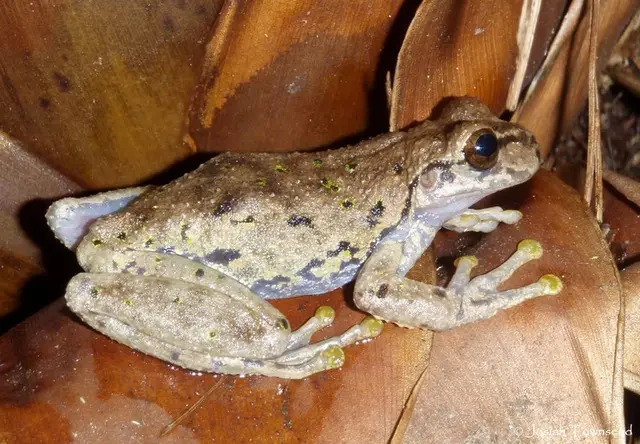
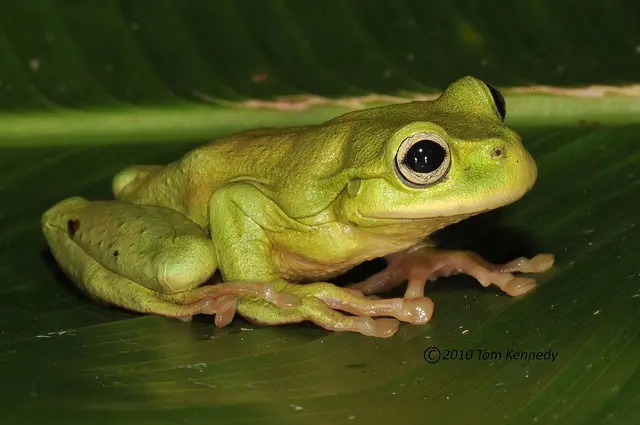
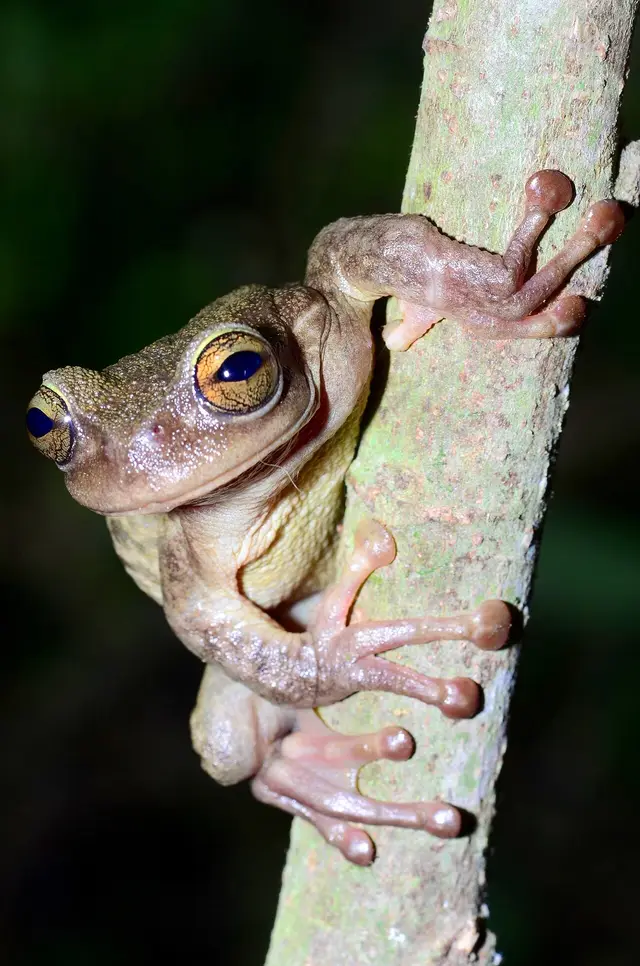
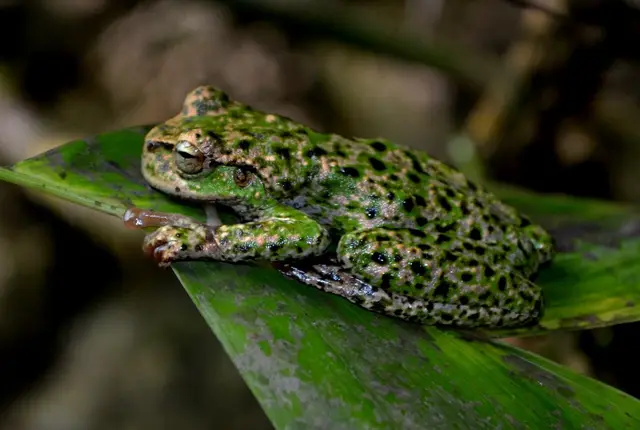
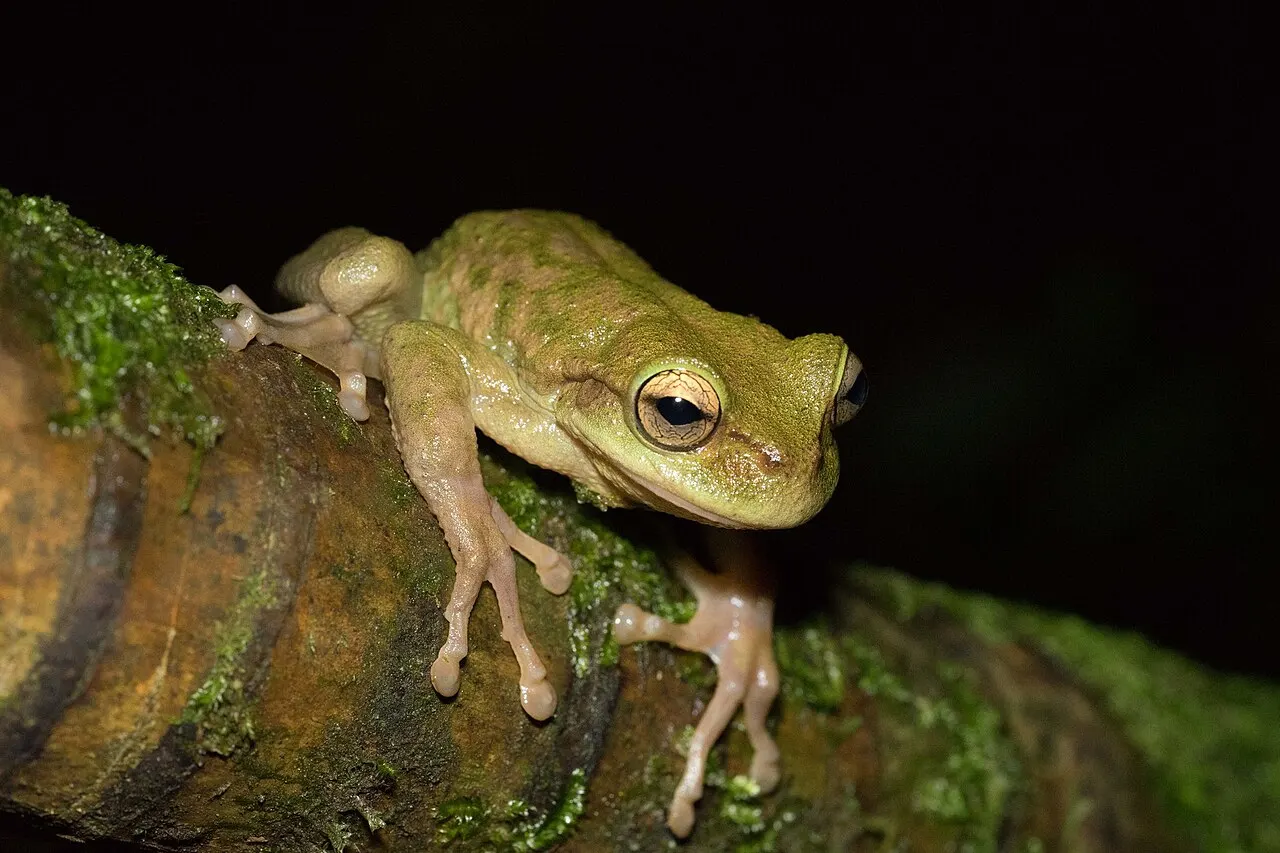
Hartweg's spikethumb frog (Hartweg's spikethumb frog) is a large cloud-forest frog of the highlands of southern Mexico, Guatemala and Honduras that breeds in rocky mountain streams. The IUCN Red List classed it as Endangered in 2020. It has vanished from some sites, and disease and forest loss are the suspected causes.
How to recognise it
It is a sturdy frog, with adult males reaching about 76 mm and females about 77 mm from snout to vent. The head is slightly wider than long, the snout is short and the eyes are large. The back is dull olive-brown, olive or pale green, and about one in five frogs has pale bronze spots. Males have a massive, forked bony spike at the base of the thumb, which gives the group its name.
William Duellman described the species in 1968. Eizi Matuda collected the first specimen in 1941, and the frog is named for the herpetologist Norman Hartweg. It may be a composite of two or more species, and the IUCN says the Honduran and Guatemalan populations need taxonomic study.
Where it lives
It lives in the Sierra Madre de Chiapas and eastern Oaxaca in Mexico, the Guatemalan highlands including the Sierra de las Minas, and the mountains of western Honduras. The IUCN gives an elevation range of 900 to 2,700 m. It is a cloud-forest species that also uses pine-oak forest, and it breeds in rocky mountain streams. It tolerates a small amount of habitat disturbance, such as secondary forest or forest edge.
Pins are Wikidata “endemic to” fields. Orange dots, when present, are GBIF occurrence tiles — survey bias included.
Why it is in trouble
The IUCN calls it rare and naturally patchy, with a population of no more than about 2,500 mature individuals that is declining and severely fragmented. In Mexico there were no sightings between 1993 and 2003, and later records come from only a few sites in Chiapas, most often in well-preserved forest. The last Honduran record dates from 1990.
Chytrid fungus is suspected in past declines in Mexico and Guatemala. In 2004 a team led by J. R. Mendelson III reported on frogs at Río Cafetal in the Sierra de las Minas, Guatemala. There, adults of Hartweg's spikethumb frog were far scarcer than in the 1970s, and the species was no longer breeding at the stream, although tadpoles turned up in nearby streams. On one night survey the team found three adults, and on another, two.
A tadpole of a different frog at Río Cafetal carried amphibian chytrid fungus, the first confirmed case in Guatemala. Large leatherleaf fern plantations had also replaced cloud forest nearby. The IUCN adds deforestation for farms, housing and coffee, fungicide pollution, longer dry seasons and, in the past, nickel-mine exploration.
What is being done
The frog occurs in protected areas in all three countries, including the El Triunfo and La Sepultura biosphere reserves in Mexico, the Sierra de las Minas biosphere reserve in Guatemala and Celaque National Park in Honduras. Mexican law gives it Special Protection status, and a conservation group works with local communities in Celaque to prevent further forest encroachment.
The IUCN calls for better management and enforcement across its range, a species management plan with an ex-situ recovery plan, and monitoring of population trends.
Sources
Written for this catalog in our own words from the sources below, checked against them on 12 November 2026. Population figures are estimates and carry the year they were made. Status and assessment year: IUCN. 2026. The IUCN Red List of Threatened Species. Version 2026-1. iucnredlist.org.