Endangered
Plectrohyla acanthodes
Plectrohyla acanthodes
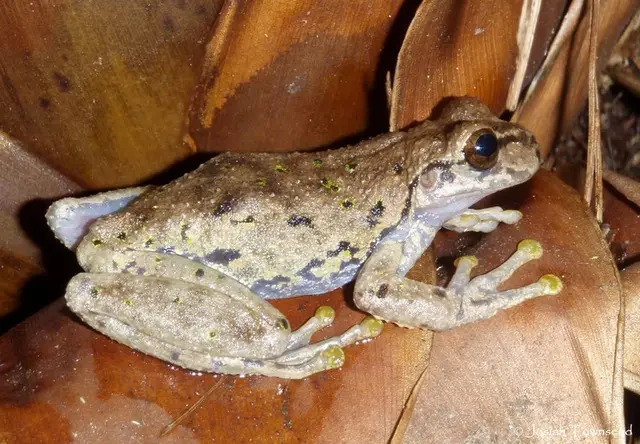
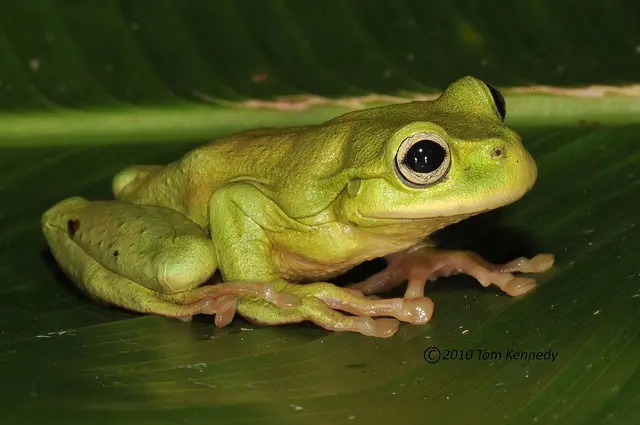
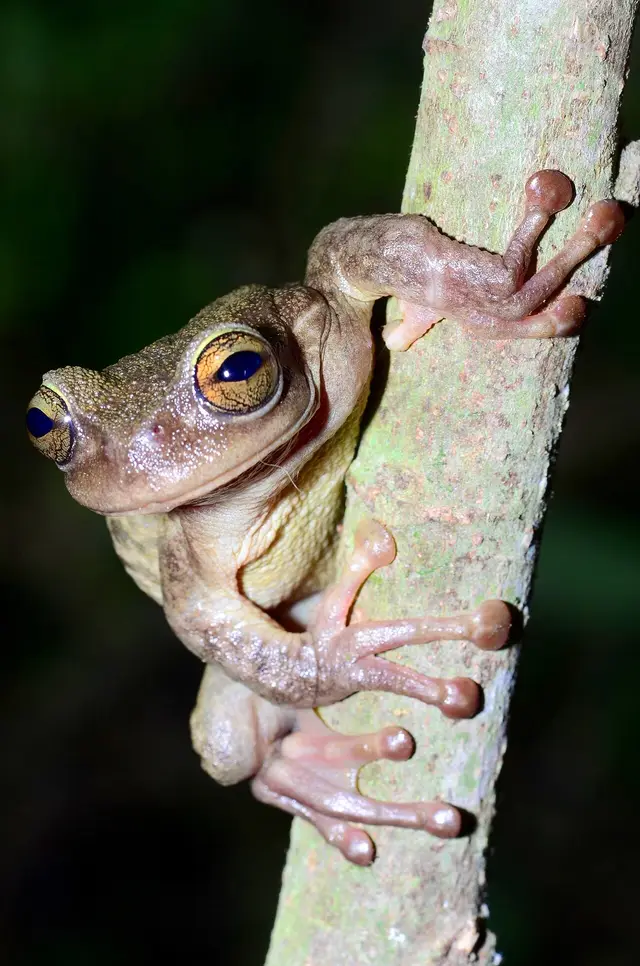
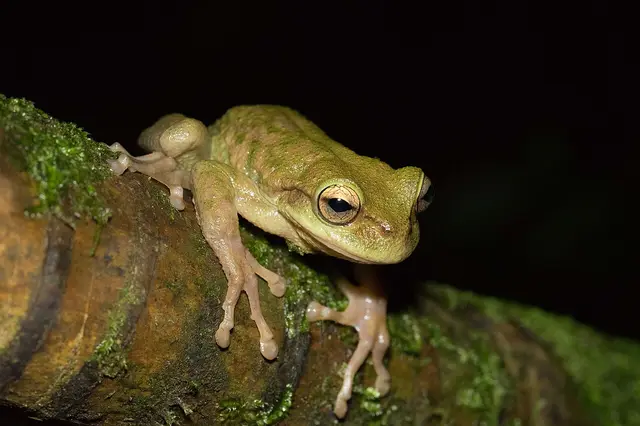
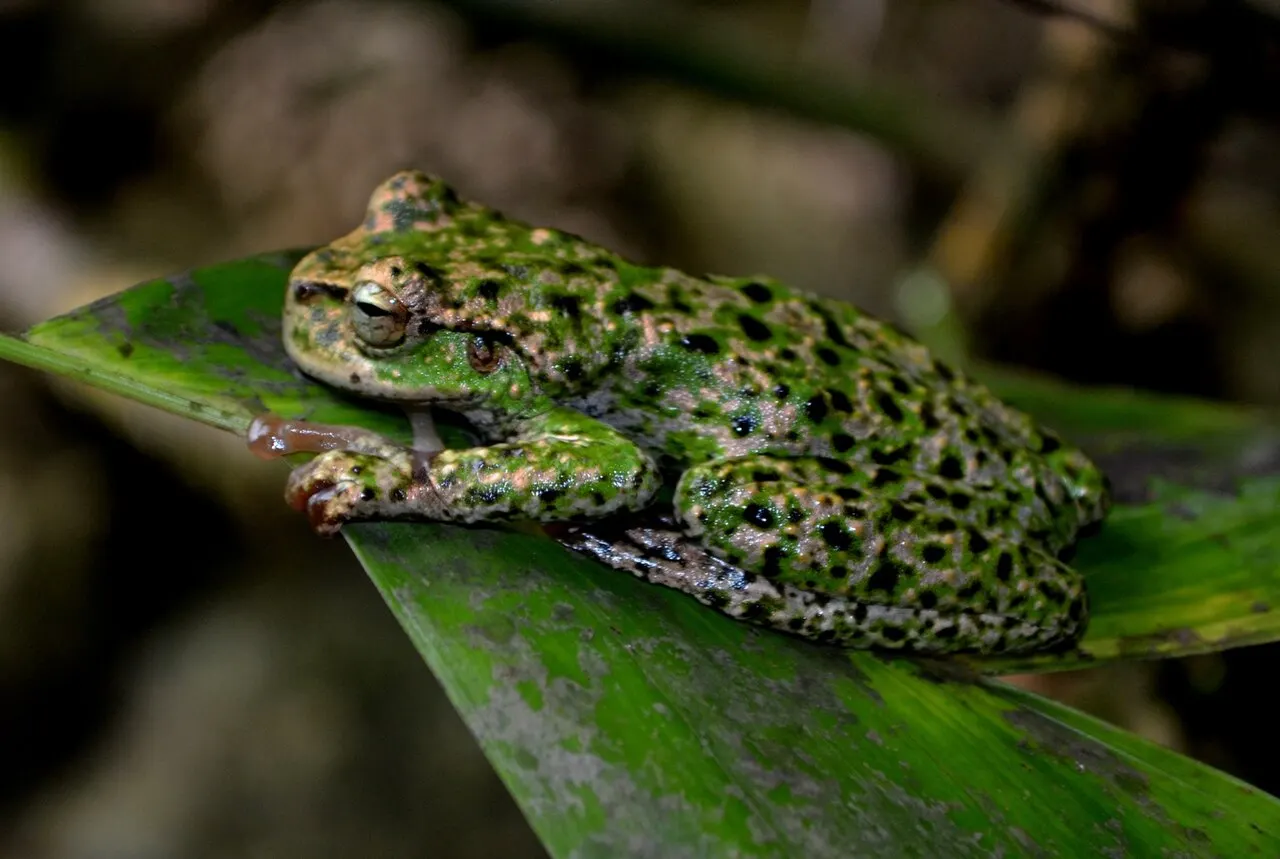
The thorny spikethumb frog (Plectrohyla acanthodes) is a stream frog of cloud and pine-oak forest in the highlands of Chiapas, Mexico, and neighbouring Guatemala. The IUCN Red List rated it Endangered in 2020. Its streams are being polluted and built over, and numbers are falling.
How to recognise it
Reported adult lengths are about 56 mm for males and 57 mm for females, figures a 2021 paper takes from the original 1992 description. The species was described that year by Duellman and Campbell. It belongs to the spikethumb frogs, genus Plectrohyla, which are mostly stream dwellers of cold mountain water.
Where it lives
It occurs in highland Chiapas in southern Mexico and across the border in Guatemala. The IUCN gives an extent of occurrence of about 11,292 square km and an elevation range of 1,540 to 2,300 m. Its habitat is cool mountain streams running through moist montane and temperate forest, including cloud forest and pine-oak woodland.
Pins are Wikidata “endemic to” fields. Orange dots, when present, are GBIF occurrence tiles — survey bias included.
How it lives
Adults live around rocks, scrub and plants growing beside streams. Tadpoles are said to need shallow, rocky, slow-flowing streams with water of roughly 18 to 24 degrees C. A 2021 study in Mesoamericana surveyed a temporary stream at 2,300 m on the edge of San Cristobal de las Casas, in September and October 2020. It found 57 tadpoles, most in the warmer (above 17 degrees C), shallower, sandy stretches lower down.
Those lower sections lie closest to houses, and the stream there collects livestock droppings, washing water and rubbish. No adults were seen during the survey, and one young frog had a malformed left forelimb. The researchers suggested that few tadpoles may survive to adulthood. The paper also cites a figure of 149 eggs that a female can lay.
Why it is in trouble
The IUCN estimates fewer than 2,500 mature frogs, with the largest subpopulation around 250, and records a decreasing population. Its listed threats include housing, small-scale farming and grazing, rubbish, sewage, pesticides, mining, water taken from streams and the ground, drought and the chytrid fungus. The 2021 study suggested that swings between extreme rain and dry spells may hurt young tadpoles, and cited a 2015 report that the species has declined and been notably absent across its range since 2006.
What is being done
The frog occurs in at least one protected area, and the IUCN lists resource and habitat protection and site protection as the conservation actions needed. The Chiapas study called for continued monitoring of the stream population and for water quality checks.
Sources
Written for this catalog in our own words from the sources below, checked against them on 12 November 2026. Population figures are estimates and carry the year they were made. Status and assessment year: IUCN. 2026. The IUCN Red List of Threatened Species. Version 2026-1. iucnredlist.org.