Endangered
Coonoor bush frog
Coonoor bush frog
The Coonoor bush frog is a small, slender frog of the Nilgiri Hills in Tamil Nadu, southern India, first found beside a park in the town of Coonoor. Rated Least Concern in 2012, it was reassessed as Endangered in 2023 because its small range is shrinking.
How to recognise it
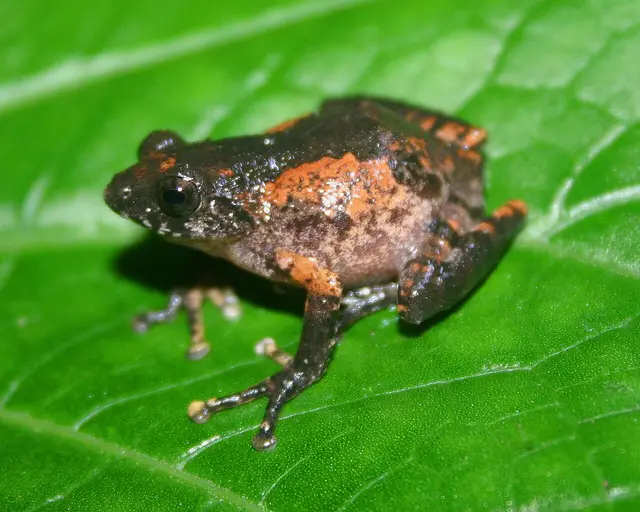
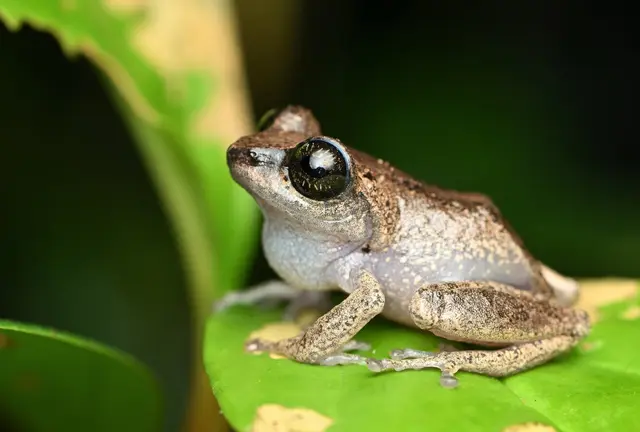
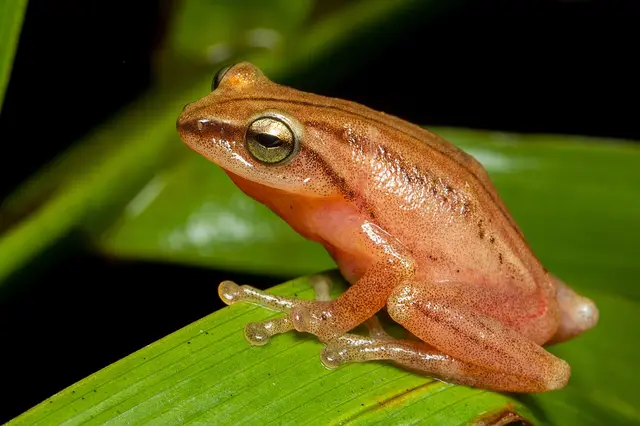
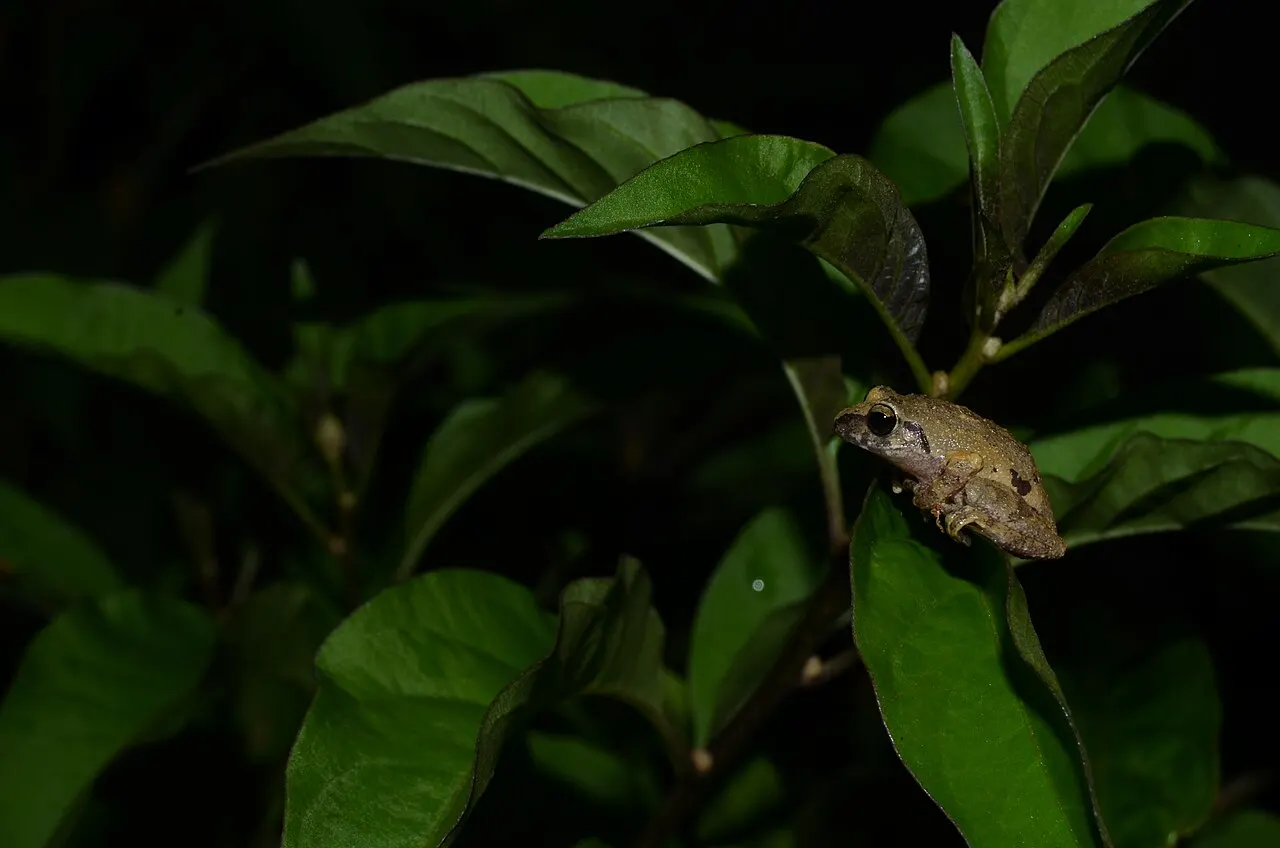
This is a small, slender frog. The holotype, an adult male, measured 22.4 mm from snout to vent, and the five males of the type series reportedly ranged from about 21 to 24 mm. The snout is oval from above, the eardrum rather distinct, and the hind legs relatively long with reduced webbing between the toes. The fingers are unwebbed.
The back is light reddish brown in the holotype and light grey in some other specimens. A dark stripe runs between the eyes, and brown concave stripes run back from behind the eyes. The back and upper eyelids carry small horny spines. The flanks have deep brown patches, the rear of the thighs is dark brown with variable grey patches, and the belly is grey with dark brown specks.
Where it lives
The species is endemic to the Western Ghats of India. It was described in 2009 as Philautus coonoorensis by Biju and Bossuyt from near Sims Park in Coonoor, and later molecular work moved it to the genus Raorchestes. The Red List adds records from Kotagiri, Naduvattam and Pykara, all in the Nilgiri Hills.
The Red List gives an elevation of about 1,780 to 2,083 m, an extent of occurrence of roughly 682 square kilometres, and five or fewer locations. The area has been surveyed widely without records elsewhere, so the frog is likely restricted to it. Its habitat is listed as montane forest and plantations.
Pins are Wikidata “endemic to” fields. Orange dots, when present, are GBIF occurrence tiles — survey bias included.
How it lives
The type frogs were sitting on leaves 1 to 1.5 m above the ground near an abandoned eucalyptus plantation beside the park. All were collected during rain in the late evening, on 15 July 2005. The Red List calls the frog locally abundant but patchily distributed, and tolerant of some habitat disturbance. Like related bush frogs, it breeds by direct development, so eggs hatch as tiny frogs with no tadpole stage.
Only males have been collected, so females are undescribed.
Why it is in trouble
A 2012 assessment rated the frog Least Concern. The 2023 assessment (criteria B1ab(iii)) raised it to Endangered because of its small range, few locations and a continuing decline in the extent and quality of its habitat. The Red List records a decreasing population trend.
It names large-scale eucalyptus plantations, where pesticide use harms frogs living on low vegetation, and a growing tourism industry in the region. How severely fragmented the population is remains unknown, and the frog does not occur in any protected area.
What is being done
No species-specific conservation programme is recorded. The assessment says habitat protection is needed and calls for more information on its distribution, population status, ecology and threats.
Sources
Written for this catalog in our own words from the sources below, checked against them on 12 November 2026. Population figures are estimates and carry the year they were made. Status and assessment year: IUCN. 2026. The IUCN Red List of Threatened Species. Version 2026-1. iucnredlist.org.