Critically Endangered
Alsodes cantillanensis
Alsodes cantillanensis
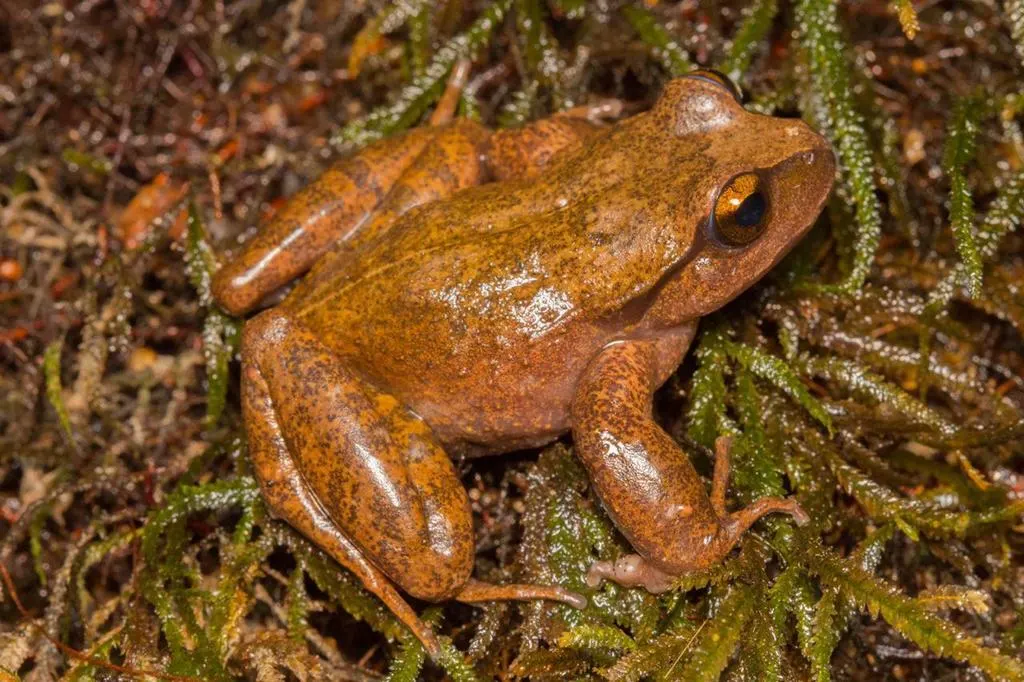
The Cantillana spiny-chest frog is a small Chilean frog known from a tiny patch of mountain forest near Santiago. Described to science only in 2015, it is rated Critically Endangered (assessed 2015) because it lives in a single place where mining, fire and land use put pressure on its habitat.
How to recognise it
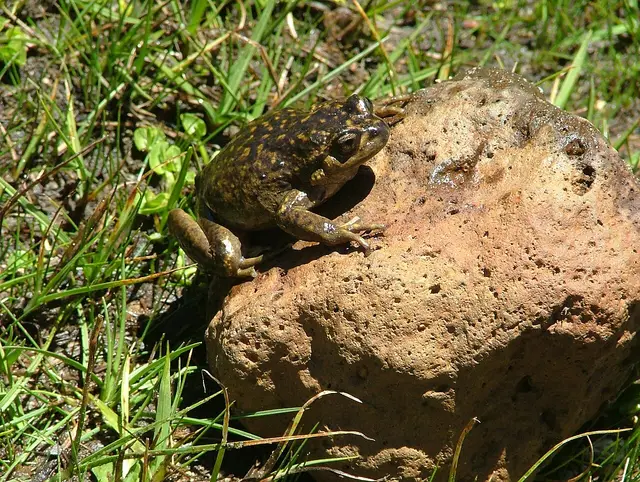
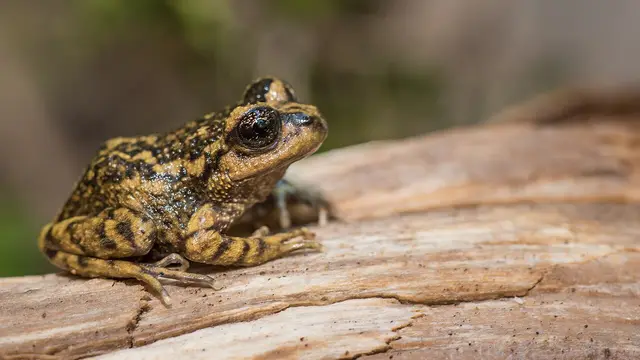
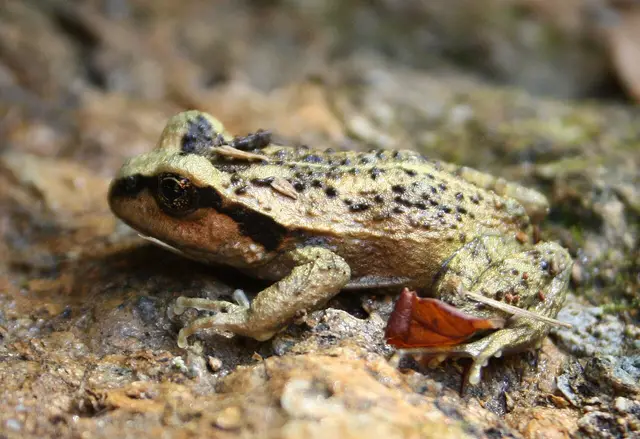
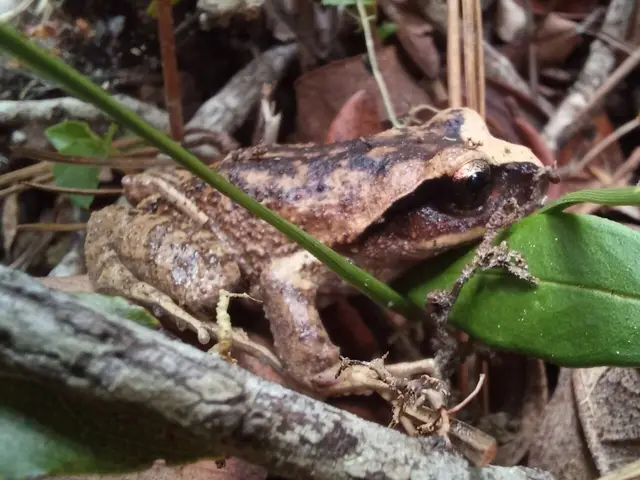
This is a small frog. The two adults measured when the species was described, one male and one female, were about 46 mm and 44 mm from snout to vent. Males are yellow to dark grey with a pale triangle on the head, while females are red to orange with a red-orange triangle. Both have a thin yellow line down the back, a white belly, white toes and small white spikes on the chest, which gives spiny-chest frogs their name.
Where it lives
The species is endemic to Chile and is named for the Altos de Cantillana, a mountain range in the Coastal Range near Santiago. The type locality, Quebrada Infiernillo, lies about 65 km from the capital at roughly 34 degrees south, within the San Juan de Piche natural sanctuary. Only that site and one nearby ravine, Quebrada Lisboa, are known.
The IUCN counts a single location, with an extent of occurrence of about 21 square kilometres and an area of occupancy of about 20 square kilometres. Records run from 729 to 850 m above sea level, and the Red List describes the frog as a resident, not a migrant.
Pins are Wikidata “endemic to” fields. Orange dots, when present, are GBIF occurrence tiles — survey bias included.
How it lives
The frog has been found in relict forest of Nothofagus macrocarpa, a southern beech, sheltering under rocks in and beside streams and under logs in deep leaf litter. The Red List gives its habitats as moist lowland forest and rivers or streams.
It shares the type locality with its closest relative, Alsodes nodosus, a widespread central Chilean species. Little has been recorded about its breeding, diet or calls, and its population trend is listed as unknown.
Why it is in trouble
The frog's whole known range is tiny, and the IUCN records a continuing decline in the area of habitat. The scientists who described the species flagged gold mining as a potential threat to the forest where it lives. The IUCN's list of ongoing threats also includes mining and quarrying, along with fire, crops, tree plantations and livestock grazing, each scored as low impact at the time of the 2015 assessment.
With one location, any single event such as a large fire or a new mine could affect most of the species at once. That is why it sits in the highest threat category despite so little being known.
What is being done
The type locality lies inside the San Juan de Piche natural sanctuary, and the IUCN estimates that between 51 and 60 percent of the population is protected by protected areas. The Red List assessment lists no species-specific conservation actions.
The describing paper noted how little is known about the biogeography, evolution and ecology of spiny-chest frogs in central Chile.
Sources
Written for this catalog in our own words from the sources below, checked against them on 12 November 2026. Population figures are estimates and carry the year they were made. Status and assessment year: IUCN. 2026. The IUCN Red List of Threatened Species. Version 2026-1. iucnredlist.org.