Endangered
Vanzolini's spiny-chest frog
Vanzolini's spiny-chest frog
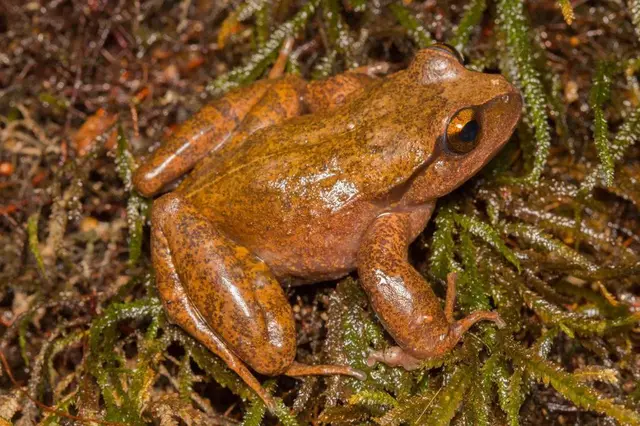
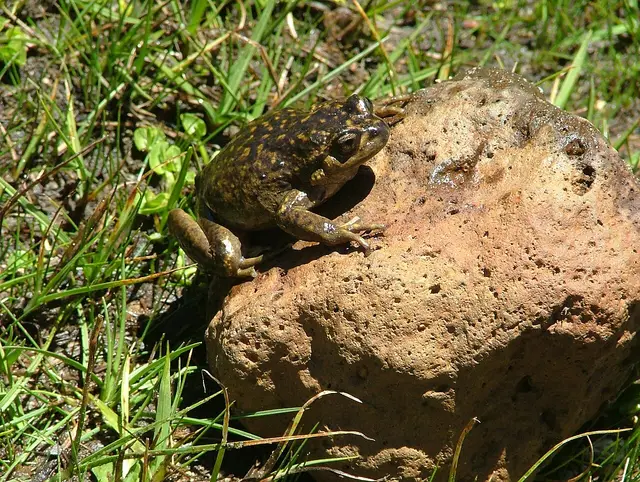
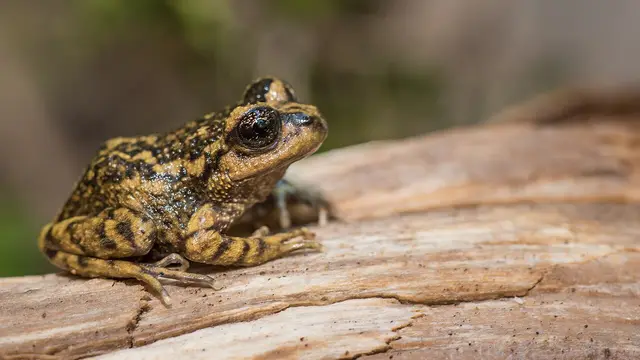
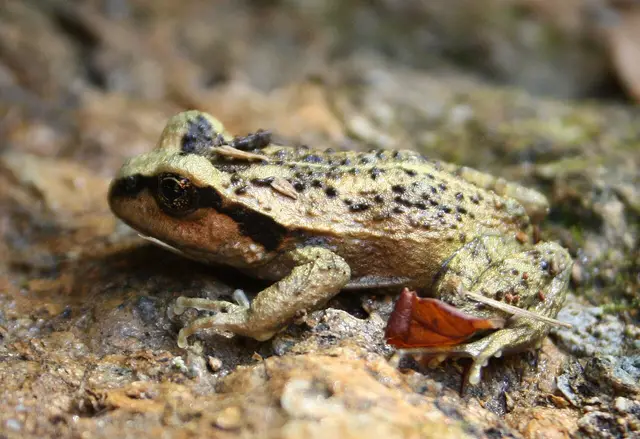
Vanzolini's spiny-chest frog, known in English as Vanzolini's spiny-chest frog, is a brown forest frog with a pale yellow triangle on its head. It lives only in a few patches of forest in Chile's coastal range. The IUCN Red List assessed it as Endangered in 2019, after rating it Critically Endangered in 2004 and 2010.
How to recognise it
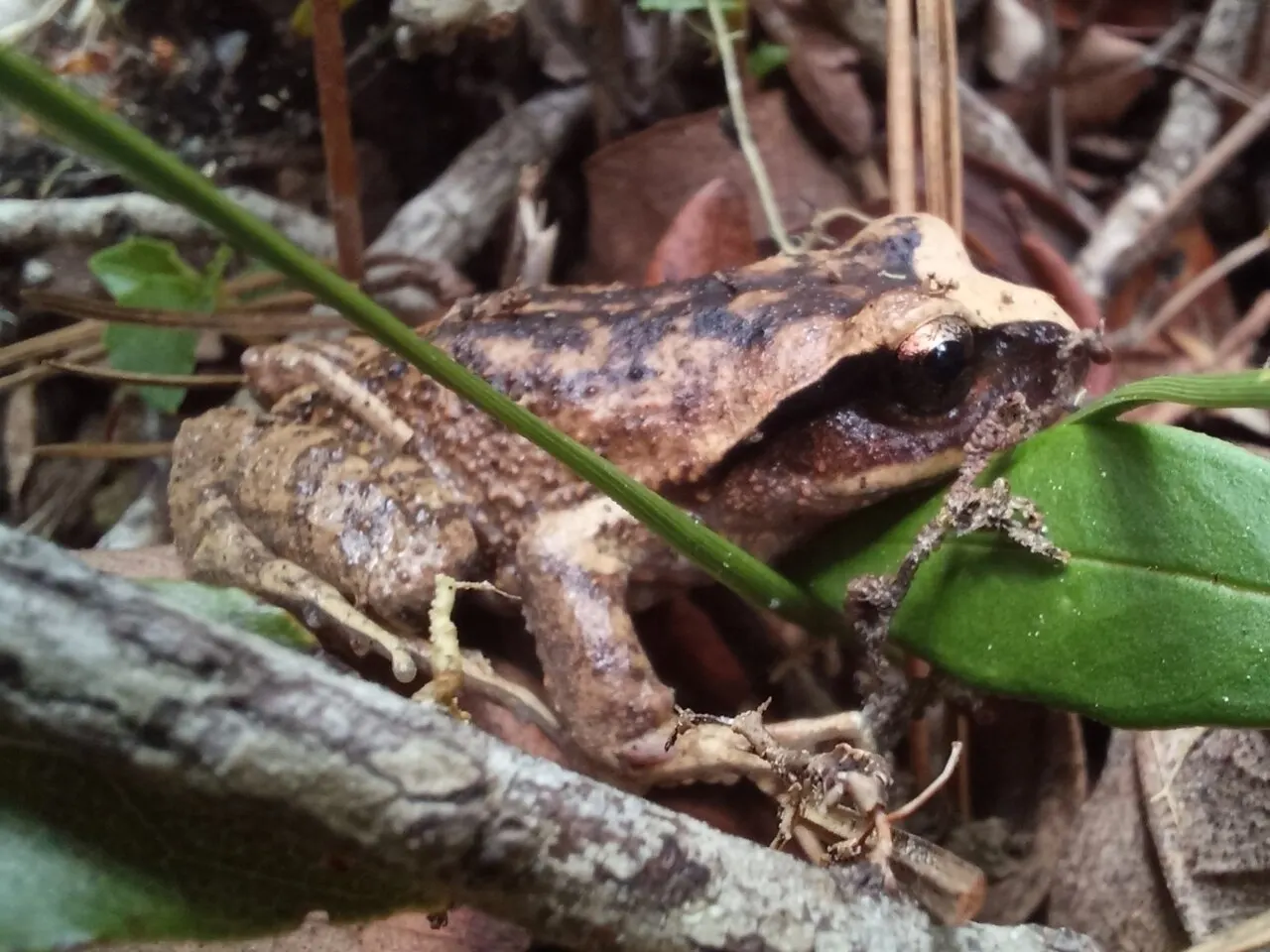
This is a medium-sized, stocky frog. Males measure about 36 to 52 millimetres from snout to vent and females about 43 to 54 millimetres. The back is brown, and the legs carry dark bars. Adults reportedly have a white belly.
Two features identify it: a rounded snout and a pale yellow triangle on the head that stands out against a dark brown face. A 2018 Chilean museum note says these separate it from any other amphibian in its forests. Its eggs are reportedly yellow, about 2.3 millimetres across, and the tadpoles develop in stream pools.
Where it lives
The species is endemic to Chile. Roberto Donoso-Barros described it in 1974 from a male collected in 1971 at Ramadillas, in Arauco Province, on the western slopes of the Nahuelbuta Range. It was first placed in the genus Eupsophus and later moved to Alsodes.
A 2018 note lists eleven small localities in Nahuelbuta, between about 37.3 and 37.7 degrees south, plus Tregualemu in the Maule Region, near the Los Queules National Reserve. A young frog was then found under a log in Nonguén National Reserve, Biobío Region, on 15 May 2018, at 250 metres above sea level. The Red List gives its extent of occurrence as about 4,590 square kilometres, at 50 to 700 metres above sea level.
Pins are Wikidata “endemic to” fields. Orange dots, when present, are GBIF occurrence tiles — survey bias included.
How it lives
Its biology is poorly known. It lives in temperate forest, especially the few remaining patches of southern beech (Nothofagus) on low coastal hills, and in the streams running through them. Some frogs have also been found in plantations of exotic Monterey pine, which the 2018 note suggests may serve as feeding areas. Even so, no stable populations have been located where the original forest has been cleared and replaced.
Why it is in trouble
Native vegetation on the Biobío coastal range has been replaced almost entirely by farm crops and tree plantations. The Red List names plantations, housing and increasing fire as ongoing threats, describes the population as decreasing and severely fragmented, and records a continuing decline in its habitat.
The Red List category moved from Critically Endangered to Endangered between 2010 and 2019, but the frog's known sites remain few, scattered and under pressure. How plantation herbicides and fertilisers affect it has not been well studied.
What is being done
The Red List records that the frog occurs in at least one protected area and is subject to ex situ conservation, and it lists site and habitat protection as conservation actions. The Nonguén record is the only one inside a protected area apart from the Tregualemu site beside Los Queules, and the author of that note urged more surveys near the known sites.
Sources
Written for this catalog in our own words from the sources below, checked against them on 12 November 2026. Population figures are estimates and carry the year they were made. Status and assessment year: IUCN. 2026. The IUCN Red List of Threatened Species. Version 2026-1. iucnredlist.org.
- IUCN Red List API, assessment 79808564 (Vanzolini's spiny-chest frog, 2019)
- IUCN Red List API, taxon record (common name, history)
- Vanzolini's spiny-chest frog (reference article)
- Mella-Romero 2018, Presencia de Vanzolini's spiny-chest frog en la Reserva Nacional Nonguen, Boletin del Museo Nacional de Historia Natural 67(1)