Critically Endangered
Alsodes pehuenche
Alsodes pehuenche
The Pehuenche spiny-chest frog (Alsodes pehuenche) lives in cold streams and wetlands of the Andes along the Argentina-Chile border, around the Pehuenche Valley in southern Mendoza. The IUCN Red List assessed it as Critically Endangered in 2019, with a declining and fragmented population.
How to recognise it
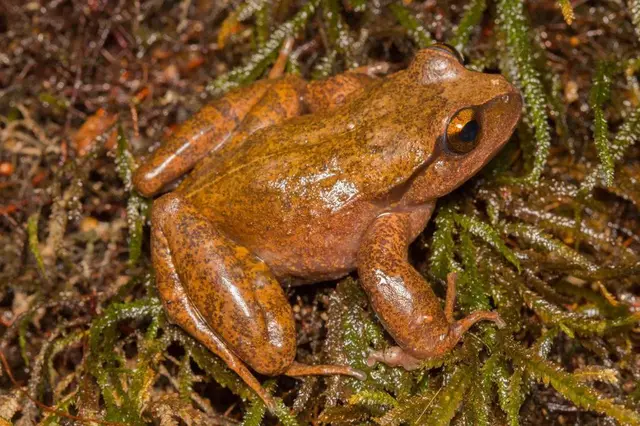
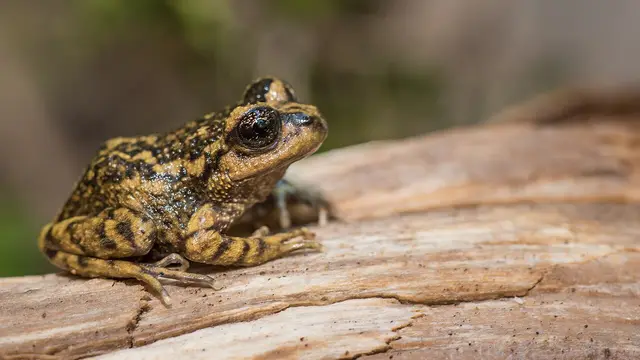
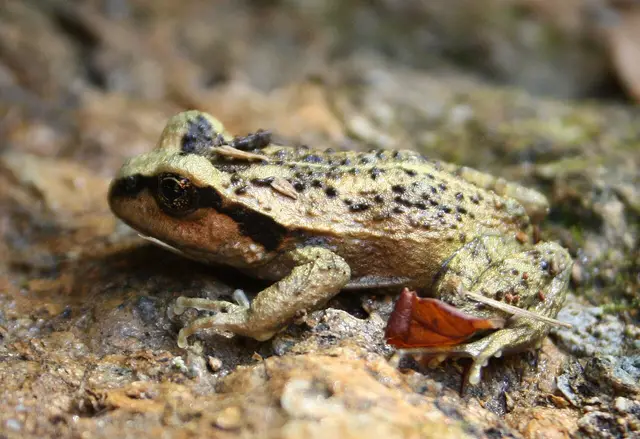
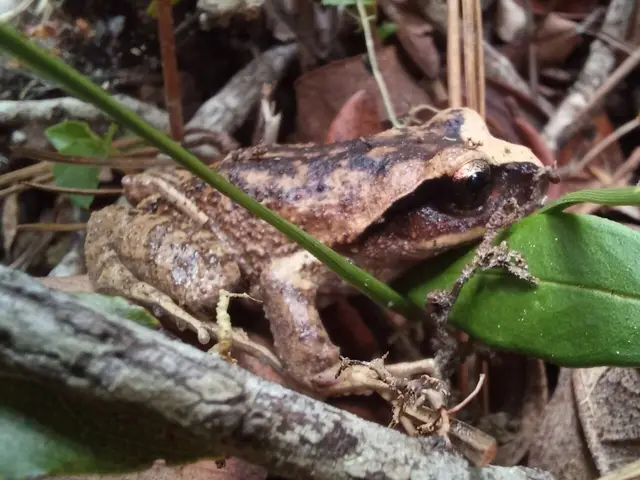
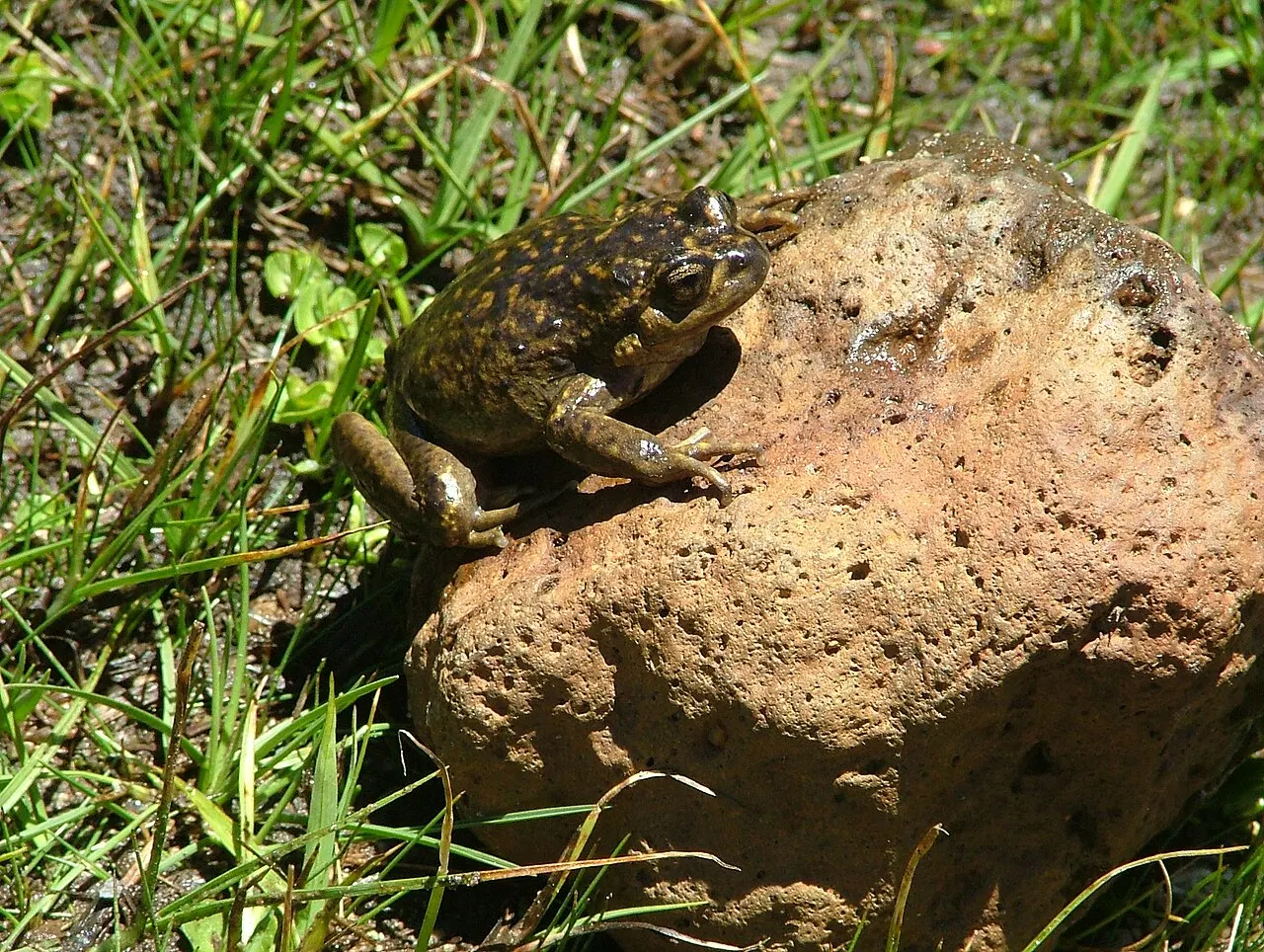
It's a stocky frog with strong limbs, a wide head and a short, rounded snout. Adults measured at two Chilean sites averaged about 51 mm from snout to vent, with males and females very similar in size. The back is light brown with faint, irregular darker blotches, and some animals, mostly females, carry yellowish blotches.
Where it lives
The frog is known from the Pehuenche Valley in Malargüe, southern Mendoza Province, Argentina, and from adjacent parts of Chile, including the Maule region. The IUCN lists an extent of occurrence of about 95 square kilometres and an area of occupancy of about 32 square kilometres, with four subpopulations. An earlier assessment, in 2012, had known it from only six streams over roughly 9 square kilometres.
It lives between 2,000 and 2,523 metres above sea level. Its habitats are permanent streams, snowmelt ponds, alpine wetlands, bogs and seasonal pools. It doesn't migrate, and the assessment records no protected area covering it.
Pins are Wikidata “endemic to” fields. Orange dots, when present, are GBIF occurrence tiles — survey bias included.
How it lives
Development is slow. Metamorphosis takes at least four winters, so tadpoles spend several years in the water. That matters for its survival, since one severe disturbance in a stream could hit several year classes at once.
Why it is in trouble
Roads and railroads, meaning the paved international highway through the valley, are the threat the assessment rates highest, at medium impact. Paving has altered stream flow, and winter road salting may affect water quality. Smaller ongoing pressures include run-off, grazing and farming by smallholders, tourism and recreation areas, including litter and livestock trampling.
Other threats are listed with unknown timing or impact: drought, introduced Salmo trout, and the chytrid fungus Batrachochytrium dendrobatidis. The IUCN records an observed past reduction of 25 percent, continuing decline in the area occupied, the number of subpopulations and the population, and says the range is severely fragmented.
What is being done
Monitoring of the valley's populations began in 2021, with volunteers and students joining the field campaigns, and is meant to continue every year. A grant of US$4,950 awarded in February 2025 through the Species Conservation Fund pays for guides and horses so teams can explore new basins for the frog, drawing on the knowledge of families who graze cattle in the wetlands each summer.
In early 2026 the municipality of Malargüe was reported to be drafting an action plan for the Pehuenche Pass area, after a first planning workshop with provincial, university and Chilean representatives. Proposed measures include protecting the meltwater streams the frog breeds in and controlling invasive species. Site protection is still listed as a conservation need.
Sources
Written for this catalog in our own words from the sources below, checked against them on 12 November 2026. Population figures are estimates and carry the year they were made. Status and assessment year: IUCN. 2026. The IUCN Red List of Threatened Species. Version 2026-1. iucnredlist.org.