Endangered
Leptobrachium boringii
Leptobrachium boringii
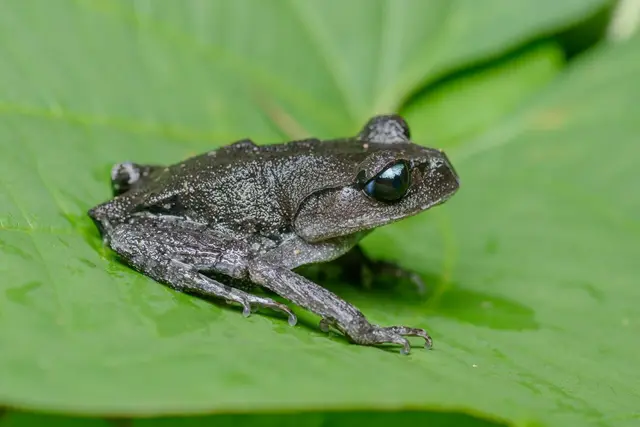
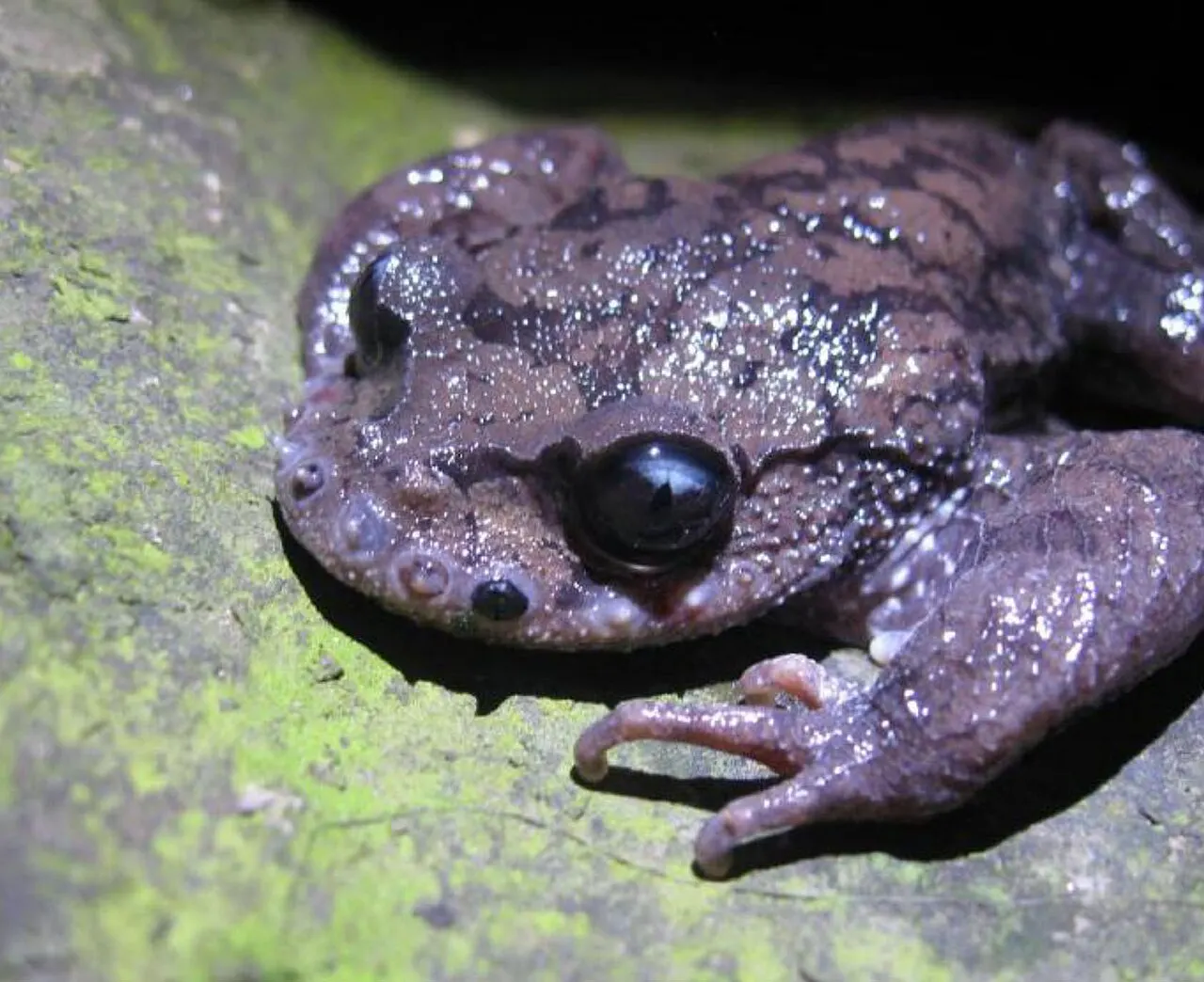
The Emei moustache toad is a large forest toad from southern and central China, named for the hard spines that breeding males grow along the upper lip. The IUCN Red List classed it as Endangered in 2020, after a decline it ties to habitat loss, dams, tourism development and collection.
How to recognise it
This is a big toad by the standards of its family. In a study on Mount Emei, males averaged about 75 mm from snout to vent and 50 g, while females averaged about 67 mm and 27 g. Males are the larger sex, which is the reverse of the usual pattern in frogs and toads.
The name comes from the breeding season. Males grow 10 to 16 hard, keratin spines, 3 to 5 mm long, on the upper lip. The spines are shed after breeding and regrow if they break.
Where it lives
The species is found only in China. The IUCN records it from Sichuan, Guizhou, Hunan and Guangxi, with an estimated range of roughly 253,900 square km. It lives in temperate forest and is also recorded in grassland, farmland and rural gardens, near rivers and streams. Records span about 600 to 1,700 m above sea level.
The type locality is Taosze on Mount Emei in Sichuan, which the common name Emei refers to.
Pins are Wikidata “endemic to” fields. Orange dots, when present, are GBIF occurrence tiles — survey bias included.
How it lives
Outside the breeding season the toads live on land in the forest. A 2013 study in PLoS ONE watched a breeding population at 650 to 890 m on Mount Emei from February 10 to March 18 in 2011 and 2012. Breeding typically lasts two to three weeks.
Males guard nests on large flat rocks in slow water and fight over them, and the spines are thought to help in these fights. Larger males mated more often, though some egg masses had more than one father, so defending a nest is not the only route to paternity. Females leave soon after laying, while males stay for over a month.
A 2021 study in Acta Herpetologica found that their tadpoles favoured wider, shallower, faster stretches of stream than the tadpoles of a frog that shares the same water.
Why it is in trouble
The 2020 assessment gives a decreasing trend and estimates a past reduction of about 50%, based on direct observation, loss of habitat quality and exploitation. It lists dams, tourism and recreation development, and targeted use of the animals as threats.
What is being done
The toad occurs in at least one protected area, and Mount Emei, where much of the research has been done, is a UNESCO World Heritage Site. The IUCN lists resource and habitat protection, site protection and management, and awareness work among the conservation actions.
Sources
Written for this catalog in our own words from the sources below, checked against them on 12 November 2026. Population figures are estimates and carry the year they were made. Status and assessment year: IUCN. 2026. The IUCN Red List of Threatened Species. Version 2026-1. iucnredlist.org.