Critically Endangered
Nectophrynoides laticeps
Nectophrynoides laticeps
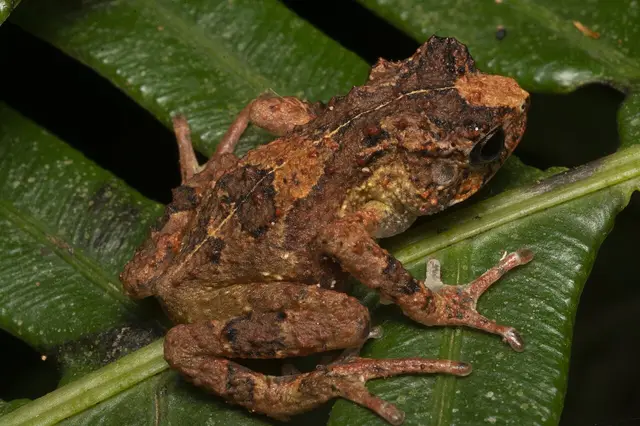
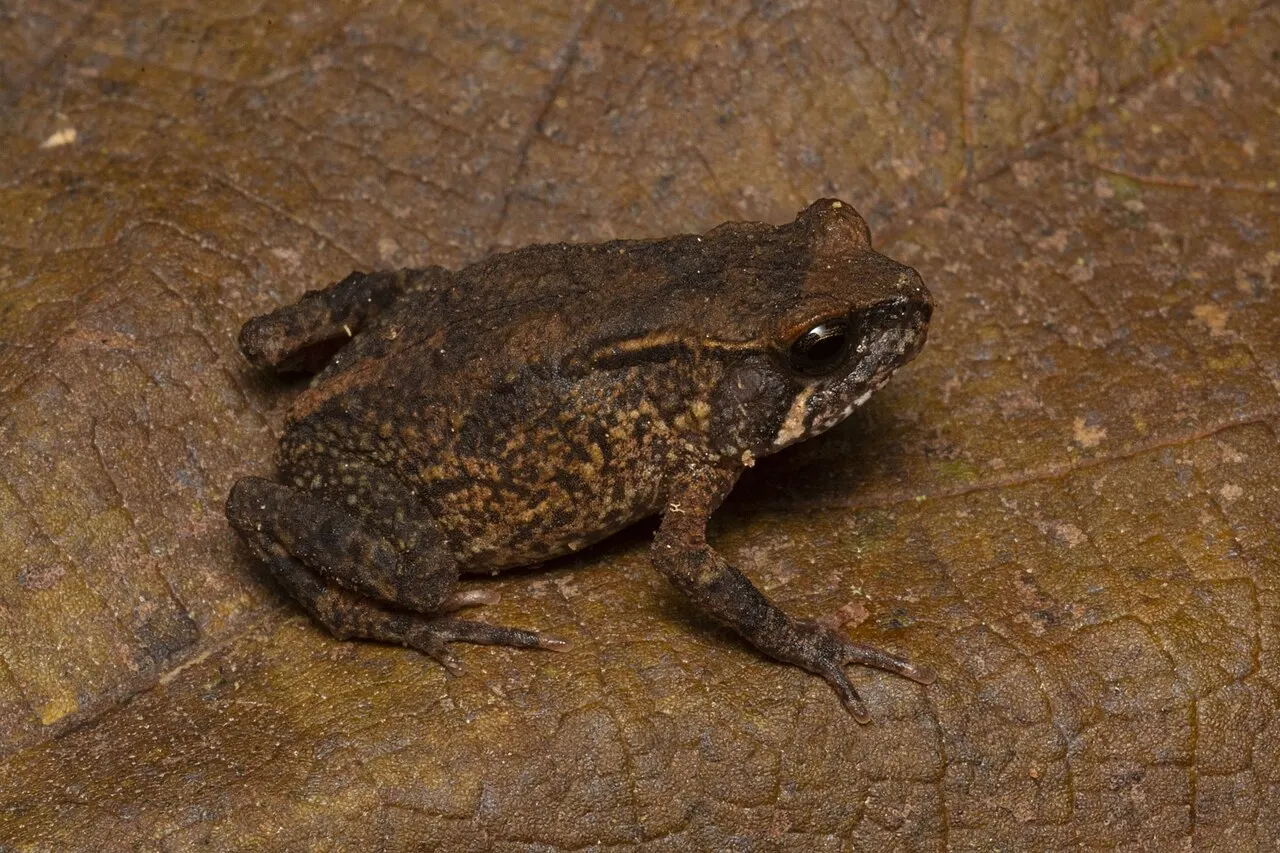
The wide-headed viviparous toad (Nectophrynoides laticeps) is a tiny forest toad known only from the Ukaguru Mountains of Tanzania. The IUCN Red List assessed it as Critically Endangered in 2025. After several surveys without a single record, it was seen again in 2023 and 2024.
How to recognise it
This is a very small toad. Adults measure about 14 to 24 mm from snout to the base of the spine, and the largest known animal is the female used to describe the species. Its colour varies and has a pinkish tinge. Telling it apart from other Nectophrynoides toads relies on a mix of body features, and its call reportedly differs from every other recorded call in the genus.
The name laticeps is Latin for wide-headed. The species was described to science in 2005 by Channing, Menegon, Salvidio and Akker, from the Mamiwa-Kisara Forest Reserve at about 1,850 m.
Where it lives
It is endemic to the Ukaguru Mountains, part of the Eastern Arc range in Morogoro Region, Kilosa District. The IUCN treats it as a single location, with an occupied area of about 36 square km inside a range of about 55 square km. It lives in moist montane forest between roughly 1,800 and 2,200 m. Satellite images from 1999 to 2003 showed only around 172 square km of evergreen forest across the whole mountain range.
The species is known from the Mamiwa-Kisara North Forest Reserve, so at least part of its range sits inside a protected area. Recent records come only from pristine forest, not from the original type locality, where the habitat has deteriorated.
Pins are Wikidata “endemic to” fields. Orange dots, when present, are GBIF occurrence tiles — survey bias included.
How it lives
It lives in leaf litter on the floor of montane forest, and animals have been found on litter and low vegetation on rainy evenings. It is reportedly active by day and by night. Like other members of its genus it is presumably live-bearing: the eggs are thought to develop inside the mother, who gives birth to young rather than laying eggs in water. Beyond that, very little has been written about its diet or breeding.
Why it is in trouble
Its whole world is one small patch of mountain forest, and that forest is shrinking. A 2022 review of 30 years of amphibian surveys in the Ukagurus found that dense forest inside the reserve boundaries had fallen by 8.4 percent over that time, and that the region is getting warmer and drier. Counts of this toad dropped from 52 animals in 1990 to eight in 2007, and further surveys then found none, which led the review to raise concern for it.
The IUCN lists encroaching agriculture, fire and logging as pressures on the forest, which is poorly protected. It also notes that a toad living near the summit cannot move uphill to escape a warming climate, and it rates the population as decreasing.
What is being done
The species is on CITES Appendix I, which covers international trade. In the IUCN's 2025 assessment there was no species recovery plan and no systematic monitoring scheme in place. Research on population size, trends, life history and habitat is listed as needed. A 2025 paper in Systematics and Biodiversity, based on sampling in 2022 to 2024, reported finding it again, along with a second Ukaguru toad, N. paulae, which had also gone unrecorded for years.
Sources
Written for this catalog in our own words from the sources below, checked against them on 12 November 2026. Population figures are estimates and carry the year they were made. Status and assessment year: IUCN. 2026. The IUCN Red List of Threatened Species. Version 2026-1. iucnredlist.org.
- IUCN Red List assessment, Nectophrynoides laticeps (2025)
- Nectophrynoides laticeps (encyclopedia entry)
- Wikispecies, Nectophrynoides laticeps
- Ukaguru Mountains (encyclopedia entry)
- Liedtke et al. 2022, thirty years of amphibian surveys in the Ukaguru Mountains (abstract, NISC)
- Lyakurwa et al. 2025, Systematics and Biodiversity (abstract repost, Nova Taxa blog)