Critically Endangered
Rana holtzi
Rana holtzi
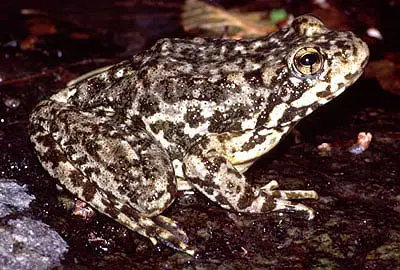
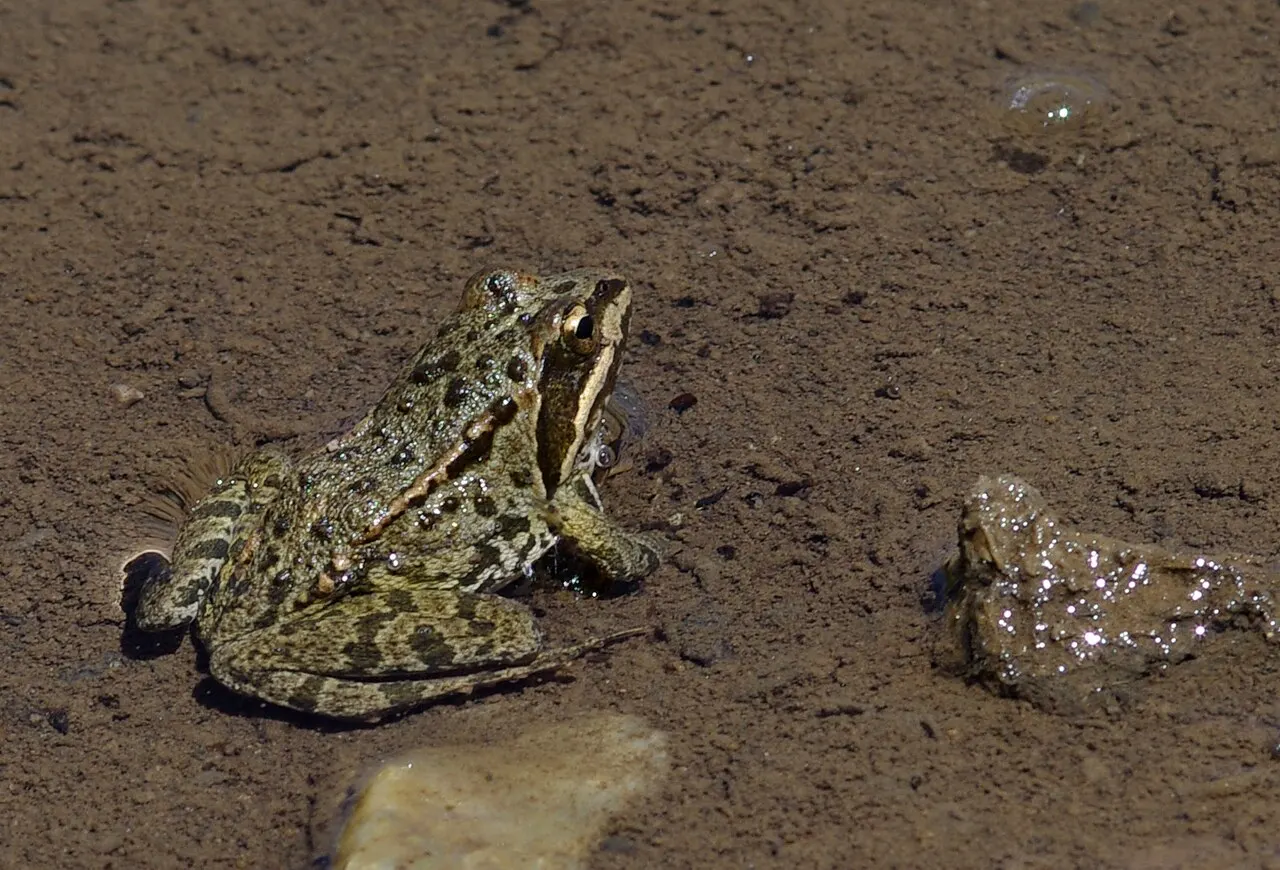
The Taurus frog (Rana holtzi) is a brown frog confined to a few high mountain lakes in the Bolkar range of southern Turkey. The IUCN Red List assessed it as Critically Endangered in 2009, with a decreasing population. Its status as a separate species is still debated.
Where it lives
This frog was first described in 1898 from a lake in the Taurus Mountains. Its known range is tiny. A 2007 study in the Herpetological Journal described it as found in only two lakes, Karagöl and Çinigöl, about 2 km apart in the Bolkar Mountains of Niğde province. A third site, Eğrigöl, was described later. The IUCN lists the frog from Türkiye only, at roughly 2,500 to 3,000 m above sea level.
Karagöl is a small mountain lake at about 2,560 m, roughly 450 by 175 m and up to 12 m deep, ringed by alpine grassland and fed by melting snow. It lies under ice and snow for five to seven months of the year. The IUCN records permanent pools and lakes, temperate shrubland and temperate grassland as its habitat.
Pins are Wikidata “endemic to” fields. Orange dots, when present, are GBIF occurrence tiles — survey bias included.
How it lives
The active season is short, running from about May to October. Frogs spend winter on land in the meadows, then migrate to the lake in May to lay eggs. Tadpoles grow through the summer and change into small land-dwelling froglets by the end of September. The whole water stage lasts about four to five months, after which young and adults move back to the meadows.
Skeletochronology, which reads growth rings in toe bones, showed that Karagöl frogs mature at 4 to 5 years old. Median age was 6 years in both sexes, and the oldest frogs reached 8 years (males) and 10.5 years (females). Measurements published in 1969 gave adult body lengths of 41 to 61 mm for males and 41 to 74.5 mm for females.
Why it is in trouble
All known frogs live in a few lakes within a very small area. A capture and recapture study by Kaya and colleagues, published in 2010, compared 2003 and 2009 data and found that the Karagöl population had declined over those six years. The Eğrigöl population was so low in number that it offered little hope for conservation.
The IUCN assessment lists road building, small-scale farming and grazing, recreation, harvesting of the frogs, and problem species among the pressures. It also records a single location and a falling population.
What is being done
The IUCN assessment lists captive breeding, control of problem species, harvest management and site protection as conservation actions. Taxonomy complicates the picture. Some authorities now treat the Taurus frog as a synonym of the long-legged wood frog (Rana macrocnemis), which is not threatened. Studies of body shape (1969) and bone structure (1970) supported it as a distinct species, but its close resemblance to related mountain frogs has kept the question open.
Sources
Written for this catalog in our own words from the sources below, checked against them on 12 November 2026. Population figures are estimates and carry the year they were made. Status and assessment year: IUCN. 2026. The IUCN Red List of Threatened Species. Version 2026-1. iucnredlist.org.