Endangered
Rhombophryne serratopalpebrosa
Rhombophryne serratopalpebrosa
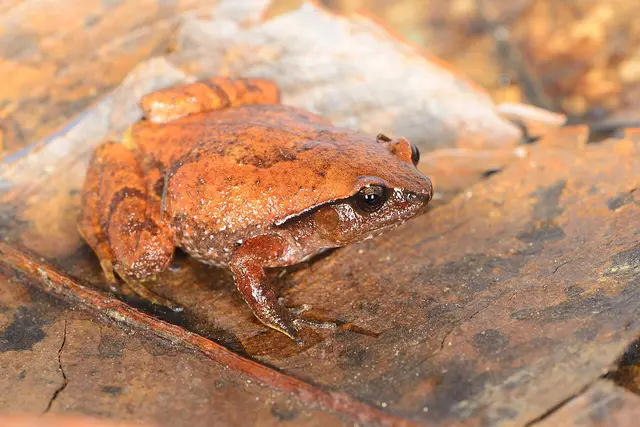
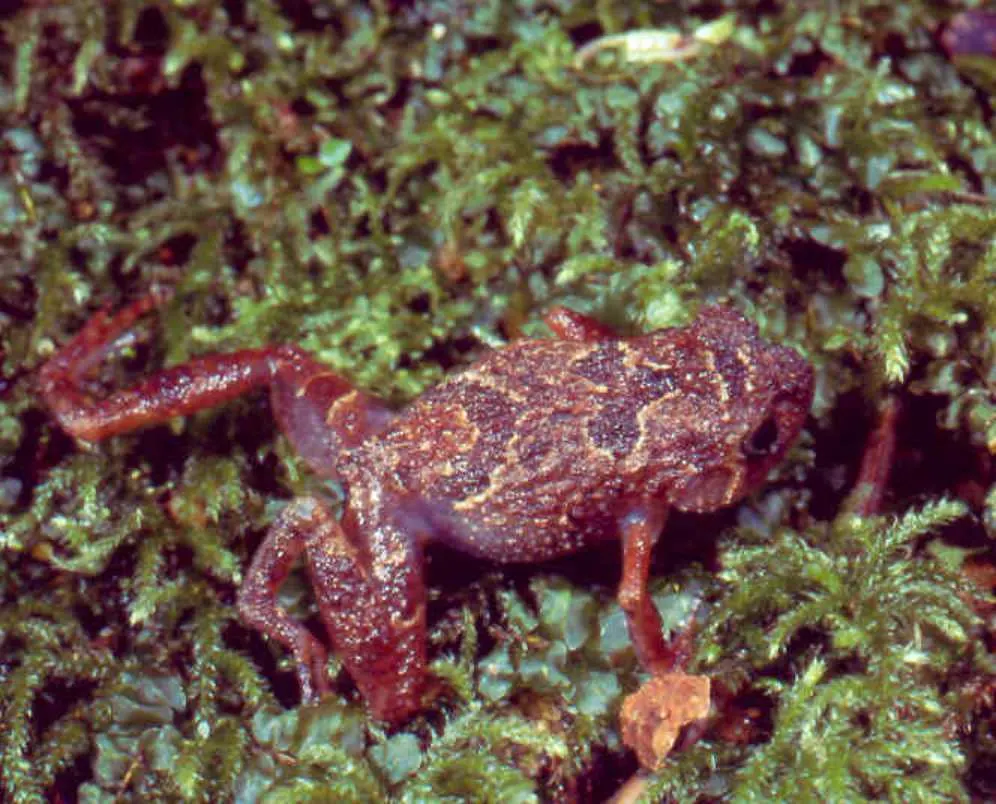
Rhombophryne serratopalpebrosa is a small digging frog from the Marojejy massif in northern Madagascar. The IUCN Red List rated it Endangered in 2016, and its population is falling. It's known for the tiny spines above its eyes, and for how little scientists have actually seen of it.
How to recognise it
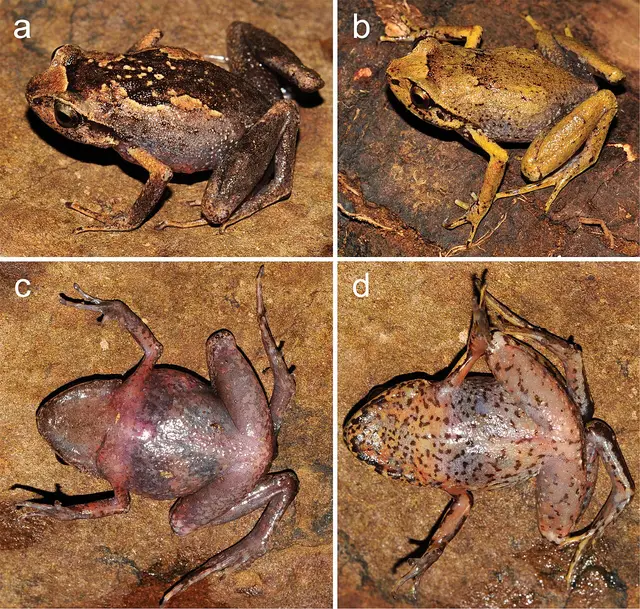
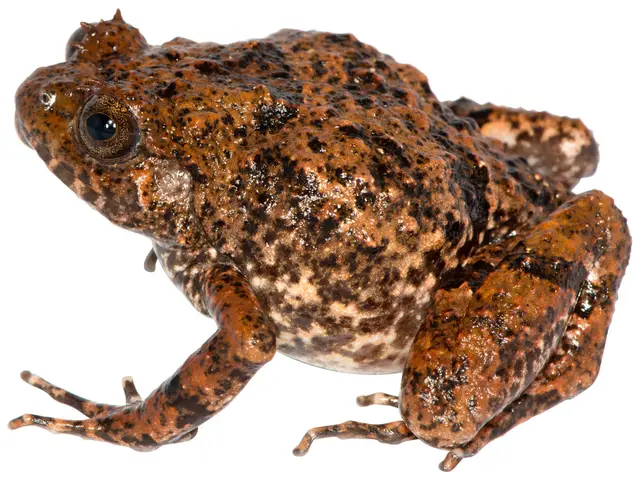
This is a small frog, with the original specimen measuring roughly 28 to 29 mm from snout to vent. Its back is grainy, its fingers and toes have no webbing, and it carries four small spines above each eye, though the rearmost one is faint.
The four eyebrow spines are what the species name refers to. A close relative from the same massif, Rhombophryne vaventy, is almost twice as long (about 53 mm), with rougher skin and a proportionally smaller eardrum.
Where it lives
The species was described in 1975 by Jean Guibé, from a single specimen collected in November 1972 on Marojejy, a mountain massif in the far north of Madagascar. Its type locality is high on the massif. The IUCN lists a known elevation range of 900 to 2,100 m, with moist lowland and montane forest as its habitat, and Madagascar as the only country.
For decades the whole picture rested on that one preserved frog. A 2014 study in Zootaxa re-described it using micro-CT scanning and called for more specimens from the high slopes of Marojejy to clarify its biology and classification. Its natural history is still poorly known.
Pins are Wikidata “endemic to” fields. Orange dots, when present, are GBIF occurrence tiles — survey bias included.
A species that may be several
DNA work has complicated the picture. Genetic evidence shows that frogs once lumped under this name form a species complex, and five related species were described from it between 2014 and 2017. Frogs reported from outside Marojejy National Park may belong to those other species, and a specimen from Ambolokopatrika once assigned to this frog may be an undescribed relative of R. vaventy. No DNA has been sequenced from frogs at the original type locality, so the true limits of the species are unsettled.
Why it is in trouble
The IUCN assessment records a decreasing population, a very small and fragmented range, and ongoing loss of habitat. The threats it lists are small-scale farming, shifting agriculture and grazing, which convert and degrade forest. It counts one to four locations.
These frogs depend on forest. In a 2015 Mongabay report, herpetologist Mark Scherz said they need the forest and are not found outside it. Marojejy National Park lost almost 1,300 hectares of tree cover between 2001 and 2012, mostly along its edges, and that report named illegal rosewood harvesting as a threat to the park.
What is being done
The species occurs in at least one protected area, Marojejy National Park, a UNESCO World Heritage Site. The IUCN lists site and area protection, resource and habitat protection and site management among its conservation actions. Field data from the upper massif are the main gap.
Sources
Written for this catalog in our own words from the sources below, checked against them on 12 November 2026. Population figures are estimates and carry the year they were made. Status and assessment year: IUCN. 2026. The IUCN Red List of Threatened Species. Version 2026-1. iucnredlist.org.