Endangered
Rhombophryne vaventy
Rhombophryne vaventy
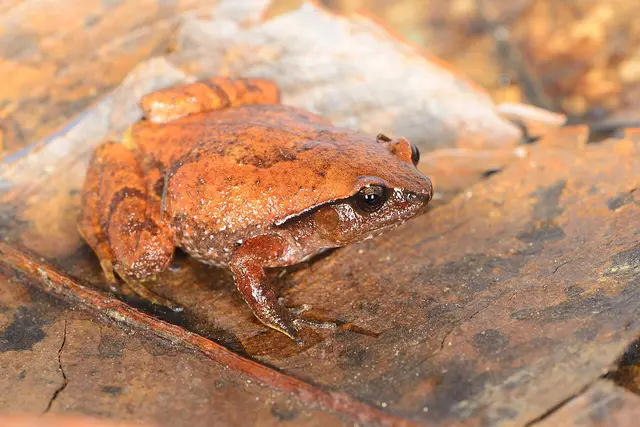
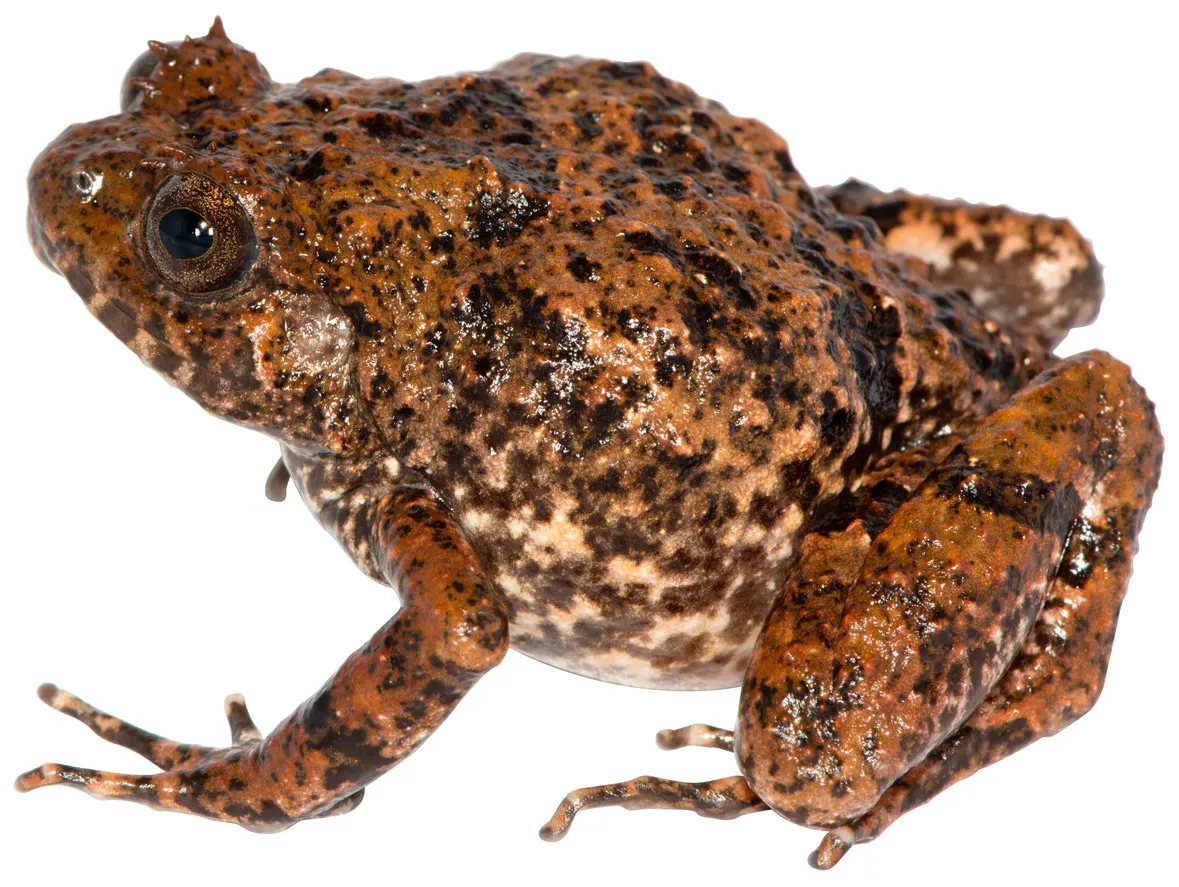
Rhombophryne vaventy is a large, rough-skinned microhylid frog known only from the Marojejy massif in northern Madagascar. The IUCN Red List classed it as Endangered in 2020. It reaches about 52 mm, has four spines of unequal size above each eye, and was described in 2014 from just two animals.
How to recognise it
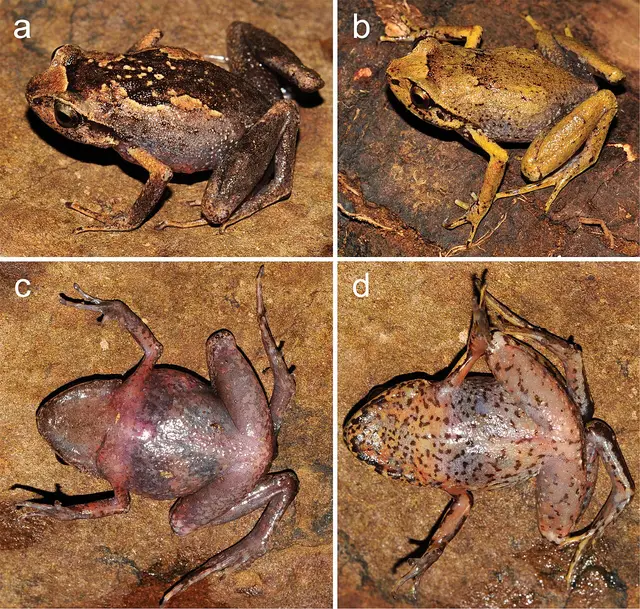
This is one of the biggest frogs in its genus. The 2014 type description gave a snout-to-vent length of 52.9 mm. The legs are very long, and there is no webbing between the fingers or toes.
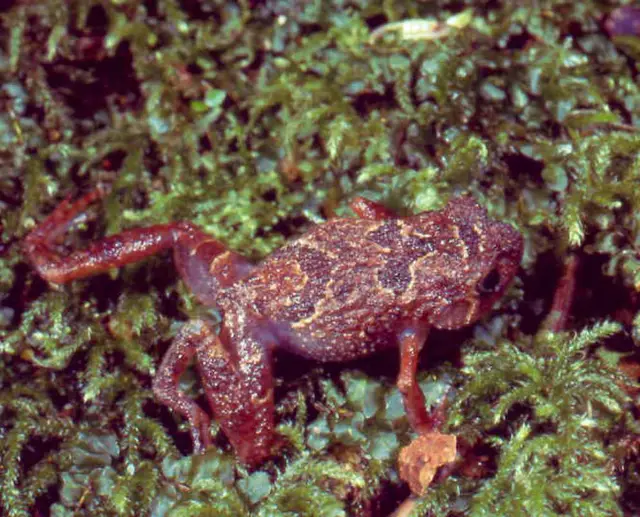
The skin is rough and tubercular, and above each eye sit four spines of unequal size. Those features separate it from its close relative Rhombophryne serratopalpebrosa, a much smaller frog (about 28 mm) with granular skin and a proportionally larger eardrum. The two were confused for a time, and the 2014 paper was written partly to sort them out.
Where it lives
The species is endemic to the Marojejy massif, a mountain block in the Sava region of north-eastern Madagascar. The Red List gives a single recorded elevation of 1,326 m and an estimated extent of occurrence of 780 square kilometres, with one to four locations. Its habitat is moist montane forest.
Marojejy National Park covers about 55,500 hectares and became a national park in 1998. The Red List records that the frog occurs in at least one protected area. The park's moist montane forest band runs from roughly 800 to 1,400 m, which includes the frog's recorded elevation.
Pins are Wikidata “endemic to” fields. Orange dots, when present, are GBIF occurrence tiles — survey bias included.
How it lives
The frog is terrestrial, and possibly semi-burrowing. It is a generalist predator, and its diet includes fairly large pill millipedes of the genus Zoosphaerium.
Its breeding habits and call have not been described. The original description rested on just two animals caught at high altitude, and the describers called for more material from the massif's upper slopes. A specimen from Ambolokopatrika, earlier filed under R. serratopalpebrosa, may belong to another undescribed species close to R. vaventy.
Why it is in trouble
The Red List lists the frog under criterion B1ab(iii): a small range, few locations and a continuing decline in habitat. Its population trend is recorded as decreasing, and no population size has been estimated.
The threats named are small-holder farming and the unintended effects of subsistence-scale and large-scale harvesting of forest products. Marojejy as a whole has seen illegal rosewood logging, and about a third of the rosewood logged in the Sava region in 2009 reportedly came from the park. Slash-and-burn farming and wood collection also continue to eat into the park's edges. The 2014 describers had proposed Vulnerable; the later Red List assessment placed the frog in Endangered.
What is being done
The main protection is the site itself. The Red List lists site and area protection, resource and habitat protection and site management as the conservation actions needed. Marojejy has been protected since it became a strict nature reserve in 1952, and it is part of a World Heritage site listed in 2007, although that site was placed on the in-danger list in 2010 because of illegal logging.
The Red List records no species-specific measures beyond occurrence in a protected area, and no captive population is known. The describers' call for more specimens from the upper slopes is the clearest research need.
Sources
Written for this catalog in our own words from the sources below, checked against them on 12 November 2026. Population figures are estimates and carry the year they were made. Status and assessment year: IUCN. 2026. The IUCN Red List of Threatened Species. Version 2026-1. iucnredlist.org.