Endangered
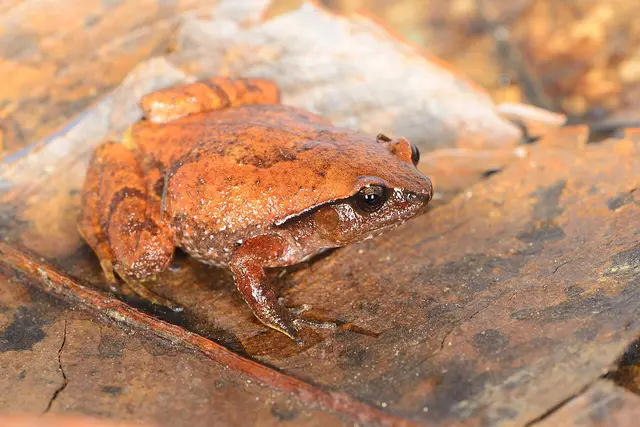
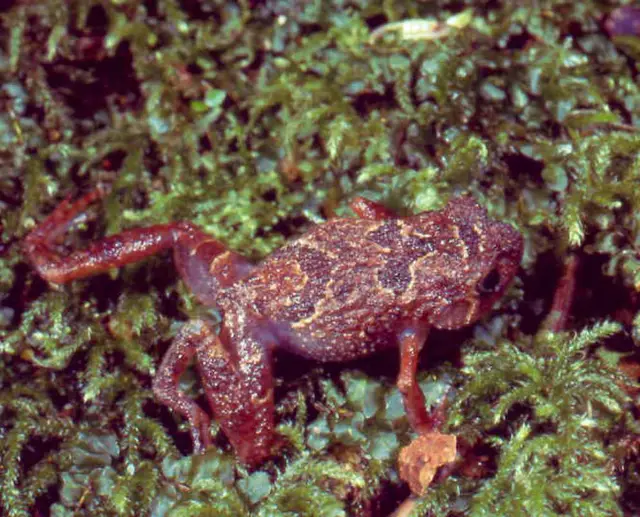
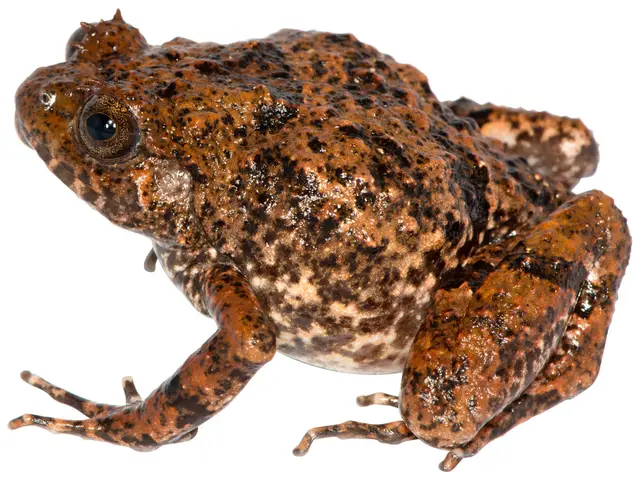
Rhombophryne longicrus
Rhombophryne longicrus
Rhombophryne longicrus is a small, unusually long-legged diamond frog from the Sorata massif in northern Madagascar. Only two specimens have been reported, both from a single area of high forest outside any protected area. The IUCN lists it as Endangered (2020 assessment), mainly because of forest loss.
How to recognise it
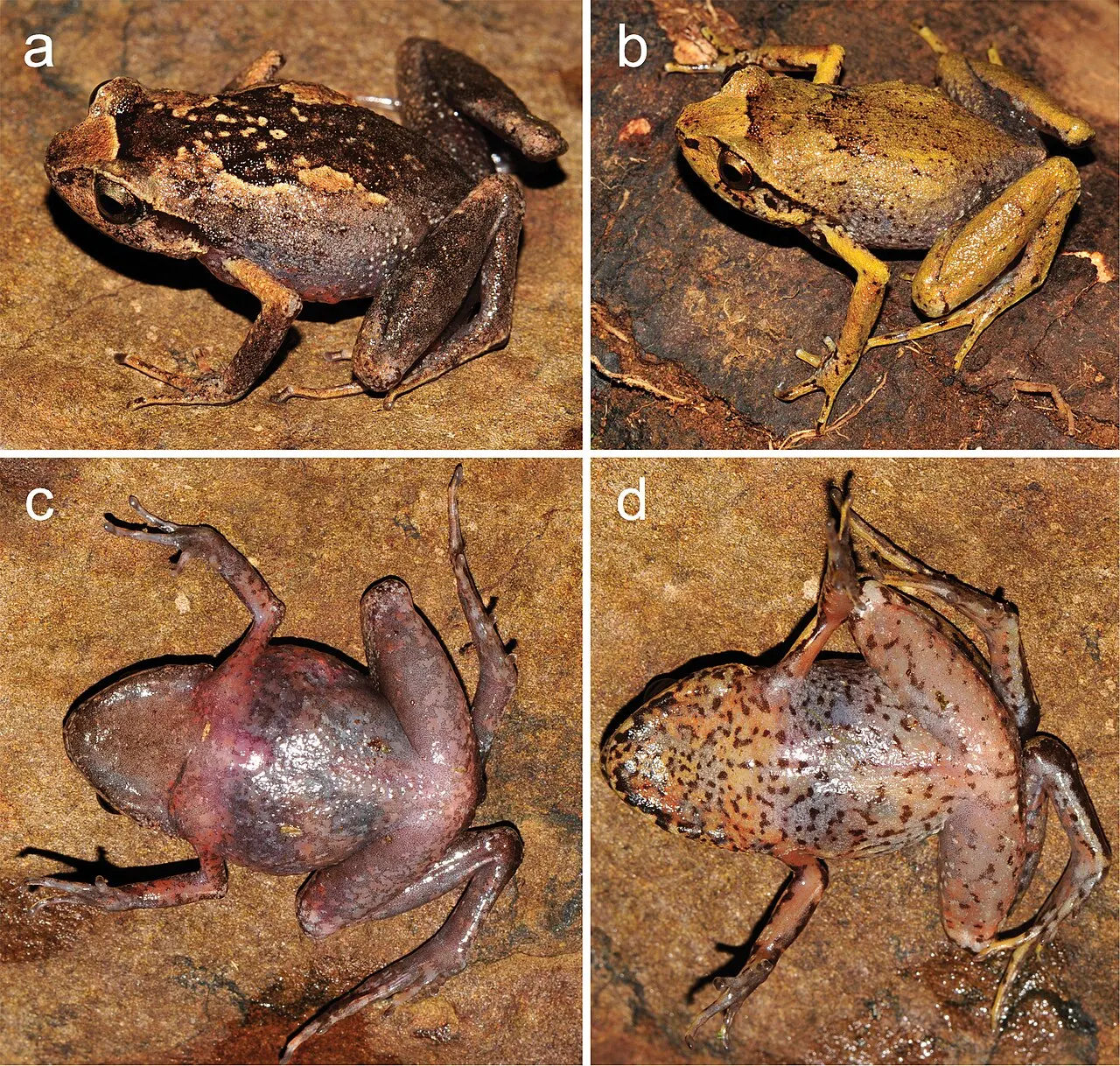
The two known frogs measure 23.8 and 27.9 mm from snout to vent. Most relatives in the genus are burrowers with short limbs, round bodies and enlarged digging tubercles on the feet. This frog breaks the pattern. Its hind legs are very long, about 183 to 185 percent of its body length, which gives the name (Latin for long and leg).
Other features from its description include a head wider than long, a small eardrum about half the width of the eye, no spines above the eyes, smooth skin and a dark patch around the nostril and eardrum. The female was bronze to light brown with a dark mark down the back and a black bar between the eyes. The male was yellow-brown with dark flecks. Both had a pinkish or orange belly.
Where it lives
The species was described in 2015 by Mark Scherz and colleagues in the journal Zoosystematics and Evolution. It is known only from the Sorata massif, a little-studied highland in the north of the island. Both frogs were collected on 28 November 2012 at about 1,580 m in montane primary forest. The forest block there covers roughly 250 sq km and has no formal protection.
The IUCN counts a single location and an extent of occurrence of about 672 sq km. The describers suspect the frog is a microendemic, found nowhere else, and call for surveys in and around Sorata to learn its full range.
Pins are Wikidata “endemic to” fields. Orange dots, when present, are GBIF occurrence tiles — survey bias included.
How it lives
Very little is known. Both frogs were caught in the early evening, on the ground beside a path through primary forest. The female carried more than twenty immature egg cells, the largest 1.3 to 1.6 mm across. The stomachs of both held remains of several small insects, mostly beetles, plus a spider and some moss, which suggests it eats whatever small arthropods it finds. The call is unknown.
Its long, slim legs and lack of digging tubercles led the describers to propose that it leaps rather than burrows, though nobody has watched it move in the wild. They expect, as for other members of its subfamily, that it lays eggs away from running water and has tadpoles that feed on yolk.
Why it is in trouble
The IUCN records a decreasing population and a continuing loss of habitat. The threats named are small-holder farming and grazing, and the unintended effects of small-scale harvesting. The describers also reported ongoing deforestation and forest degradation around Sorata.
They noted that clearing hits forest edges hardest, so a frog living high up may be among the last to be affected, but sustained loss pushes the threat to ever higher altitudes. They thought climate change could matter too, though far less than deforestation.
What is being done
The Red List records that the species occurs in no protected area. The actions it lists as needed are protection of the site and of its habitat. No monitoring or captive programme is listed.
Sources
Written for this catalog in our own words from the sources below, checked against them on 12 November 2026. Population figures are estimates and carry the year they were made. Status and assessment year: IUCN. 2026. The IUCN Red List of Threatened Species. Version 2026-1. iucnredlist.org.