Critically Endangered
Craugastor escoces
Craugastor escoces
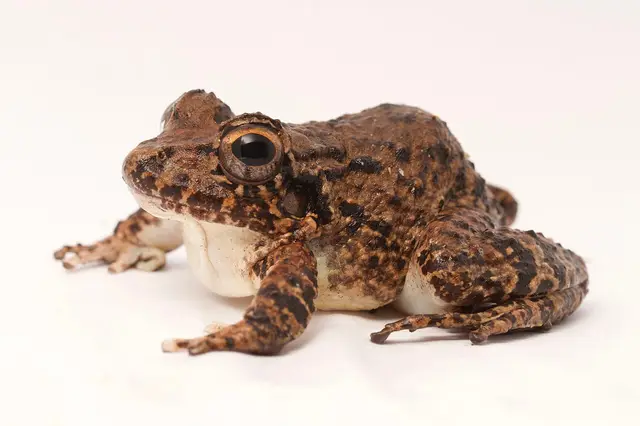
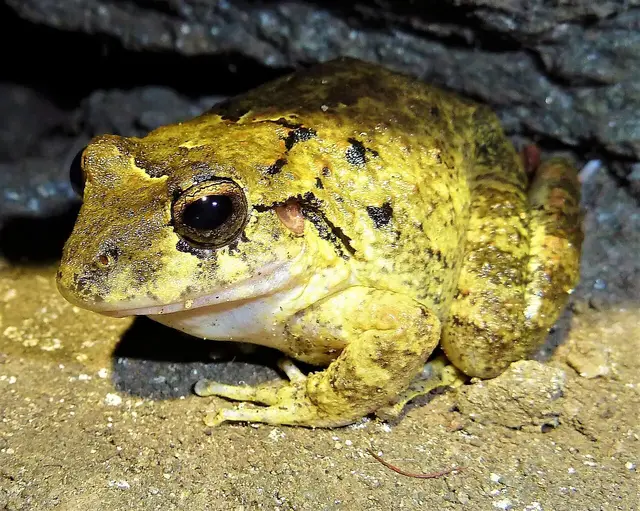
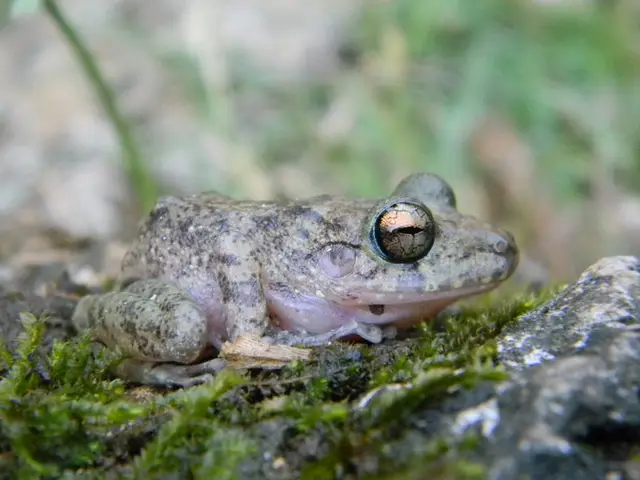
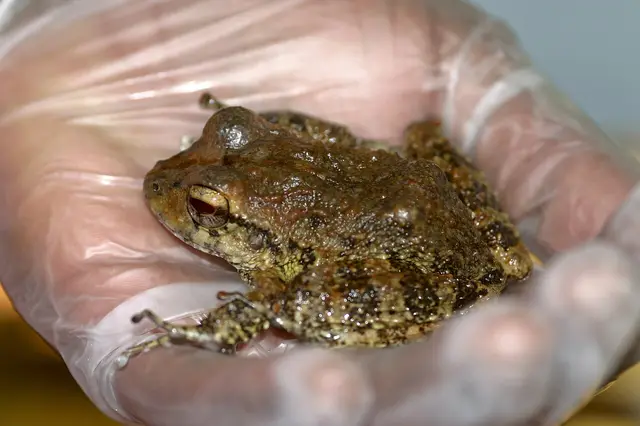
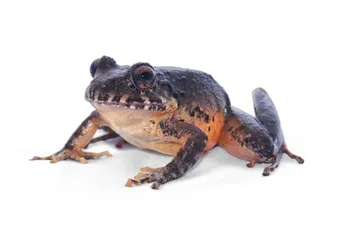
Craugastor escoces is a brown, red-bellied robber frog from the mountain forests of Costa Rica. The IUCN declared it extinct in 2004 after it vanished in 1986, then a single female turned up in 2016. Its 2020 Red List status is Critically Endangered, and almost nothing is known about its life.
How to recognise it
It's a brown frog with a red belly, a trait reported to be unique within its group. The female found in 2016 was reported at 6.2 cm in a Costa Rican account, while a US news report gave 3 and a quarter inches (about 8.3 cm), so published sizes differ.
The species belongs to the family Craugastoridae. Jay Savage described it in 1975 under the name Eleutherodactylus escoces. One news report called it the Heredia robber frog.
Where it lives
The species is endemic to Costa Rica. It is recorded from premontane and lower montane rainforest between 1,100 and 2,100 m, and the IUCN also lists streams among its habitats. Its historical range is described as the slopes of the Barva and Poás volcanoes.
The only recent record comes from the edge of Juan Castro Blanco National Park in Alajuela province, at about 1,820 m.
Pins are Wikidata “endemic to” fields. Orange dots, when present, are GBIF occurrence tiles — survey bias included.
The rediscovery
Randall Jiménez and Gilbert Alvarado, researchers at the University of Costa Rica, found a single adult female hiding in a small cave beside a stream in September 2016. Reports give the date as 18 or 19 September. Their note was published in Amphibia-Reptilia in 2017 (volume 38, pages 257 to 259).
The species had gone unrecorded since 1986 despite directed searches, which is why the IUCN listed it as extinct in 2004. When the find was announced, the university said an amphibian breeding centre was under construction at its Alfredo Volio Mata experimental station in Ochomogo.
Why it is in trouble
The 2020 assessment names the amphibian chytrid fungus (Batrachochytrium dendrobatidis) as the major threat, scoring it high impact with very rapid declines across the whole population.
The assessment lists the population as decreasing and gives a figure of 249 individuals, all treated as one subpopulation. That number rests on very sparse data. The species is recorded in at least one protected area, and no captive population existed at the time of assessment.
The assessment lists captive breeding as a conservation action and names population trends, threats and population size and distribution as research needs.
Sources
Written for this catalog in our own words from the sources below, checked against them on 12 November 2026. Population figures are estimates and carry the year they were made. Status and assessment year: IUCN. 2026. The IUCN Red List of Threatened Species. Version 2026-1. iucnredlist.org.