Critically Endangered
Craugastor punctariolus
Craugastor punctariolus
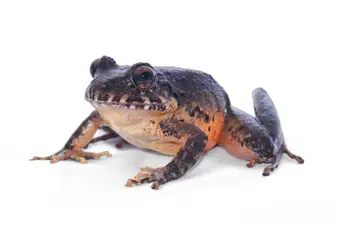
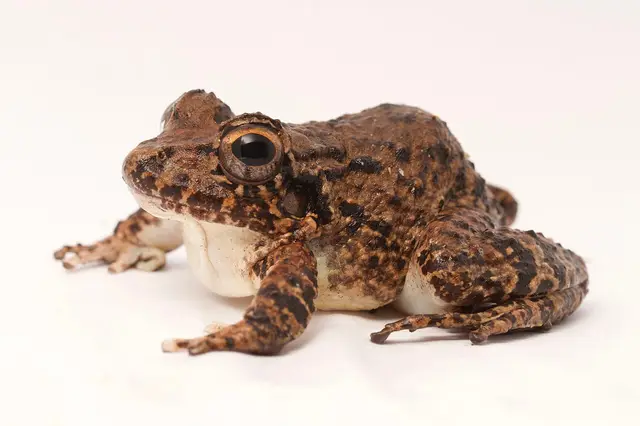
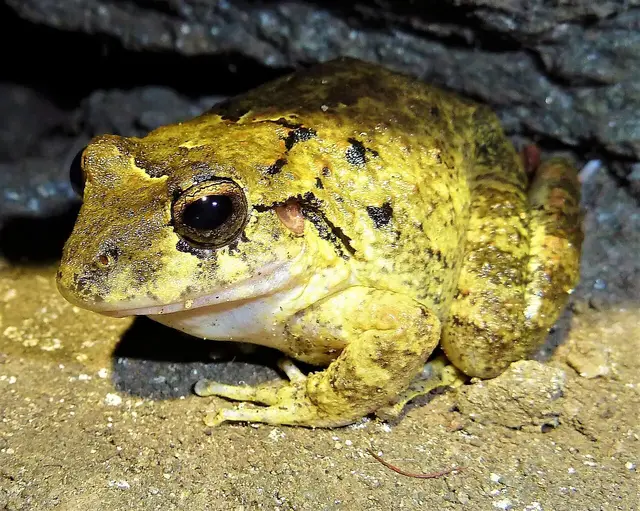
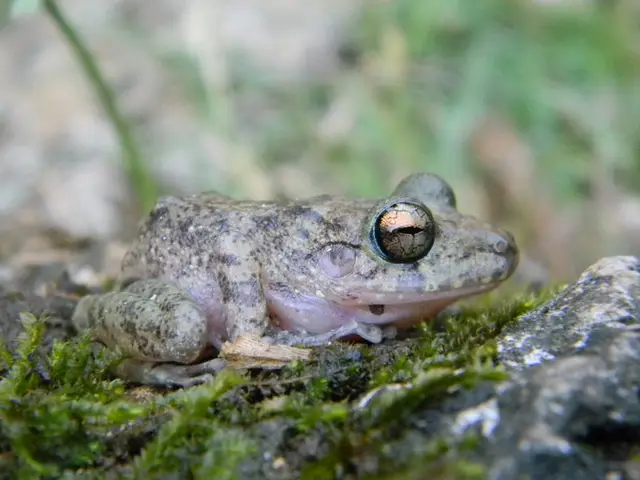
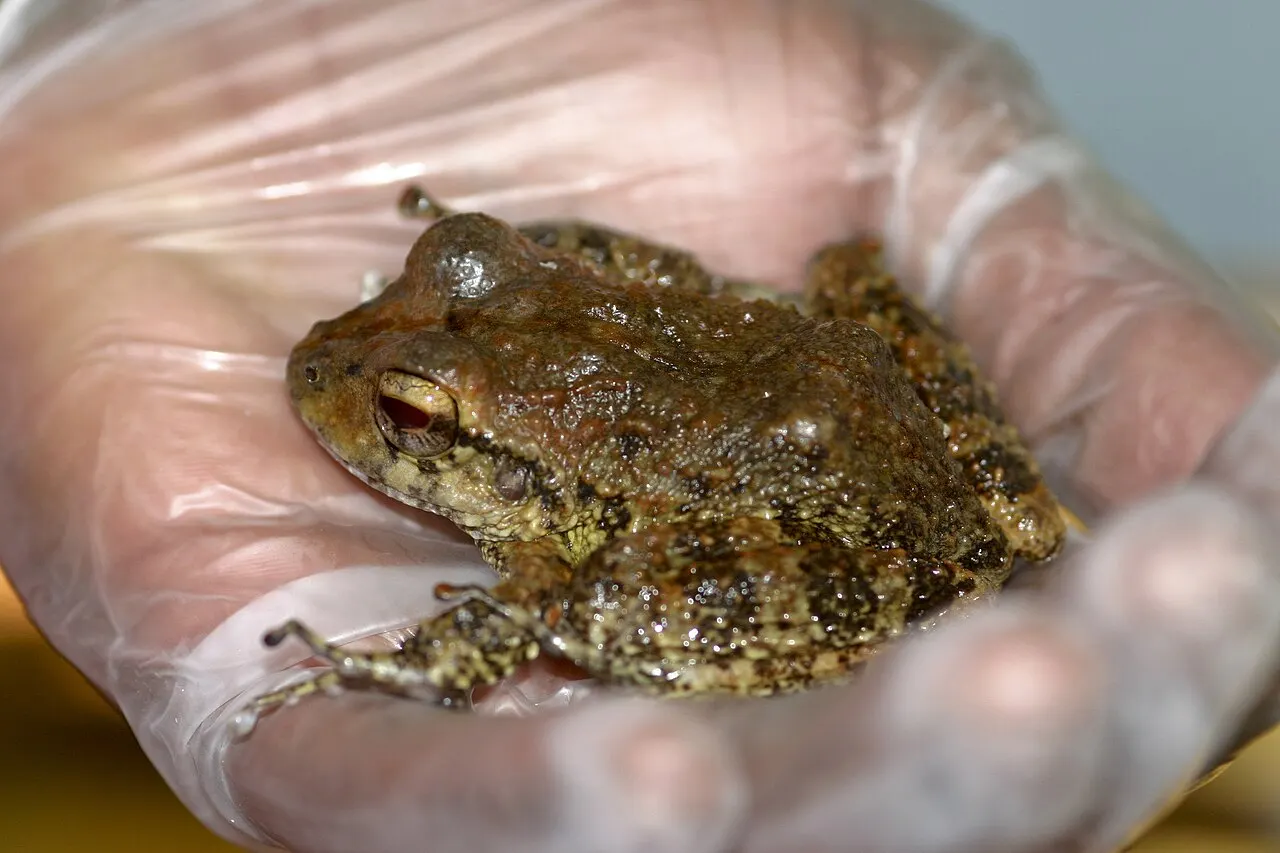
Bob's robber frog (Craugastor punctariolus) is a stream-dwelling frog found only in Panama. The IUCN Red List (2020) rates it Critically Endangered and possibly extinct. A chytrid fungus outbreak wiped out three monitored populations in about two months in 2004, and the last database record dates to 2010.
Where it lives
This frog belongs to the robber frog family, Craugastoridae. Wilhelm Peters described it in 1863 under the name Hyla punctariola. It is found only in Panama.
The IUCN lists two habitats: subtropical or tropical moist montane forest and permanent rivers and streams. Its recorded elevation runs from about 560 to 1,000 metres, and the assessment treats it as non-migratory. The best-studied population lived in the mountain streams of Omar Torrijos national park in central Panama.
Pins are Wikidata “endemic to” fields. Orange dots, when present, are GBIF occurrence tiles — survey bias included.
A population that vanished
Most of what is known about the species comes from one study site in central Panama. From 1999 to 2005, Mason Ryan, Karen Lips and Michael Eichholz ran a mark-and-recapture study of three subpopulations there. Before disease arrived, the groups were large, with counts of 19 to 68 frogs along a 200 metre stretch of stream. They had a stable mix of ages and sizes, and the frogs survived well from year to year.
All age and size classes lived together on clumps of boulders along the streams. Adults tended to return to the same spots and were probably territorial.
Chytrid fungus
In late September 2004, the team found four dead frogs infected with the chytrid fungus (Batrachochytrium dendrobatidis), the first infected animals detected at the site. Within about two months, all three subpopulations had disappeared.
Their 2008 paper in Biological Conservation suggests the speed of the collapse owed something to the fact that frogs of every age used microhabitats where the fungus thrives. A news summary of the work says the frogs are unlikely to return while the fungus stays in the streams.
How many are left
Nobody knows if any survive. The 2020 IUCN assessment, based on criterion D (a very small population), gives a population size of 0 to 49 mature individuals and a decreasing trend, and it marks the species as possibly extinct in Panama. A database of recently extinct species gives 2010 as the last record and lists the frog as missing.
The IUCN scores the fungus as the main threat, affecting the whole population with very rapid declines. It also lists small-holder farming and grazing as low-impact pressures. Dams are recorded as a past impact that is unlikely to return.
What is being done
The assessment records that the species occurs in at least one protected area and that it has been the subject of ex situ (captive) conservation. Research is listed as an ongoing need, specifically work on population size, distribution and trends.
Sources
Written for this catalog in our own words from the sources below, checked against them on 12 November 2026. Population figures are estimates and carry the year they were made. Status and assessment year: IUCN. 2026. The IUCN Red List of Threatened Species. Version 2026-1. iucnredlist.org.