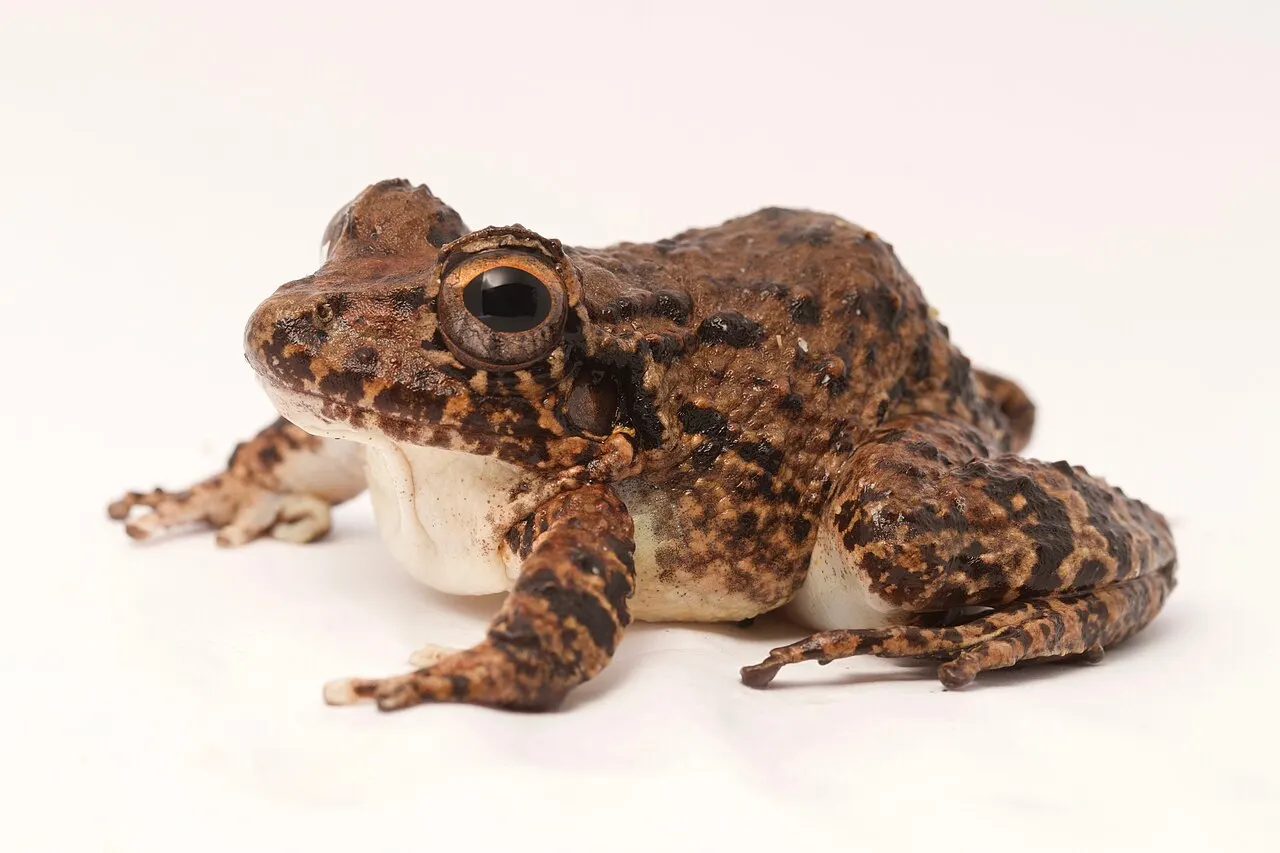
Critically Endangered
Vanishing Rainfrog
Craugastor evanesco
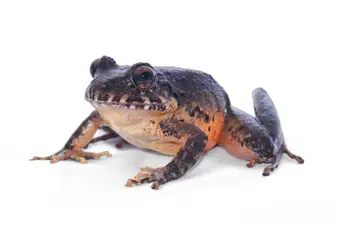
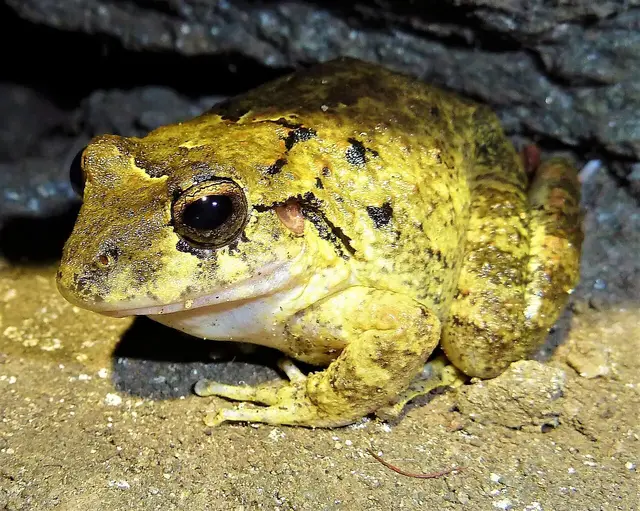
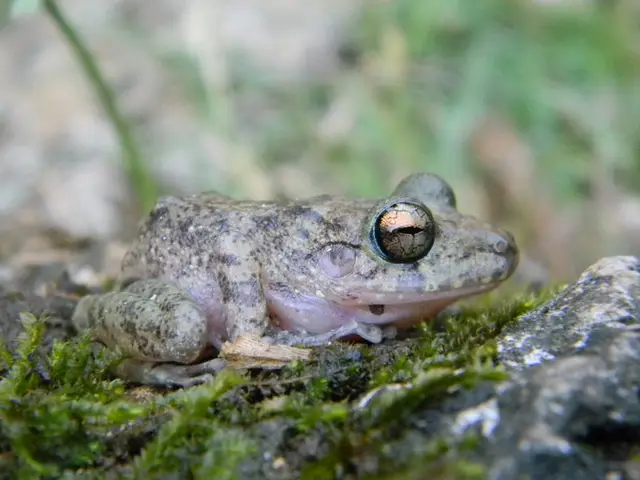
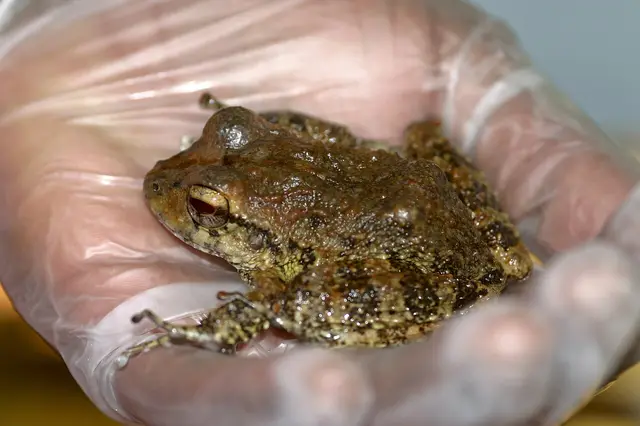
The vanishing rainfrog (Craugastor evanesco) is a small stream-side frog from the Caribbean slope of Panama. It was described in 2010, by which time it had already vanished from the park where it was found. The IUCN Red List rated it Critically Endangered in 2019, and no self-sustaining wild population is known.
How to recognise it
It belongs to the Craugastor rugulosus series of robber frogs. Within that group it is told apart by a combination of features: adult males lack vocal slits and nuptial pads, there is a large flap-like fold on the tarsus (the ankle region of the hind leg), and the toes are strongly webbed. Nobody knows whether it calls.
Ryan and colleagues described the species in 2010. It was discovered in 2004, shortly before it disappeared from El Cope in Cocle Province.
Where it lives
The frog was known from the Caribbean (Atlantic) slope of Panama, from El Cope in Cocle Province east to Rio Indio Arriba, along the banks of clear, flowing streams. The Red List also records lowland moist forest and pools, at elevations from about 80 to 709 m. Its extent of occurrence is about 6,072 square kilometres, and the assessment treats the remaining range as a single location. It occurs in General de Division Omar Torrijos Herrera National Park at El Cope.
Reports differ on whether any remain in the wild. The original description found no remaining populations in its known range. The Red List says the frog still persisted in parts of the Donoso region as of 2015, an amphibian rescue project says single frogs are still found occasionally at mid-elevation Caribbean sites in the Donoso area, and the Smithsonian says individual frogs turn up now and then, but no viable, self-sustaining population has been found.
Pins are Wikidata “endemic to” fields. Orange dots, when present, are GBIF occurrence tiles — survey bias included.
How it lives
Like other robber frogs it lays eggs that develop directly, with no free-swimming tadpole stage. The Red List describes it as not migratory and gives a generation length of about five years.
It was uncommon even before disease arrived. Almost nothing else is recorded about its diet, calls or breeding in the wild.
Why it is in trouble
The disease chytridiomycosis, caused by a fungus, is the main suspect. At El Cope the frog disappeared between 2004 and 2010, coinciding with a chytrid outbreak in 2004, and three close relatives in Panama have also disappeared. The Red List infers a decline of at least 90 percent from about 2007, based on direct observation, habitat loss and the effects of disease. It also lists mining and quarrying and small-holder farming as threats, with habitat loss and degradation still continuing.
What is being done
The Panama Amphibian Rescue and Conservation Project, a partnership of the Houston Zoo, Cheyenne Mountain Zoo, Zoo New England and the Smithsonian's conservation and tropical research institutes, built a captive group of 20 males and 20 females collected from a lowland site in central Panama. One pair produced a single offspring, the first captive breeding, which the Smithsonian reported in April 2017.
The project has since said that reproduction was occasional and never reliable, and that its captive program will no longer include this species. The Red List lists captive breeding, reintroduction, species recovery and a genome resource bank among its actions, and in 2019 recorded no systematic monitoring scheme and no recovery plan. It says reintroduction to suitable habitat in the national park will be needed.
Sources
Written for this catalog in our own words from the sources below, checked against them on 12 November 2026. Population figures are estimates and carry the year they were made. Status and assessment year: IUCN. 2026. The IUCN Red List of Threatened Species. Version 2026-1. iucnredlist.org.