Endangered
Raorchestes jayarami
Raorchestes jayarami
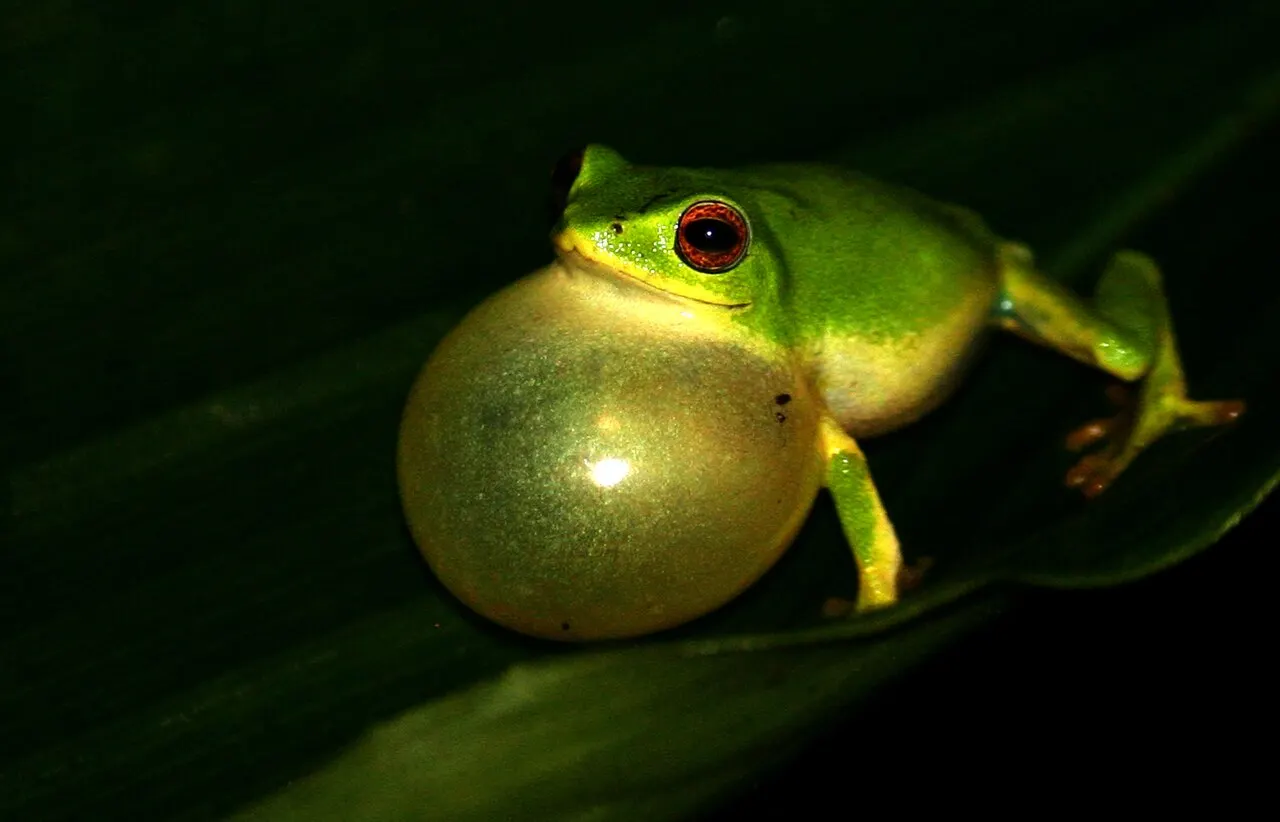
Jayaram's bush frog (Raorchestes jayarami) is a green tree frog of the Western Ghats in southern India, known from the Valparai area of Tamil Nadu and from Kerala. The IUCN Red List lists it as Endangered (assessed 2023), with a declining population split into fragments.
How to recognise it
This is a green frog, though individuals vary. Some are plain green, others carry darker green splotches and dots, and a few look yellowish. A white edge along the side and thigh, sometimes with bluish spots, helps separate it from other green bush frogs of the Ghats.
For a bush frog it is fairly large. It is a close relative of Raorchestes glandulosus. The species was first described in 2009 by Biju and Bossuyt under the old genus name Philautus, and it has been moved between genera since.
Where it lives
The type locality is Valparai, on the plateau of the Anamalai hills in Tamil Nadu. The IUCN assessment lists Tamil Nadu and Kerala, and records the frog between 600 and 1,800 metres above sea level in moist lowland and moist montane forest.
That often means small patches of forest and shola (stunted montane forest) tucked between human settlements, and a few sightings have reportedly come from tea plantations. The IUCN records its population as severely fragmented.
Pins are Wikidata “endemic to” fields. Orange dots, when present, are GBIF occurrence tiles — survey bias included.
How it lives
Raorchestes bush frogs develop directly: the eggs hatch into tiny froglets, with no free-swimming tadpole stage. That is reported for the genus as a whole, and it suggests this species does not depend on ponds or streams for breeding. Little else about its daily life or breeding season has been published.
Why it is in trouble
The Red List assessment points to plantations as the main pressure, both large agro-industrial estates and small-holder plantations, along with tourism and recreation areas and more frequent fires. Direct use of the frog is also recorded, though as a minor pressure. Use in traditional medicine for children's ailments has reportedly occurred.
Annual pilgrimage crowds reportedly disturb the frog and have burned grassland in parts of its range. Because it lives high in the hills, warming is a further worry, as populations cannot easily shift to cooler ground. The chytrid fungus has turned up on related Raorchestes frogs, so it may be a risk here too, though infection in this species has not been reported.
Its status has worsened on paper. A 2013 listing treated it as Near Threatened, and the 2023 assessment places it in the Endangered category on criteria B1ab(iii,v), which cover a small, fragmented range and continuing decline.
What is being done
The frog occurs in at least one protected area, and the Red List records site protection and habitat protection as the actions in place or needed. Most of its habitat, though, appears to lie among estates and villages, so its future depends on how forest fragments on private land are treated.
Sources
Written for this catalog in our own words from the sources below, checked against them on 12 November 2026. Population figures are estimates and carry the year they were made. Status and assessment year: IUCN. 2026. The IUCN Red List of Threatened Species. Version 2026-1. iucnredlist.org.