Endangered
Betsileo bright-eyed frog
Betsileo bright-eyed frog
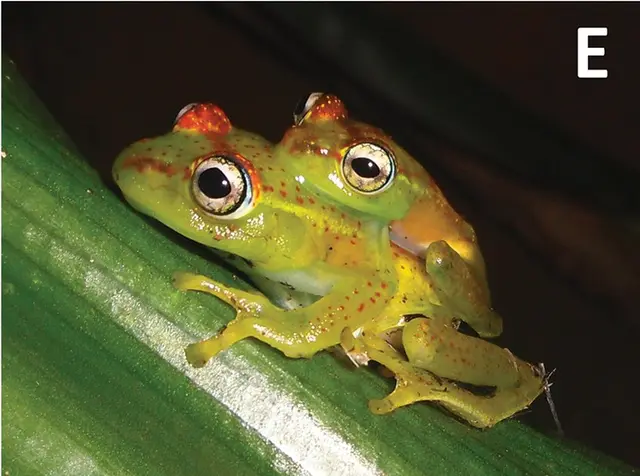
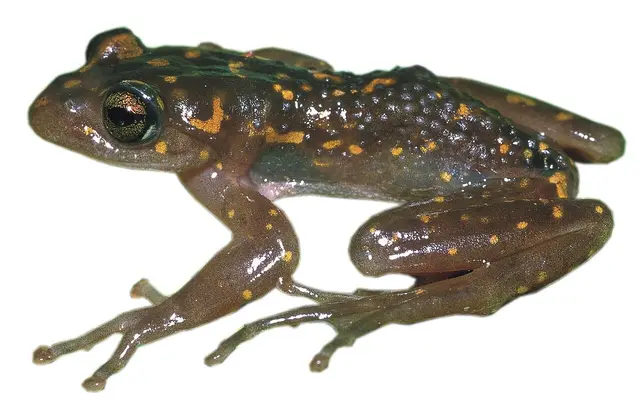
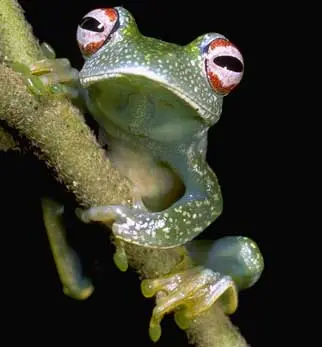
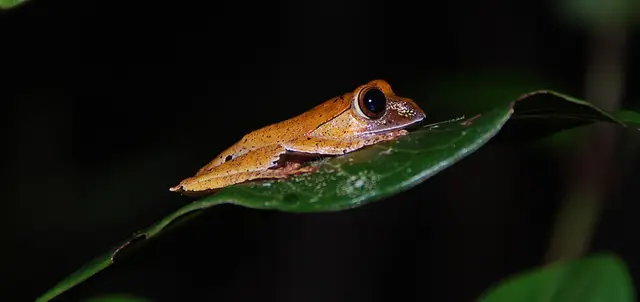
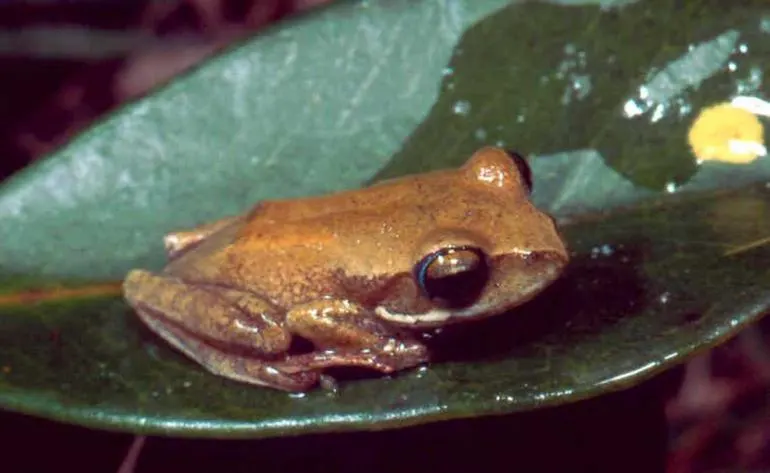
The Betsileo bright-eyed frog, Betsileo bright-eyed frog, is a tree frog of the mantella family (Mantellidae) found only in Madagascar. The IUCN Red List has listed it as Endangered since 2015. Records span 900 to 1,500 metres, and the forest and wetland habitat it relies on is being cleared.
A frog named by Boulenger
George Albert Boulenger described the species in 1882. It belongs to Boophis, a large Madagascan genus in the family Mantellidae, and the Red List gives its common name as the Betsileo bright-eyed frog.
The name has a tangled history. A related frog, Boophis andrangoloaka, had been folded into B. rhodoscelis and was separated again in a 2010 revision in Zootaxa by Frank Glaw and colleagues. The frogs from Ambohitantely, in the northern highlands, are assigned to B. andrangoloaka, not to B. rhodoscelis. Older accounts and range maps written before 2010 may therefore mix the two.
Where it lives
Betsileo bright-eyed frog is endemic to Madagascar. The 2015 Red List assessment gives an extent of occurrence of about 1,637 square kilometres, elevations between 900 and 1,500 metres, and between one and four locations. It occurs in at least one protected area, and Ranomafana National Park is one place it is recorded.
Its habitats include lowland and montane moist forest, high-altitude grassland, and inland wetlands and rivers. It is not a migrant. Tadpoles collected at Vohiparara, near Ranomafana, were matched by DNA to an adult from the park. A described tadpole was about 40 millimetres long including its tail. In preserved specimens it was brownish above, with a whitish tail marked by brown spots.
Pins are Wikidata “endemic to” fields. Orange dots, when present, are GBIF occurrence tiles — survey bias included.
Why it is in trouble
The 2015 assessment placed the frog in the Endangered category under criterion B1ab(iii): a small range, very few locations and an ongoing decline in habitat quality. The population is recorded as decreasing, though no population size has been estimated.
The threats listed are all land use. They include small-holder farming and grazing, shifting agriculture, housing and urban growth, and mining and quarrying. Each one converts or degrades the forest and streams the frog depends on.
What is being done
The conservation actions recorded are resource and habitat protection and site or area protection. The species occurs in at least one protected area, but the assessment records no species-specific recovery programme.
Sources
Written for this catalog in our own words from the sources below, checked against them on 12 November 2026. Population figures are estimates and carry the year they were made. Status and assessment year: IUCN. 2026. The IUCN Red List of Threatened Species. Version 2026-1. iucnredlist.org.