Endangered
Boophis jaegeri
Boophis jaegeri
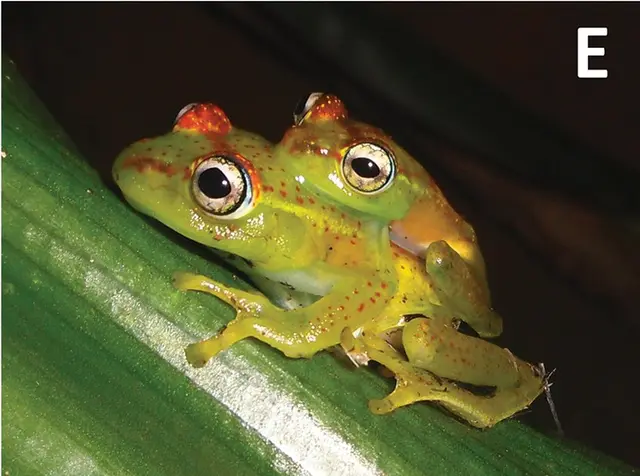
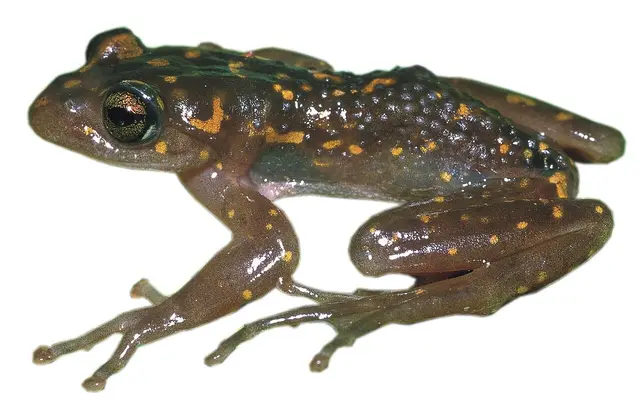
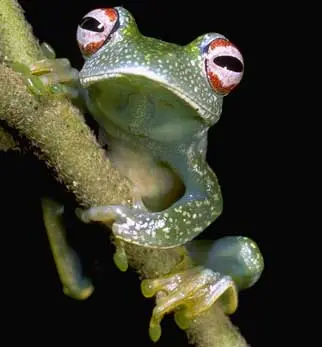
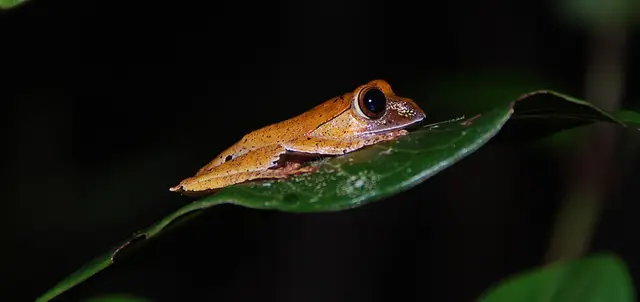
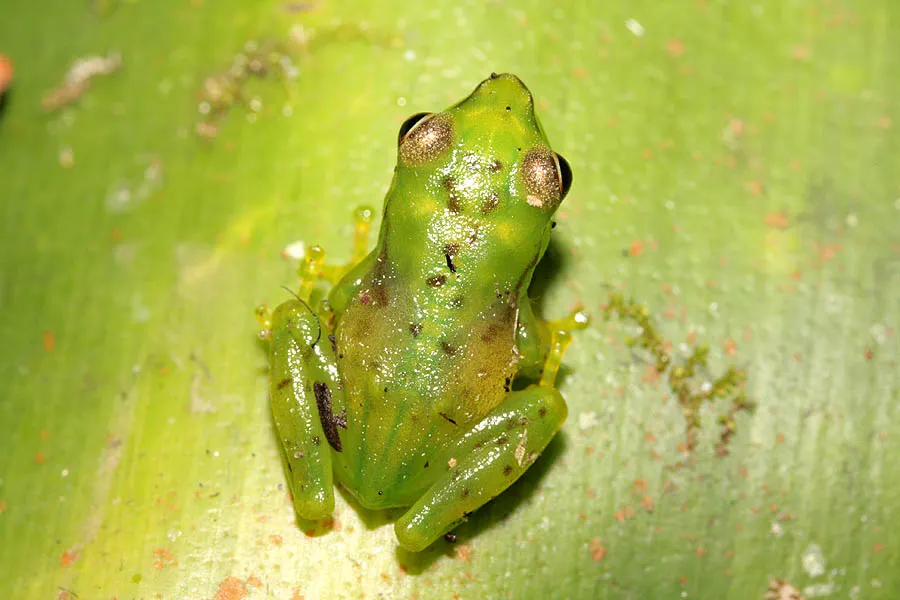
The green skeleton frog, Boophis jaegeri, is a treefrog endemic to Madagascar. It lives at low elevations in moist forest and along streams, is known from only 2 locations, and is listed as Endangered (2016 assessment) with a decreasing, severely fragmented population.
What it is
Boophis jaegeri is a Madagascan treefrog known in English as the green skeleton frog. Frank Glaw and Miguel Vences described it in 1992. Little has been published in accessible sources about its appearance, voice or breeding, and no population estimate exists.
Where it lives
The Red List treats it as endemic to Madagascar, with only 2 locations, an extent of occurrence of about 2,367 square kilometres, and a range from sea level up to 200 m. Its population is severely fragmented.
Of nine preserved specimens in GBIF, the dated ones come from Nosy Be, collected in 1991 and in 2008 at the southern end of Lokobe. One further record is eDNA with no locality given.
It uses lowland moist forest and rivers and streams, and it also occurs in plantations and heavily degraded former forest.
Pins are Wikidata “endemic to” fields. Orange dots, when present, are GBIF occurrence tiles — survey bias included.
Why it is in trouble
The population is decreasing and the area it occupies keeps shrinking. The Red List lists small-holder farming and grazing, shifting agriculture, housing and surface water abstraction among the ongoing pressures. Its tolerance of plantations and degraded forest may help, but the assessment still records ongoing loss of habitat.
What is being done
The species occurs in at least one protected area, and the Red List calls for site protection, site management and habitat protection. It was listed as Vulnerable in 2004 and 2008, and moved to Endangered in 2016.
Sources
Written for this catalog in our own words from the sources below, checked against them on 12 November 2026. Population figures are estimates and carry the year they were made. Status and assessment year: IUCN. 2026. The IUCN Red List of Threatened Species. Version 2026-1. iucnredlist.org.