Endangered
Telmatobufo bullocki
Telmatobufo bullocki
Bullock's false toad (Telmatobufo bullocki) is a stocky, toad-like frog found only in the Nahuelbuta mountains of southern Chile. The IUCN Red List lists it as Endangered (assessed 2017). It is so rarely seen that fieldwork between 1992 and 2002 turned up a single adult.
How to recognise it
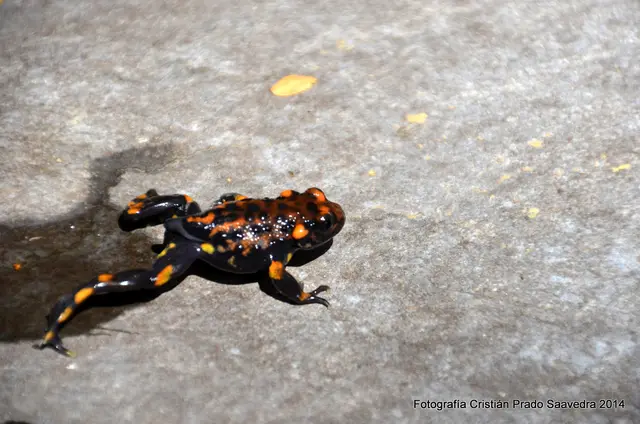
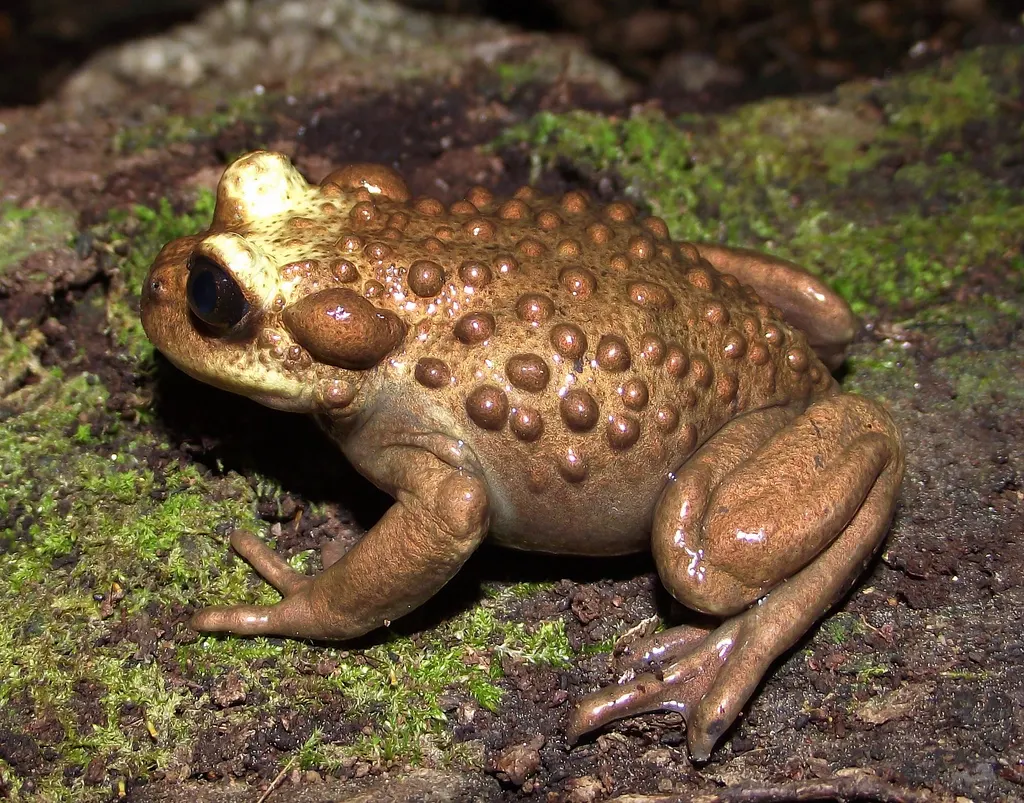
It's a heavy-bodied frog, roughly 60 to 80 mm long, with a warty back, large oval glands behind the eyes and a mottled grey-brown coat with darker spots. The legs are long and slender and the toes are broadly webbed, though the fingers are free. Schmidt's 1952 description of the first specimens also noted striking white eyelids, yellowish in life.
Tadpoles live in fast water and scrape algae off submerged stones.
Where it lives
The species is known only from the Cordillera de Nahuelbuta, part of Chile's Coast Range, in the Biobío and La Araucanía regions. The Red List records it between 133 and 1,200 m above sea level and describes its population as severely fragmented. It lives along fast streams running through temperate southern beech (Nothofagus) forest.
Karl Patterson Schmidt of the Chicago Natural History Museum described it in 1952 from two specimens collected in the Nahuelbuta forest in 1931 and 1936. It is reported from Nahuelbuta National Park, although the Red List assessment does not record it as occurring in a protected area.
Pins are Wikidata “endemic to” fields. Orange dots, when present, are GBIF occurrence tiles — survey bias included.
How it lives
Very little is known. One of the first two specimens was found under a log, and adults are thought to shelter that way. The stomach of the second specimen held a beetle larva, cockroach fragments, spider and harvestman remains and a good deal of plant material, which suggests a ground-dwelling forager. Breeding takes place in the streams, where free-swimming tadpoles grow.
Why it is in trouble
Extensive fieldwork between 1992 and 2002 found only one adult. The Red List describes the population as decreasing, with the habitat still shrinking. The threats it records are agro-industry plantations and soil erosion and sedimentation. Logging of beech forest and its replacement by plantations send silt into the streams, which makes it harder for tadpoles to feed.
What is being done
Habitat and site protection are the actions recorded in the Red List assessment. The picture isn't entirely bleak. In a 2014 paper in Check List, Felipe Rabanal and Virginia Moreno-Puig reported surveying historic localities and possible new ones in private forestry areas of the range. They found the frog at six localities, four historic and two new. That suggests it persists in more streams than the single-adult years implied.
Sources
Written for this catalog in our own words from the sources below, checked against them on 12 November 2026. Population figures are estimates and carry the year they were made. Status and assessment year: IUCN. 2026. The IUCN Red List of Threatened Species. Version 2026-1. iucnredlist.org.