Critically Endangered
Anomaloglossus degranvillei
Anomaloglossus degranvillei
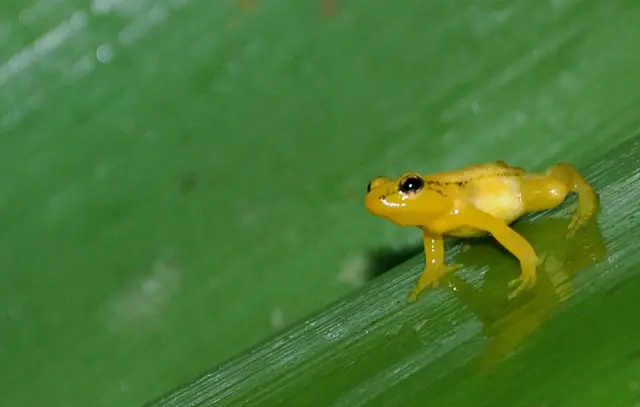
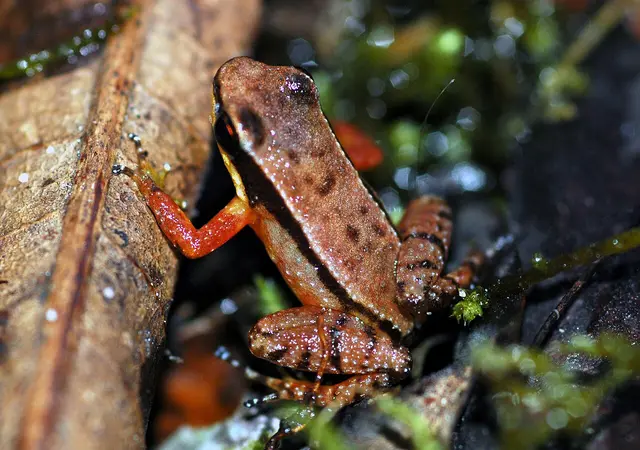
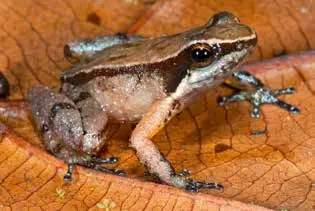
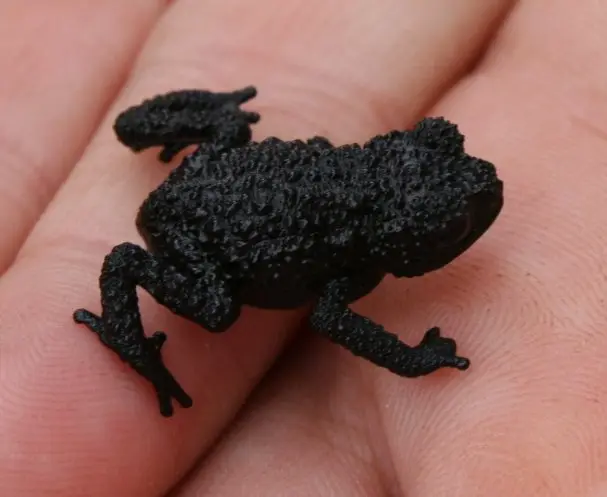
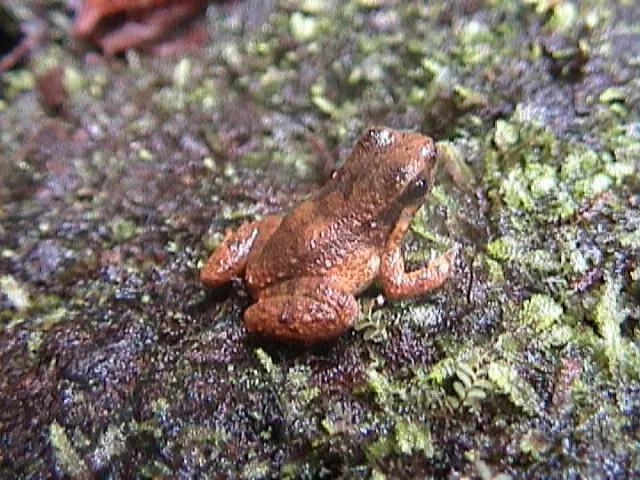
Degranville's rocket frog is a tiny stream frog from the rainforest massifs of central French Guiana. The IUCN Red List classed it as Critically Endangered in 2019, after an estimated 80 percent drop in numbers. Fathers carry the tadpoles on their backs.
How to recognise it
This is a very small frog, about 14 to 20.5 mm from snout to vent, with a dark brown to black belly marked by white spots. It belongs to the Aromobatidae, a family of South American frogs often called rocket frogs.
Jean Lescure first described it in 1975 under the name Colostethus degranvillei. It honours Jean-Jacques de Granville, a botanist from French Guiana. Telling it from close relatives is hard, which has muddled its range.
Where it lives
Older accounts spread this frog across much of French Guiana, and some even suggested neighbouring countries. A 2017 genetic study by Vacher and colleagues found the traditionally assigned French Guianan populations were deeply divergent. In 2018 Antoine Fouquet and colleagues described two new species from them in Zootaxa and redefined Degranville's rocket frog as endemic to a few massifs in central French Guiana, with a very restricted range.
It lives along the edges of rocky forest streams and is absent where streams run through swampy or sandy ground. The IUCN gives a lower elevation limit of 300 m, and one description puts it at around 400 m. The IUCN lists lowland moist forest and permanent streams, including waterfalls, as its habitats. It has been recorded in the Parc Amazonien de Guyane, and the IUCN notes it occurs in at least one protected area.
Pins are Wikidata “endemic to” fields. Orange dots, when present, are GBIF occurrence tiles — survey bias included.
How it lives
It is reportedly active by day and territorial. The male carries the tadpoles on his back after they hatch, and the tadpoles do not feed while they finish developing. Because the species was redefined in 2018, some of this behaviour may come from relatives now classed separately. The IUCN estimates a generation at about 3 years and treats the species as non-migratory.
Why it is in trouble
The main threat is the chytrid fungus Batrachochytrium dendrobatidis, which the IUCN rates as ongoing, affecting the majority of the population and causing rapid declines. The 2019 assessment records a drop of about 80 percent, based on direct observation. The 2018 Zootaxa study likewise found the frog appeared to have declined rapidly over the previous decade and proposed Critically Endangered status.
Mining and quarrying add a smaller, ongoing pressure. The IUCN also lists habitat shifting and alteration as a future threat, rated negligible so far.
What is being done
Part of the range lies inside the Parc Amazonien de Guyane. The IUCN lists captive breeding among the conservation actions relevant to the species, though no breeding programme has been found in the sources read. Living in a protected area can shield a frog from some habitat pressures, but not from a fungus.
Sources
Written for this catalog in our own words from the sources below, checked against them on 12 November 2026. Population figures are estimates and carry the year they were made. Status and assessment year: IUCN. 2026. The IUCN Red List of Threatened Species. Version 2026-1. iucnredlist.org.