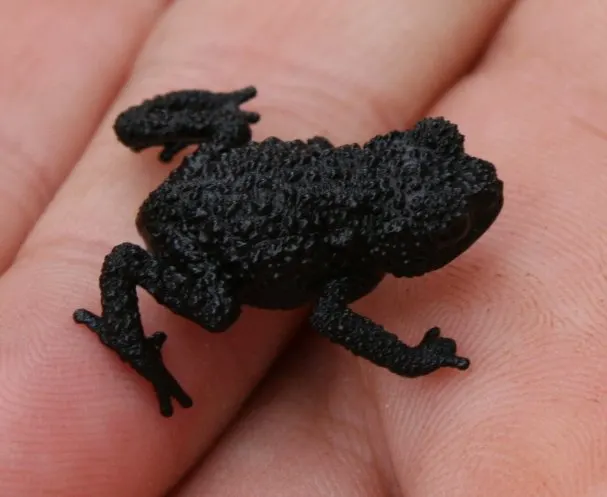
Endangered
Anomaloglossus roraima
Anomaloglossus roraima
The Roraima rocket frog (Anomaloglossus roraima) is a tiny frog of the high tepui plateaus of southeastern Venezuela and western Guyana, living mostly in large bromeliads. The IUCN Red List lists it as Endangered (assessed 2021), with fire, tourism disturbance and climate change among the concerns.
How to recognise it
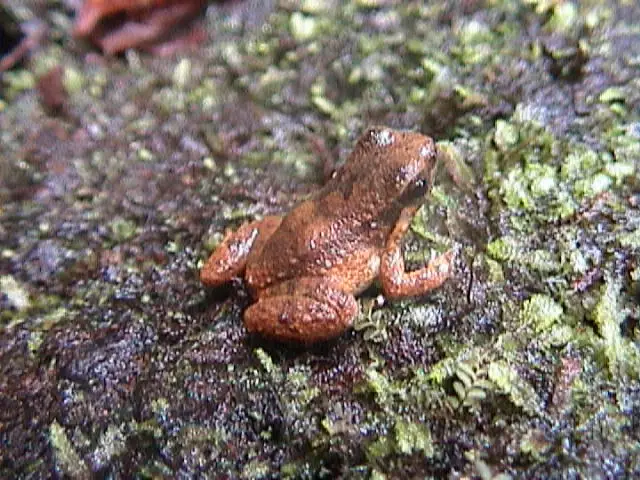
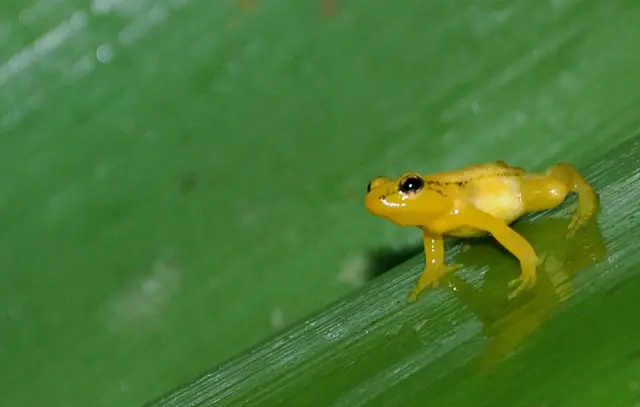
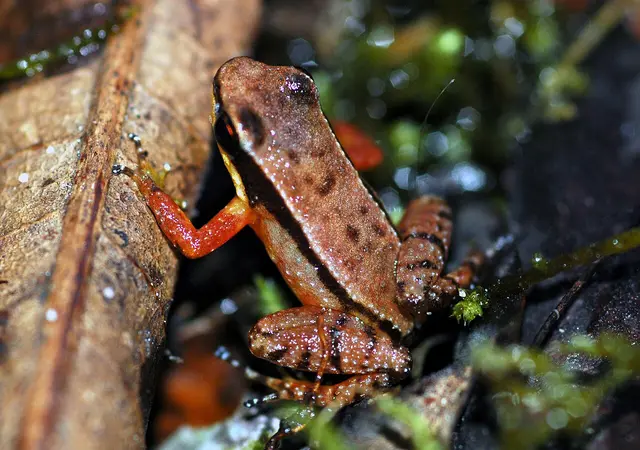
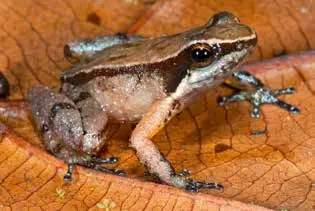
It is a very small frog. Adults are reported at about 16.5 to 19 millimetres from snout to vent, with females up to about 19.3 millimetres. The back is tan or light brown, sometimes with darker marks, and the belly is yellow or reddish, occasionally with dark brown markings.
The upper surfaces of the legs are paler with small white dots and sometimes dark bars. Toe tips can be blue. Its former name was Colostethus roraima, and the species was described by Enrique La Marca in 1997.
Where it lives
The type locality is Mount Roraima. The frog is found on tepuis, the flat-topped sandstone mountains of the Guiana Shield, in southeastern Venezuela and western Guyana. It is expected in neighbouring Brazil, and the IUCN lists Brazil as well.
It is a high-altitude species, recorded between 1,860 and 2,700 metres in tepui scrub, high-altitude grassland and boggy ground. The one protected area where it has been recorded is Canaima National Park in Venezuela.
Pins are Wikidata “endemic to” fields. Orange dots, when present, are GBIF occurrence tiles — survey bias included.
How it lives
Much of its life centres on large bromeliads such as Brocchinia tatei, whose leaves hold pools of rainwater. Tadpoles develop in that water. Males reportedly call during the day, especially when the mist is down.
Why it is in trouble
The species is thought to be rare. The Red List assessment names recreational activities, more frequent and more intense fires, shifting habitat and drought as threats, and records a severely fragmented population and a continuing decline in the area it occupies. Population trend is listed as unknown.
Disturbance by visitors is a concern at these sites, and fires lit by people can reach these heights. Climate change adds another problem, since there is no cooler, higher ground above the summit for the frog to move to.
What is being done
The IUCN puts 41 to 50 percent of the population inside protected areas, and records site management and national-level action as the responses in place or needed. It lists no recovery plan, no systematic monitoring scheme and no education programme.
Sources
Written for this catalog in our own words from the sources below, checked against them on 12 November 2026. Population figures are estimates and carry the year they were made. Status and assessment year: IUCN. 2026. The IUCN Red List of Threatened Species. Version 2026-1. iucnredlist.org.