Endangered
Kaikatti bush frog
Kaikatti bush frog
The Kaikatti bush frog is a small frog known only from a handful of forest patches in the Nelliampathi Hills of Kerala, India, in the Western Ghats. It is rated Endangered on the Red List (2023 assessment), and its small range is still shrinking.
How to recognise it
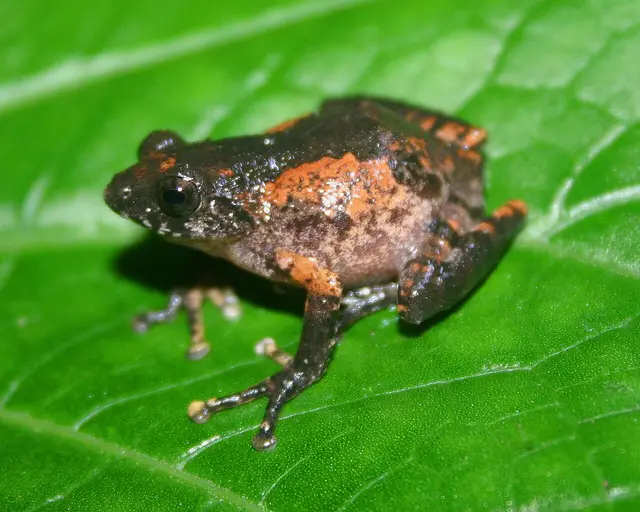
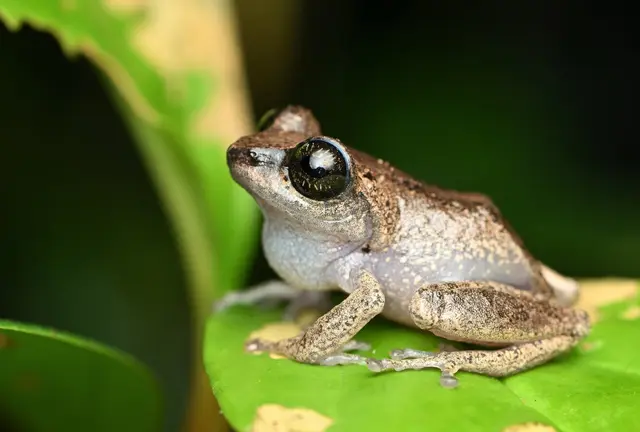
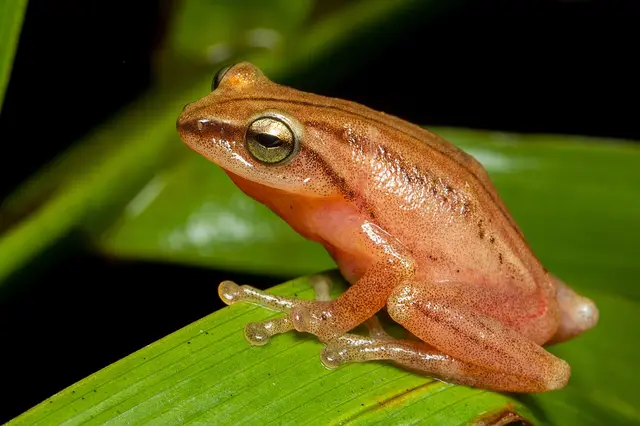
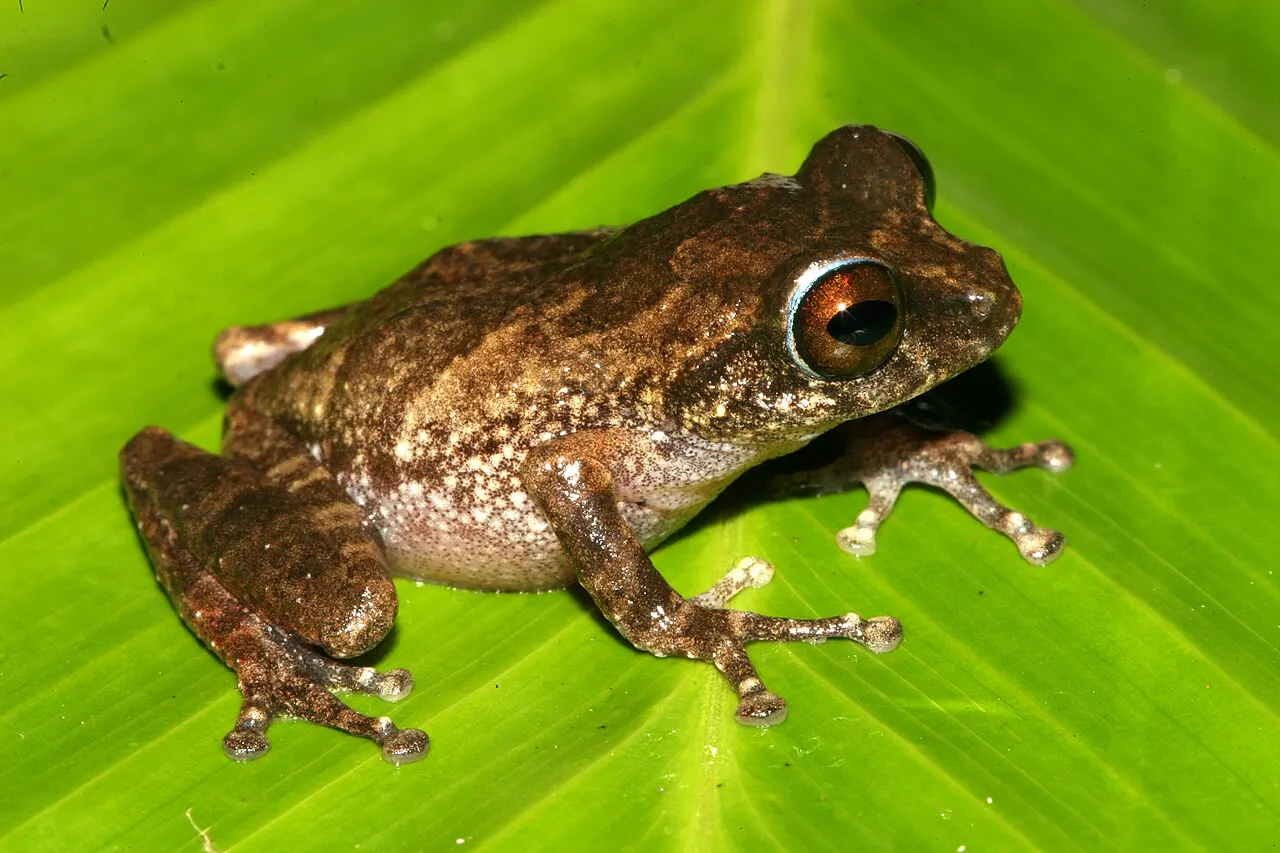
It is a medium-sized bush frog with a sturdy body. Males measure about 23 to 26 mm from snout to vent. The back is dark greyish brown with uneven light grey and dark brown blotches, and a dark grey band runs straight across between the eyes. The sides and the back of the thighs are noticeably granular.
The original series of specimens held only adult males, so females have not been described.
Where it lives
Biju and Bossuyt described the species in 2009 in the Zoological Journal of the Linnean Society, under the name Philautus kaikatti. The type specimen, an adult male, was collected on 20 September 1998 at Kaikatti-Nelliyampathi in Palakkad district, Kerala, which is also where the name comes from. The frog has since been moved to the genus Raorchestes.
The IUCN puts its extent of occurrence, the whole area it is known from, at about 301 sq km, between 600 and 1,000 m above sea level. It is known from one to five locations, and the assessment records no protected area holding it.
Pins are Wikidata “endemic to” fields. Orange dots, when present, are GBIF occurrence tiles — survey bias included.
How it lives
It is a forest frog. Later surveys found it in small patches of evergreen forest, in the canopy up to about 5 m above the ground. The IUCN lists both moist montane and moist lowland forest as its habitat, and notes it is not a migrant. It has also been reported from coffee plantations and other farms bordering forest, so it is not entirely restricted to untouched woodland.
Its calls, breeding habits and tadpoles have not been described in the sources available.
Why it is in trouble
The Red List assessment records a decreasing population and a continuing loss of habitat area. The pressures it names are small-holder farming, agro-industry and tourism and recreation development, all of which clear or degrade forest in this part of the Nelliampathi Hills.
Its small range, few locations and apparent poor tolerance of disturbance are why it ranks as Endangered. It was rated Critically Endangered in 2011, and the 2023 assessment lists it as Endangered under criterion B1ab(iii).
What is being done
No protected area is recorded for the species, and the actions the IUCN lists as needed are site protection and resource and habitat protection. No breeding programme or monitoring scheme is listed, and the assessment records no use of or trade in the frog.
Sources
Written for this catalog in our own words from the sources below, checked against them on 12 November 2026. Population figures are estimates and carry the year they were made. Status and assessment year: IUCN. 2026. The IUCN Red List of Threatened Species. Version 2026-1. iucnredlist.org.