Endangered
Micrixalus silvaticus
Micrixalus silvaticus
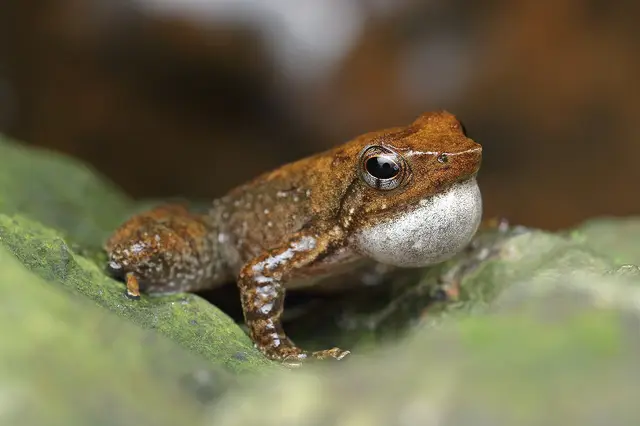
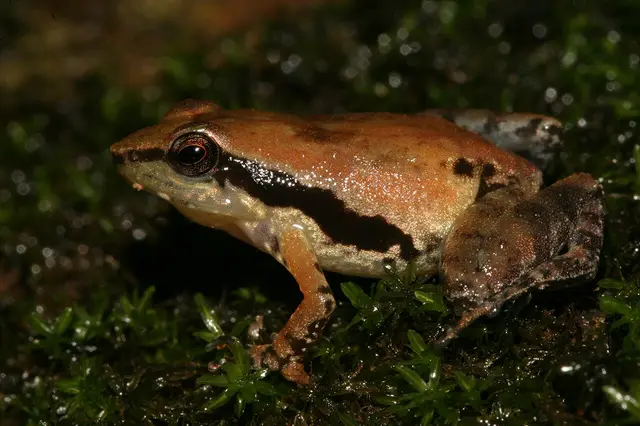
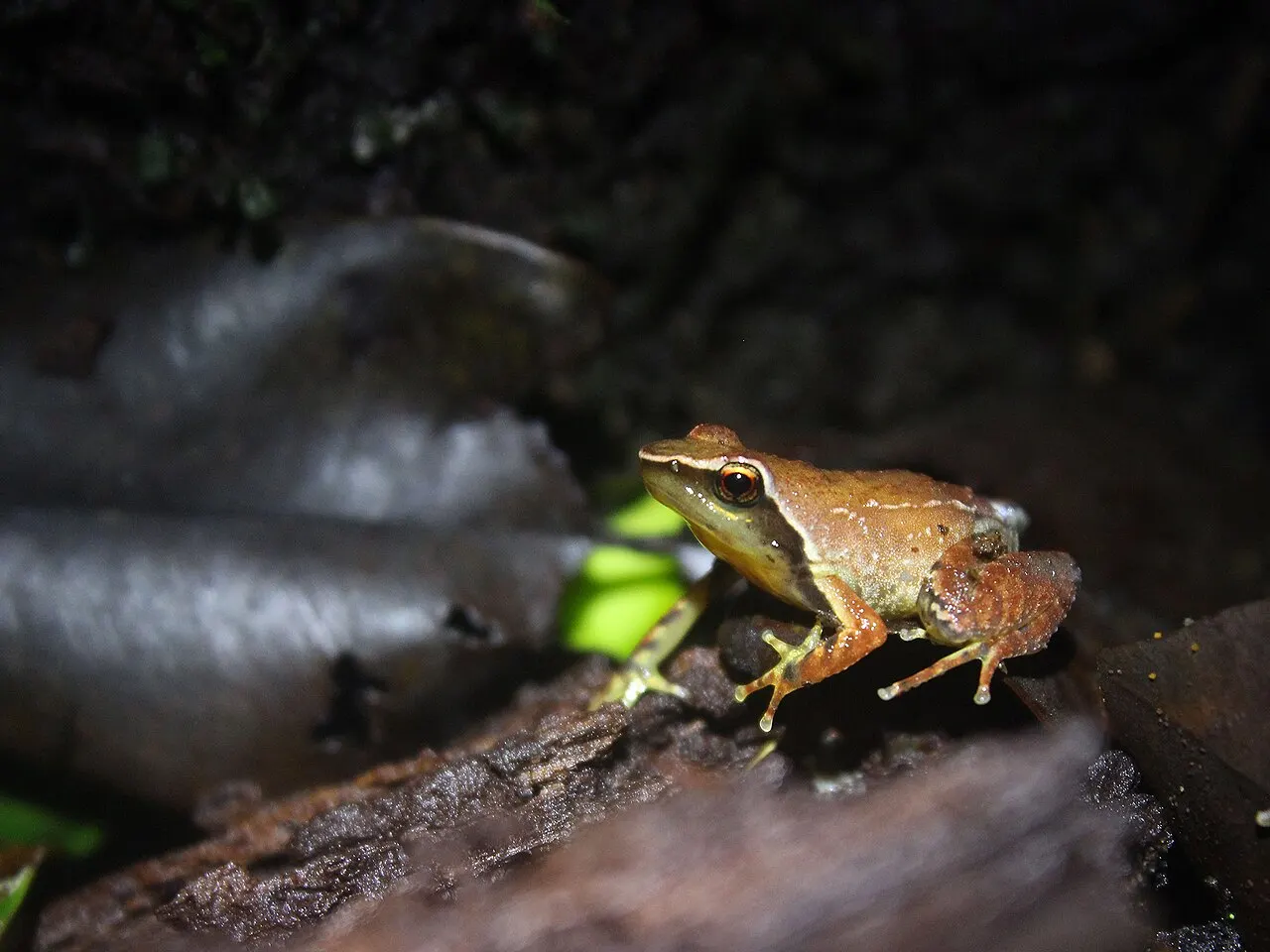
The forest dancing frog (Micrixalus silvaticus) is a small stream frog found only in the Western Ghats of India, in Kerala and Tamil Nadu. The IUCN Red List assessed it as Endangered in 2023, with only two known locations and a shrinking habitat. Its population trend is recorded as unknown.
Where it lives
This frog is endemic to the Western Ghats, the mountain chain running down India's west side. It is known only from a few restricted localities in Kerala and Tamil Nadu, south of the Palghat Gap. Documented sites include Kadalar Estate in Idukki District and, reportedly, Valparai in Coimbatore District.
The 2023 assessment counts two locations, both at about 1,429 m above sea level, and puts the extent of its range at roughly 94 square kilometres. Its listed habitats are moist montane forest, permanent streams and rivers (including waterfalls), and plantations.
Pins are Wikidata “endemic to” fields. Orange dots, when present, are GBIF occurrence tiles — survey bias included.
A frog with a tangled history
George Albert Boulenger described it in 1882 as Ixalus silvaticus, in the British Museum's catalogue of frogs. It now sits in Micrixalus, the dancing frogs, the only genus in its family and found nowhere outside the Western Ghats.
In 2014 Biju and colleagues used DNA barcoding to revise the Indian dancing frogs and described 14 new species. This frog was treated in that revision, and it is still known from only a handful of places.
How dancing frogs live
Little has been published on this species' own habits, so the genus gives the general picture. Many dancing frogs wave a hind foot at rivals and mates during the breeding season, which gives the group its name, though not every species does it. Mating pairs enter the water, and the female digs a chamber in the streambed, lays her eggs there and buries them under sand and gravel.
The IUCN lists this species as not migratory.
Why it is in trouble
The Red List names habitat alteration, housing and urban development, small-holder and agro-industry farming, and herbicide and pesticide use as threats. Water taken from streams for agriculture and small dams matter too, because this frog depends on flowing water. The area it occupies is recorded as still declining.
The only conservation action the assessment lists is resource and habitat protection. It records it as unknown whether the frog occurs in any protected area.
Sources
Written for this catalog in our own words from the sources below, checked against them on 12 November 2026. Population figures are estimates and carry the year they were made. Status and assessment year: IUCN. 2026. The IUCN Red List of Threatened Species. Version 2026-1. iucnredlist.org.