Critically Endangered
Micrixalus kottigeharensis
Micrixalus kottigeharensis
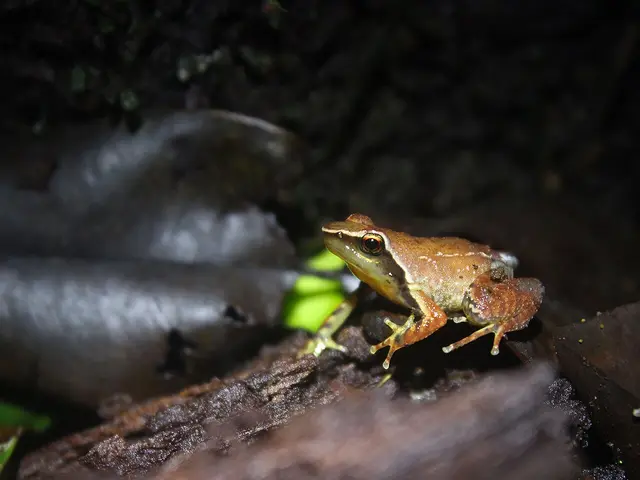
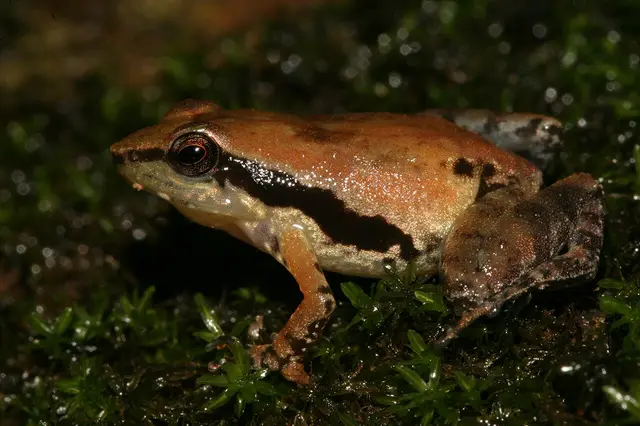
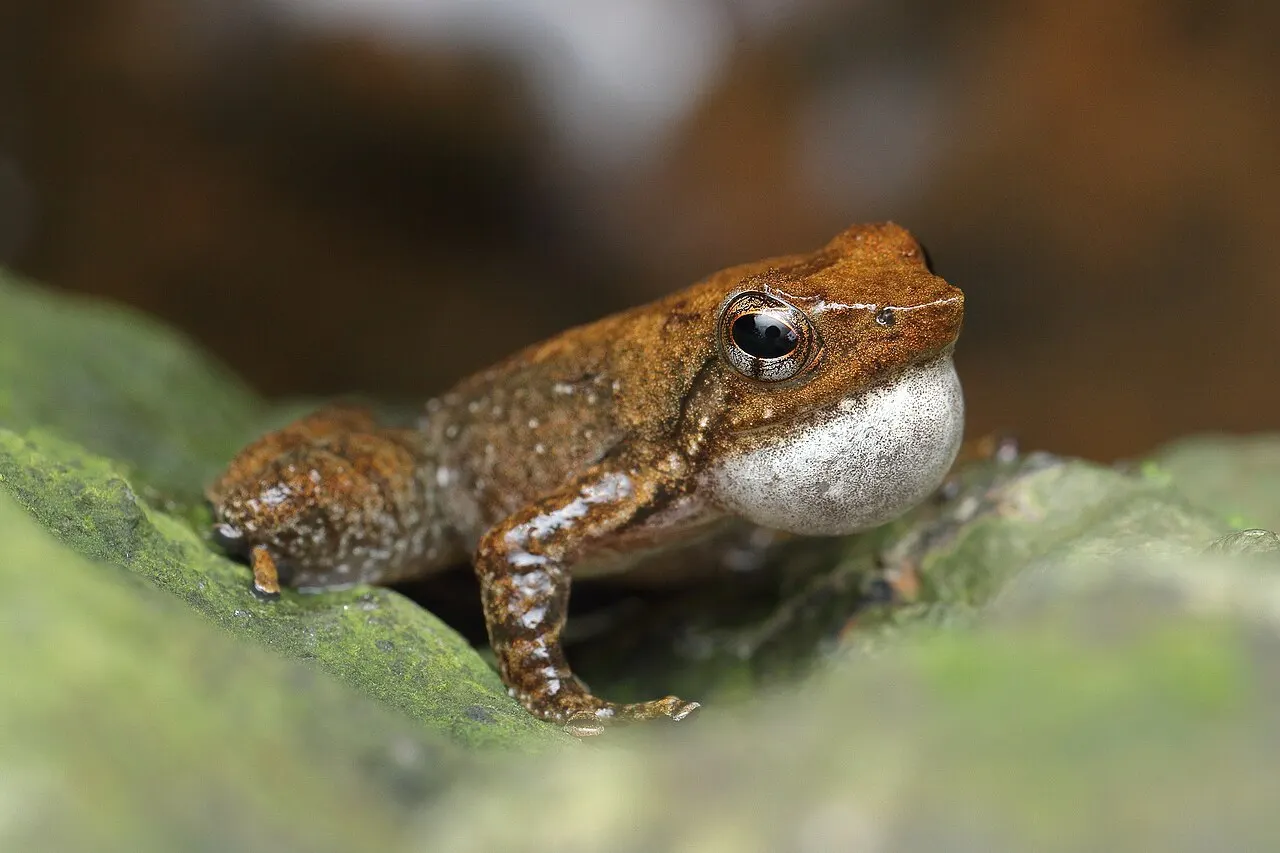
The Kottigehar dancing frog (Micrixalus kottigeharensis) is a small stream frog from the Western Ghats of Karnataka, India. Males wave their webbed feet to signal to rivals. The IUCN Red List rated it Critically Endangered in 2004, though newer survey work was expected to move it to Vulnerable because more sites have been found.
How to recognise it
It is a small frog. Males measure 22 to 24 mm from snout to vent and females 28 to 33 mm. Large adhesive discs on the finger and toe tips grip wet rock, and strong legs and webbed feet help it move in running water.
Rao described it in 1937. Its name refers to Kottigehara in Karnataka, one of the places it is known from. Until 2014 two other frogs, Micrixalus narainensis and M. swamianus, were treated as separate species. Genetic work has since folded both into this one.
Where it lives
It is endemic to the Western Ghats in Karnataka. Older records come from places such as Kottigehara, Charmadi Ghat and Kemmanagundi. Surveys between 2019 and 2021 found it at nine new sites, confirmed with DNA. A 2020 reassessment put its extent of occurrence at about 7,149 square km and the number of threat-defined locations at 10 or fewer.
It lives in small, fast-flowing streams in moist evergreen and semi-evergreen forest, at elevations of about 270 to 725 m, and also in two relict Myristica swamps (freshwater swamp forests of nutmeg-family trees, many of them sacred groves). Most streams where it was found had about 70 percent canopy cover, and numbers dropped where cover was thinner, as in areca nut plantations.
Pins are Wikidata “endemic to” fields. Orange dots, when present, are GBIF occurrence tiles — survey bias included.
How it lives
The dancing frogs get their name from foot-flagging. A male lifts a hind leg and waves his webbed toes in the air, which probably helps because calls are drowned out by the noise of the stream. Males of this species flag at other males, including males of a related dancing frog nearby, Micrixalus niluvasei.
Pairs mate in a clasp behind the front legs, and sometimes a third, satellite male is present. The eggs are laid in the streambed under the top layer of gravel. Reportedly, females dig the egg cavities with their hind limbs to a depth of about 32 mm, and the tadpoles burrow.
Why it is in trouble
The Red List names agro-industry and small-holder farming as the threats. In practice that means areca nut and coconut plantations replacing forest outside protected land. At one site, a stream ran from forest into a plantation and the frog count dropped from 4 to 1.
A 2021 conservation plan from the Zoological Society of London's EDGE programme lists more pressures: illegal tree felling, small check-dams and water abstraction, litter and uncontrolled tourism at waterfall sites, and climate change and disease. Invasive mosquitofish are another concern, according to a news report on dancing frogs. The new sites and some older ones lie outside any protected area, and two, Sirimane Falls and Jogi Gundi, are promoted as tourist sites.
There is no published population count and no information on trends.
What is being done
The species is not listed under CITES. According to the EDGE plan it has no specific protection in Karnataka, though freshwater frogs of the Western Ghats fall under a general schedule of India's wildlife law that bars hunting and trade.
The plan, written by Madhushri Mudke, Benjamin Tapley and Neelavar Ananthram Aravind, calls for work to pin down its range, studies of microhabitat and breeding behaviour, partnerships with local stakeholders, and policy talks to have its habitat declared local biodiversity heritage sites. The IUCN assessment lists protection of sites and habitat as conservation actions.
Sources
Written for this catalog in our own words from the sources below, checked against them on 12 November 2026. Population figures are estimates and carry the year they were made. Status and assessment year: IUCN. 2026. The IUCN Red List of Threatened Species. Version 2026-1. iucnredlist.org.