Endangered
Whistling shrub frog
Whistling shrub frog
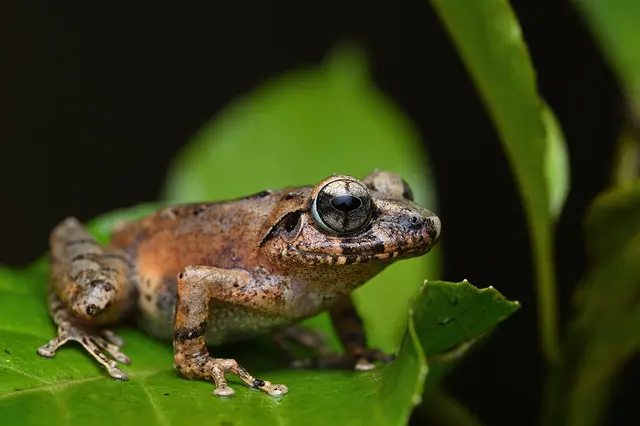
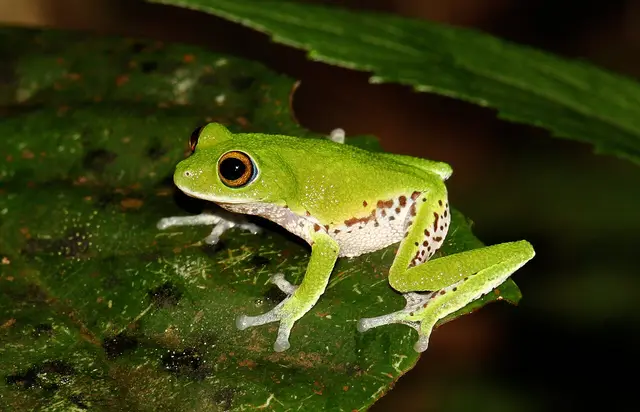
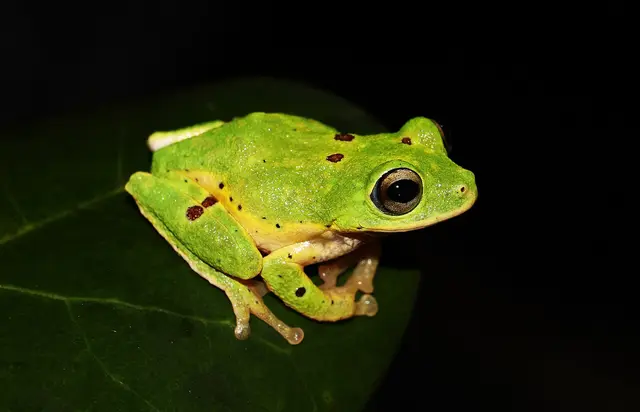
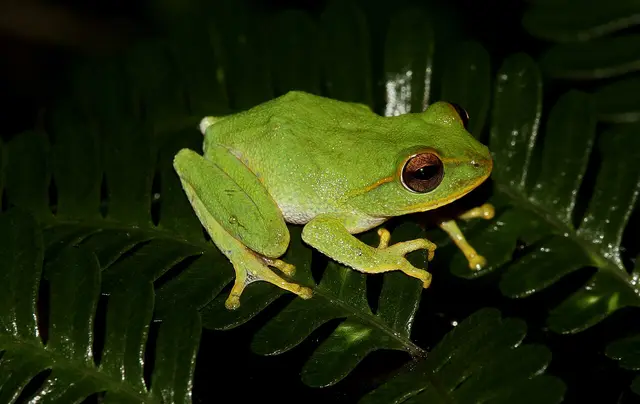
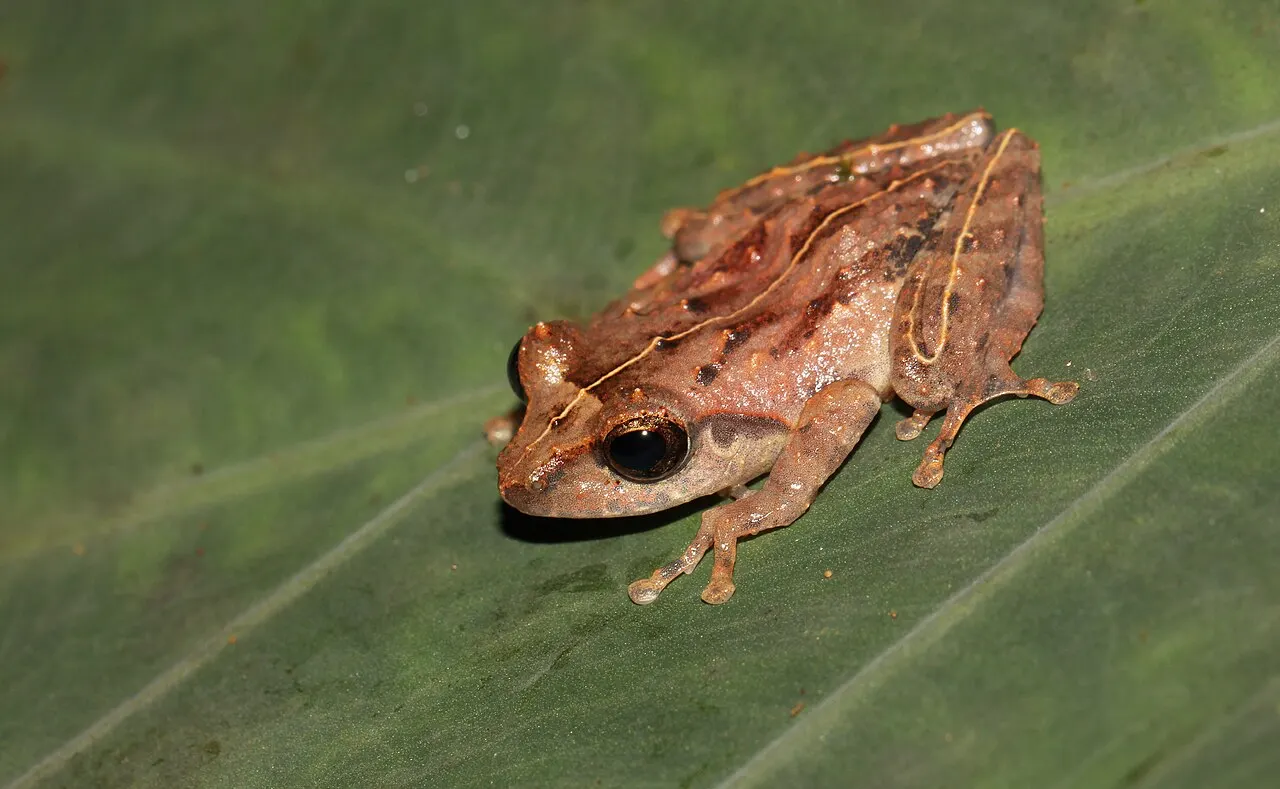
The whistling shrub frog (Whistling shrub frog) lives only in Sri Lanka, in a few patches of wet lowland forest. The IUCN Red List classed it as Endangered in 2020, because it is known from very few places and its forest habitat keeps shrinking. Scientists described it only in 2005.
A recently described frog
The whistling shrub frog belongs to the Rhacophoridae, a large family of tree frogs and shrub frogs, and to the genus Pseudophilautus. Manamendra-Arachchi and Pethiyagoda named it Philautus nemus in 2005, in a long paper that described 27 new Sri Lankan shrub frogs at once. The type specimen came from Haycock, near Hiniduma, at about 660 meters above sea level.
The genus was later revised, which is why current sources use Pseudophilautus. It is the same animal under a newer genus name.
Where it lives
The species is endemic to Sri Lanka, meaning it occurs nowhere else. Two sites are on record: the Haycock Hill Forest Reserve and the Kanneliya Forest. Between them they span roughly 60 to 660 meters in elevation, and the habitat is subtropical or tropical moist lowland forest.
The Red List assessment counts one to five locations and puts the frog's extent of occurrence at about 3,900 square kilometers. It describes the species as a resident that does not migrate.
Pins are Wikidata “endemic to” fields. Orange dots, when present, are GBIF occurrence tiles — survey bias included.
Why it is in trouble
The Red List gives its population trend as decreasing, and it records a continuing loss of forest area where the frog lives. The Endangered listing (criteria B1ab(iii)) is IUCN shorthand for a small range, few locations and a continuing decline in habitat. No population count has been published.
The assessment lists a long run of pressures on its forest: small-holder and agro-industry farming, herbicides and pesticides, shifting and altered habitat, drought, more frequent fires, housing and urban growth, and renewable energy development. It also lists unintentional harm from small-scale harvesting in the area. The stresses it names are conversion and degradation of the ecosystem itself.
An earlier Red List assessment, in 2004, placed the species in the Critically Endangered category. The 2020 reassessment moved it to Endangered.
What is being done
Both known sites are protected areas, and the assessment records all of the known population as lying inside protected land. The actions listed for the species are habitat protection and site management. The Red List record shows no captive breeding programme or dedicated recovery plan.
Sources
Written for this catalog in our own words from the sources below, checked against them on 12 November 2026. Population figures are estimates and carry the year they were made. Status and assessment year: IUCN. 2026. The IUCN Red List of Threatened Species. Version 2026-1. iucnredlist.org.