Critically Endangered
Eleutherodactylus turquinensis
Eleutherodactylus turquinensis
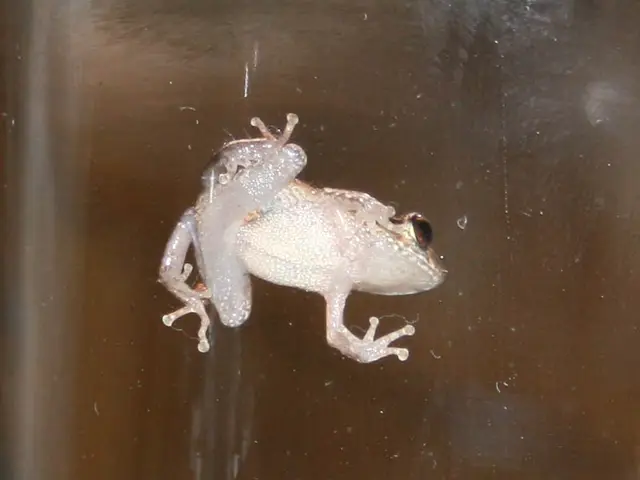
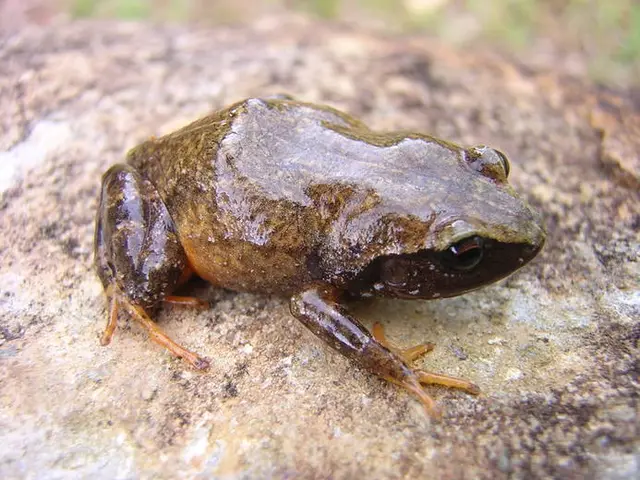
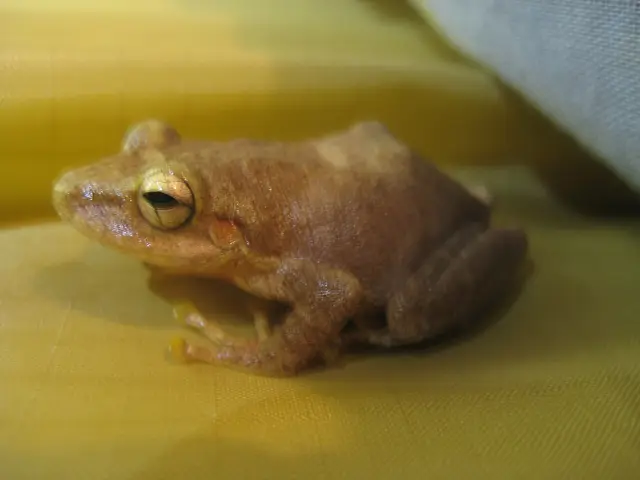
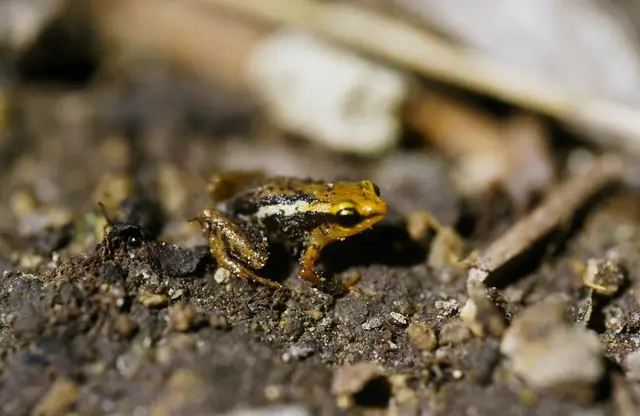
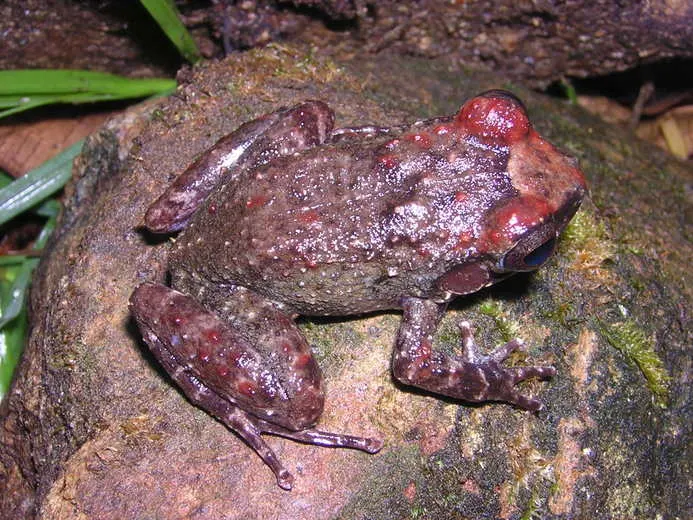
Eleutherodactylus turquinensis, the Turquino streamfrog, is a frog found only in the mountains of south-eastern Cuba. It lives along forest streams and has been described by Cuban researchers as the most aquatic of the island's eleutherodactylid frogs. The IUCN Red List classed it as Critically Endangered in 2023.
How to recognise it
Few details of its appearance are easy to find. A 2011 Mexican paper on Cuban frogs gave a body length (snout to vent) of about 53 mm for females and 37 mm for males, though those figures come from the species description rather than from the specimens the study sampled.
It is strongly nocturnal, so it is usually met after dark near running water. The same paper describes it as living in relatively cool surroundings.
Where it lives
The species was described by Thomas Barbour and Benjamin Shreve in 1937 and is known from the Sierra Maestra of eastern Cuba. The Red List gives an elevation span of about 450 to 1,830 m and an extent of occurrence of roughly 557 square kilometres, across three locations. A 2011 paper gave a far smaller occupied area, under 10 square kilometres, so the area it actually occupies may be much smaller than the overall range.
Its habitats are moist lowland forest, moist montane forest and permanent streams. Cuban researchers called it the most aquatic of the island's eleutherodactylids. Juveniles were seen basking by day on stream banks with little tree cover, in warmer conditions than adults were recorded in.
Pins are Wikidata “endemic to” fields. Orange dots, when present, are GBIF occurrence tiles — survey bias included.
Why it is in trouble
The 2023 assessment estimates a past population reduction of 80 percent, using a generation length of three years. It is based on declining habitat quality and the effects of introduced species and pathogens, though the causes are only partly understood. Small-holder farming, housing, tourism and recreation areas, run-off, drought and temperature extremes are listed as threats, and the decline continues.
The assessment does not consider the population severely fragmented.
What is being done
About 71 to 80 percent of the population is estimated to fall inside protected areas. The assessment lists site management, habitat protection and awareness work as the conservation actions. A captive programme is not recorded.
Sources
Written for this catalog in our own words from the sources below, checked against them on 12 November 2026. Population figures are estimates and carry the year they were made. Status and assessment year: IUCN. 2026. The IUCN Red List of Threatened Species. Version 2026-1. iucnredlist.org.