Endangered
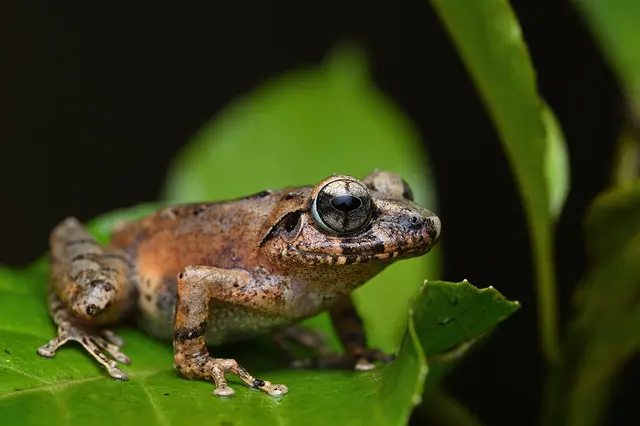
Pseudophilautus microtympanum
Pseudophilautus microtympanum
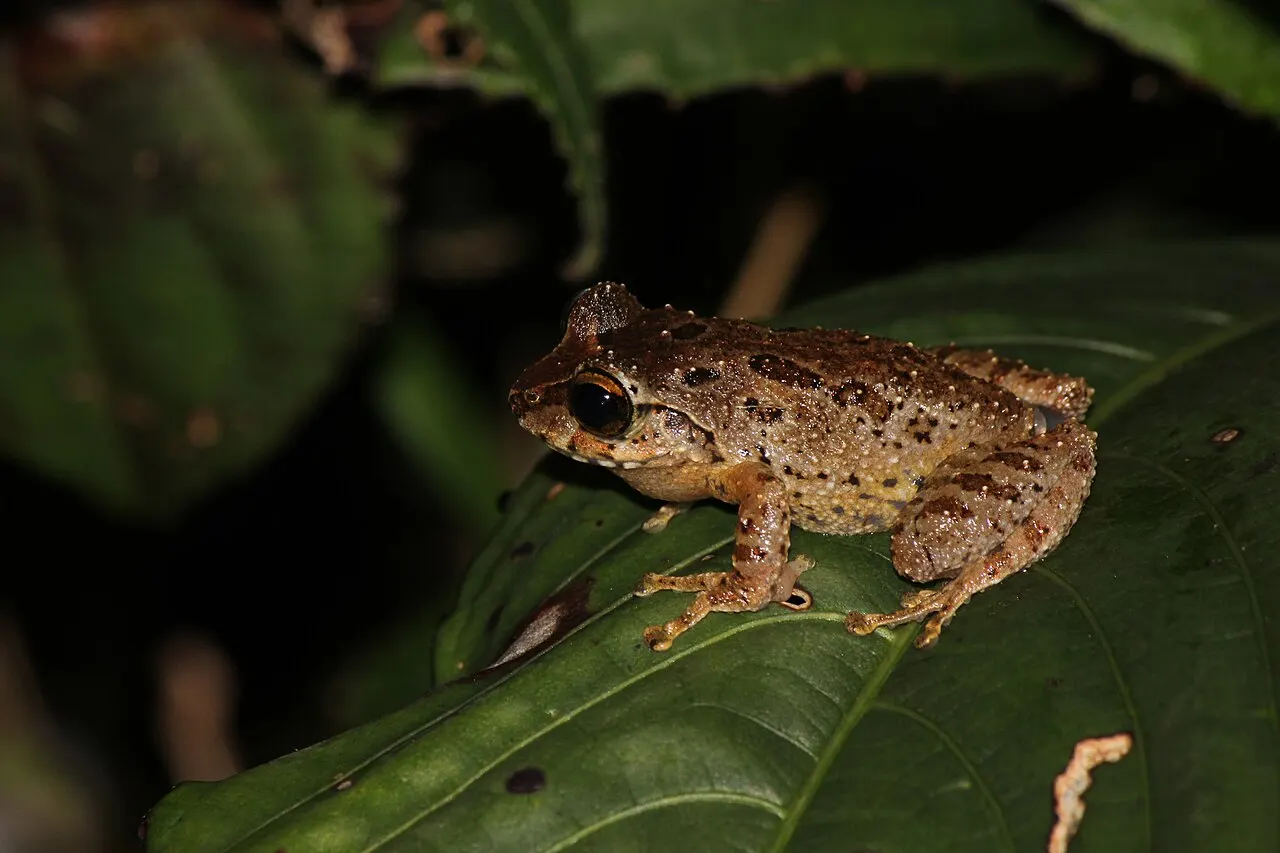
Günther's bubble-nest frog, also called the small-eared shrub frog, lives only in the central hills of Sri Lanka. The IUCN Red List lists it as Endangered (assessed 2020) because its range is small and its habitat is shrinking. Its population is decreasing.
Where it lives
This frog is endemic to Sri Lanka's central hills. The IUCN gives an elevation range of 1,300 to 2,135 metres and an extent of occurrence of about 2,300 square kilometres, spread over one to five locations. Museum specimens collected from Horton Plains National Park (2,135 metres) and the Agra Arboretum near Agarapatana (1,555 metres) appear in a 2015 paper in the Journal of Threatened Taxa.
Horton Plains sits on the southern plateau of the central highlands. The park is a mix of montane grassland and shrubland (wet patana) and subtropical montane evergreen forest.
Pins are Wikidata “endemic to” fields. Orange dots, when present, are GBIF occurrence tiles — survey bias included.
How it lives
It is a shrub frog in the family Rhacophoridae. Albert Günther described it in 1858.
It copes with more than one kind of habitat. The IUCN lists moist montane forest, high-altitude grassland, plantations and rural gardens as places it occurs. Age matters, though. Juveniles and sub-adults turn up more often in grassland and disturbed ground, while adults are usually found under closed canopy. Its size, diet and breeding habits are poorly documented in the sources available.
Why it is in trouble
The IUCN lists droughts, shifting and altered habitat, more frequent and more intense fires, and acid rain as ongoing threats. Unintentional effects of large-scale harvest are also listed. Agrochemical pollution and drying out of its habitat are named as concerns elsewhere.
Horton Plains, one of the places it has been collected, shows how a mountain habitat can degrade. Forest dieback was first reported there in 1978 and has been severe on some edges of the park, with water shortage during more frequent droughts cited as the main cause. Tourism-related problems at the park include fires.
What is being done
The frog occurs in at least one protected area. The IUCN lists site and area management, resource and habitat protection and site protection as actions needed. No recovery plan or monitoring scheme for this frog appears in the assessment.
Sources
Written for this catalog in our own words from the sources below, checked against them on 12 November 2026. Population figures are estimates and carry the year they were made. Status and assessment year: IUCN. 2026. The IUCN Red List of Threatened Species. Version 2026-1. iucnredlist.org.