Endangered
Nototriton lignicola
Nototriton lignicola
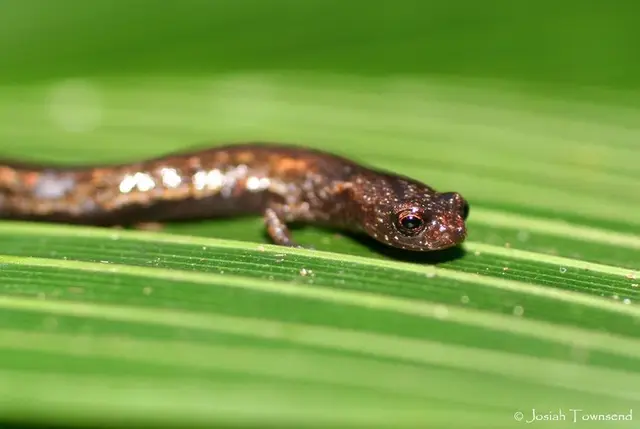
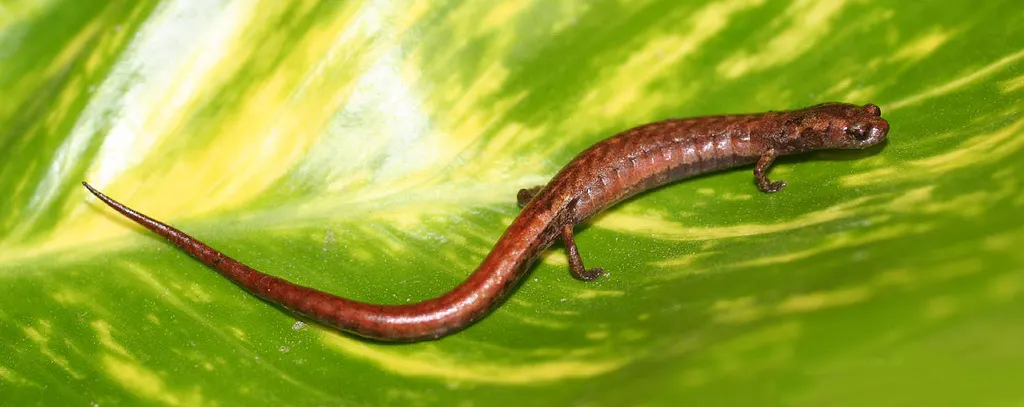
The Cerro de Enmedio moss salamander (Nototriton lignicola) is a tiny, semi-burrowing forest salamander known only from cloud forest in two national parks in Honduras. The IUCN Red List rated it Endangered in 2019, because farming keeps shrinking its mountain habitat.
What it is
Nototriton lignicola is a salamander of the family Plethodontidae, one of the moss salamanders. James McCranie and Larry Wilson described it in 1997. The common name comes from Cerro de Enmedio, the mountain where it was first found.
The species is semi-fossorial, meaning it spends much of its time underground or hidden, which makes it hard to find. Nothing about its biology is known to be unusual, and it has never been held in captivity.
Where it lives
For years the salamander was known only from its type locality on Cerro de Enmedio in La Muralla National Park, Olancho, at about 1,760 to 1,780 metres. It has since been found at Cataguana in Montaña de Yoro National Park, between about 1,820 and 2,020 metres. Specialists think it probably occurs only at suitable elevations within these two parks.
The Red List assessment gives an overall elevation span of 1,760 to 2,020 metres, counts two locations and puts the extent of occurrence at about 488 square kilometres. The habitat is moist montane forest, and the species does not migrate.
Pins are Wikidata “endemic to” fields. Orange dots, when present, are GBIF occurrence tiles — survey bias included.
How many there are
No population size has been published, and the species is generally uncommon. A 2019 assessment workshop recorded four to five salamanders over three days of surveys at Cerro de Enmedio in April 2017. At Cataguana, a handful of animals were recorded between 2006 and 2008, and the species there is described as uncommon to locally common.
The Cerro de Enmedio population is thought to be relatively stable, while the Montaña de Yoro population is thought to be declining along with its habitat.
Why it is in trouble
The Red List assessment records a continuing decline in habitat area. Threats listed include small-holder and large-scale farming, shifting agriculture, grazing, drought, storms and landslides.
The 2019 workshop adds detail. At Cataguana, forests have been cleared for marijuana plantations. A 2016 Honduran decree encouraged coffee growing on national lands, including the core zones of both parks, and coffee plantations are reported to be spreading inside them. A pine beetle outbreak from 2016 also led to heavy timber cutting, deliberate fires and conversion of burned land to crops in the wider region.
What is being done
Part of the range lies inside national parks, but the workshop describes both as poorly managed and enforced, with habitat loss continuing inside their core areas. Better enforcement, and removing incentives to convert forest, are called for. Research on distribution, population trends and natural history is also needed.
Sources
Written for this catalog in our own words from the sources below, checked against them on 12 November 2026. Population figures are estimates and carry the year they were made. Status and assessment year: IUCN. 2026. The IUCN Red List of Threatened Species. Version 2026-1. iucnredlist.org.