Endangered
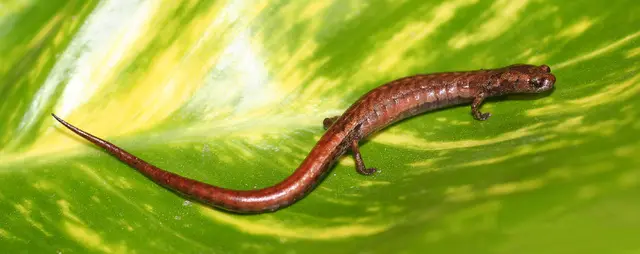
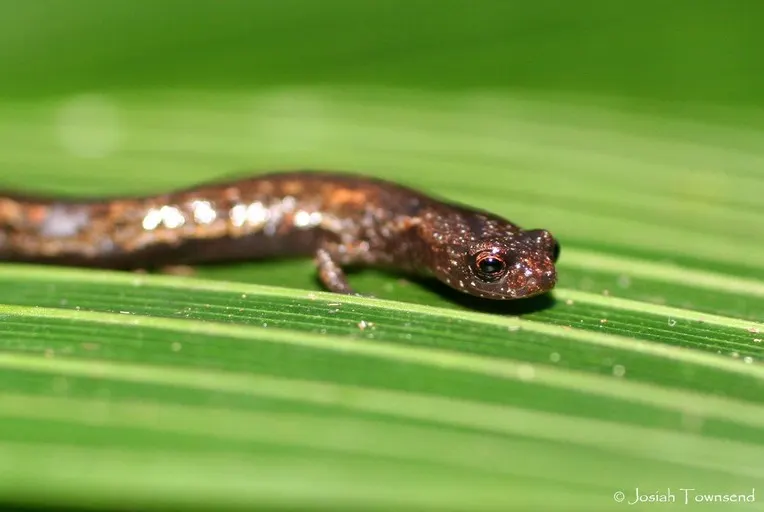
Santa Barbara moss salamander
Nototriton limnospectator
The Santa Barbara moss salamander (Nototriton limnospectator) is a lungless salamander known only from western Honduras. Described in 1998, it was rated Endangered by the IUCN Red List in 2019, with just two known locations and a decreasing population.
Where it lives
This salamander is endemic to Honduras. It belongs to the family Plethodontidae and to Nototriton, a genus of moss salamanders. Moss salamanders have no lungs and breathe through their skin and the lining of the mouth. The genus ranges from central Costa Rica through Honduras to eastern Guatemala, and this species is one of its Honduran members.
The IUCN assessment counts two locations and gives an elevation range of 800 to 1,980 m, in moist montane and moist lowland forest. Museum records fit that picture. GBIF lists specimens from 1995 collected at El Ocotillo (about 1,800 m) and on a trail southwest of San Luis de los Planes, both on Montana de Santa Barbara, and a 2008 specimen from the same mountain at about 1,750 m.
Pins are Wikidata “endemic to” fields. Orange dots, when present, are GBIF occurrence tiles — survey bias included.
Other sites
A second site is Cerro Azul Meambar National Park, in the department of Comayagua, where GBIF lists specimens collected in 2008 below the Varsovia camps. Three specimens from Los Pinos, in the department of Cortes, were collected in 2007 at about 975 m.
McCranie, Wilson and Polisar named the species in 1998. Little has been published on its size, diet or breeding, so it remains poorly known.
Why it is in trouble
The Red List classes it as Endangered under criterion B1ab(iii), which reflects a small range, very few locations and ongoing decline in the quality of its habitat. Its population trend is decreasing, and the area it occupies is still shrinking.
The pressures listed include shifting agriculture, industrial and small-holder farming, housing, recreational activity and increased fire frequency. Natural events such as drought, storms and flooding, and landslides are also named. The assessment also mentions deaths from unintentional effects of small-scale harvesting.
What is being done
The species occurs in at least one protected area. The recommended actions are site and area management, control of invasive or problematic species, awareness work and national-level measures. No captive programme or population estimate was found.
Sources
Written for this catalog in our own words from the sources below, checked against them on 12 November 2026. Population figures are estimates and carry the year they were made. Status and assessment year: IUCN. 2026. The IUCN Red List of Threatened Species. Version 2026-1. iucnredlist.org.