Critically Endangered
Cape mountain toad
Capensibufo rosei
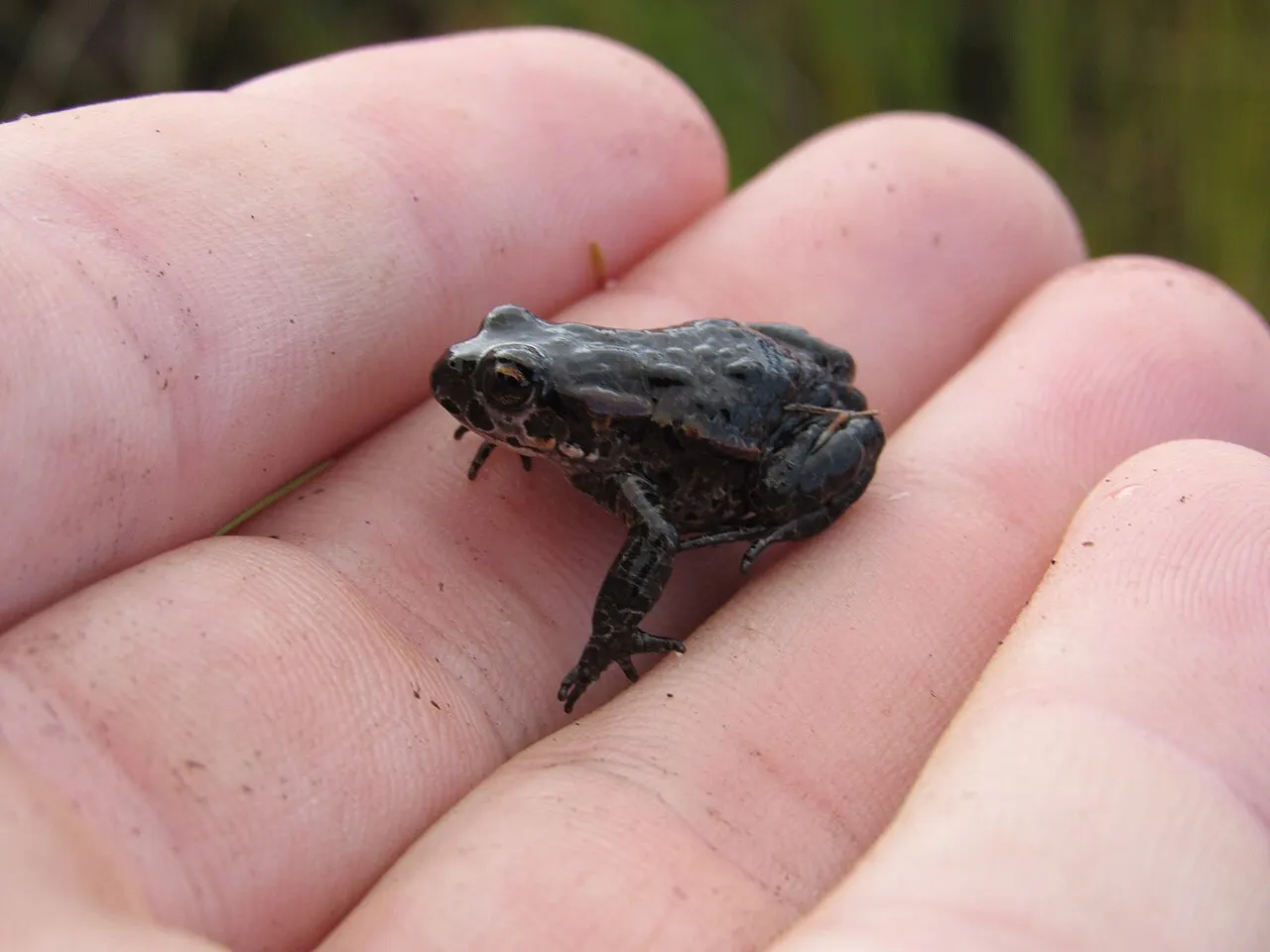
Rose's mountain toad (Capensibufo rosei) is a small, voiceless toad from the fynbos of South Africa's Western Cape. It survives at only two known sites on the Cape Peninsula. The IUCN Red List rated it Critically Endangered in its 2026 assessment.
How to recognise it
Females reach about 39 mm and males about 28 mm. The back is grey or brown with paler streaks and scattered warts, the belly is white with dark blotches, and the parotoid glands behind the head are prominent. No eardrum shows. In the breeding season an oval pink patch appears under the vent.
Males don't call, which may make this the only South African amphibian without a voice.
Where it lives
It lives in mountain fynbos, a low shrubland with winter rain, in the Western Cape. The IUCN lists seasonal freshwater pools and Mediterranean-type shrubland as habitat, and gives two locations and an elevation of 60 to 450 m. Older descriptions of the toad's wider range give elevations up to 1,600 m, but a 2015 study proposed that the Cape Peninsula toads are a species in their own right, so those figures may not apply to them.
On the Cape Peninsula only two populations are known, about 20 km apart, at Silvermine and Cape Point. A population was recorded on Table Mountain in 1927, but targeted surveys have found none there since 1983.
Pins are Wikidata “endemic to” fields. Orange dots, when present, are GBIF occurrence tiles — survey bias included.
How it lives
Breeding follows winter rain, in shallow temporary pools on mountain plateaux of low fynbos. On the Peninsula the season is short, about two weeks in mid to late August. A female lays about 100 eggs in a jelly string. They hatch in about 12 days, and tadpoles turn into toadlets roughly six weeks later.
Because the toad is silent, breeding groups can't be located by their calls.
Why it is in trouble
In a 2015 study in Oryx, Cressey, Measey and Tolley searched twelve historical sites between 2008 and 2011. They found toads breeding at only one of five known historical breeding sites, plus one new site. Toads were absent from 15 other places where they had once been recorded. Silvermine held hundreds of adults. Cape Point had fewer than 100, and no young toads were seen there in 2010 or 2011.
The two populations share no genetic variants, which suggests little or no contact, and Cape Point has much lower genetic diversity than Silvermine. No single cause has been identified. The toads tested negative for chytrid fungus, which makes it an unlikely culprit, and climate change was not ruled out. The study raised a tar road built in the 1960s that probably altered one breeding site, tourism and a major footpath at Platteklip Gorge, and subtle habitat changes from invasive plants, dams and the exclusion of fire. The IUCN lists recreational activities and habitat alteration.
What is being done
The IUCN records a systematic monitoring scheme, a regional management plan, invasive species control and protected-area cover for 91 to 100 percent of the population. Invasive alien plants that affected Silvermine and Cape Point have been removed.
The 2015 study urged protecting and expanding both populations, managing them separately and considering reintroductions to suitable historical sites. It named Cape Point as the priority, since losing it would leave a single breeding site.
Sources
Written for this catalog in our own words from the sources below, checked against them on 12 November 2026. Population figures are estimates and carry the year they were made. Status and assessment year: IUCN. 2026. The IUCN Red List of Threatened Species. Version 2026-1. iucnredlist.org.




