Endangered
Papallacta robber frog
Papallacta robber frog
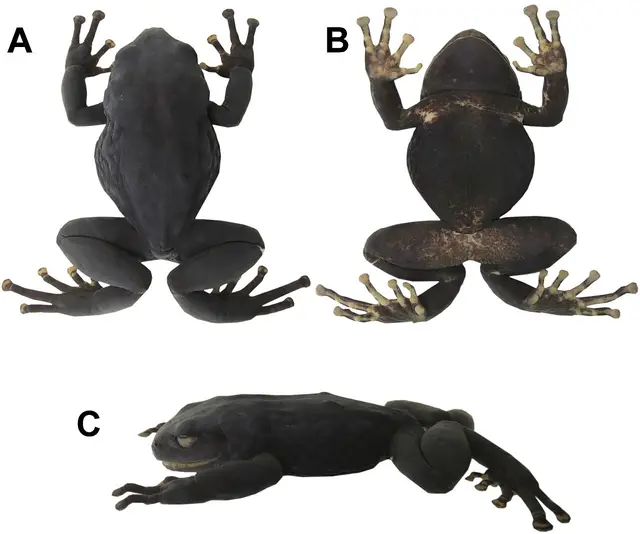
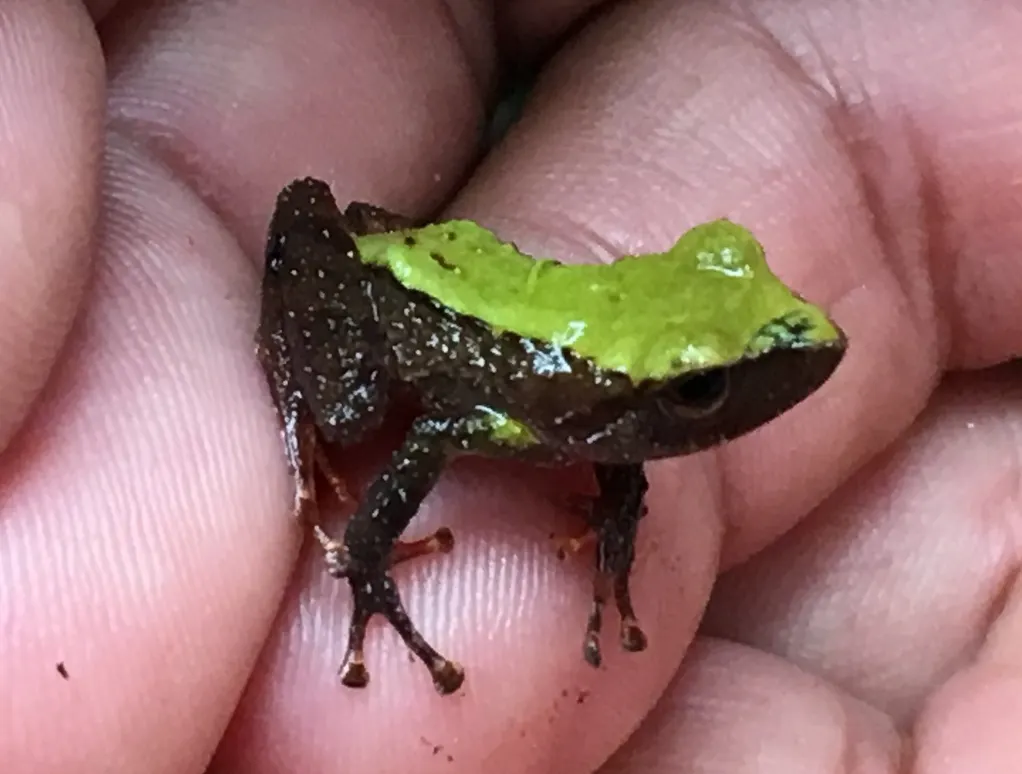
Papallacta robber frog, the Papallacta robber frog, is a small Andean frog known only from Ecuador. It lives in high cloud forest and is listed as Endangered on the IUCN Red List (assessed 2022). It is dark above and has smooth skin, and its name refers to the lack of small bumps on its eyelids and heels.
How to recognise it
Lynch and Duellman described the species in 1980. In the original series, males measured 25 to 34 mm from snout to vent, while the one female was larger at 45 mm. The back is black or dark grey and smooth, the belly is dark grey to greyish brown, and males have a creamy brown throat. The snout is pointed in profile, the eardrum is clearly visible and the fingers and toes end in broad discs.
The scientific name comes from Greek and refers to the absence of small bumps (tubercles) on the eyelid, heel and tarsus. In Ecuador it is known as cutin de Papallacta.
Where it lives
The frog is endemic to Ecuador. It was first found between Papallacta and Cuyuja in Napo Province, and it also occurs in Llanganates National Park in Pastaza Province. The Red List counts three to five locations. The global biodiversity database GBIF holds 47 records of the species, all from Ecuador.
It lives in montane cloud forest. The original specimens came from about 2,660 to 2,750 m above sea level, and the Red List gives a wider range of roughly 2,660 to 3,600 m.
Pins are Wikidata “endemic to” fields. Orange dots, when present, are GBIF occurrence tiles — survey bias included.
How it lives
Little has been written about its daily life. In the type series, one frog was found under a log by day, and the others were found at night on bushes up to about 2 m above the ground. Details of its calls, breeding and diet are scarce.
Why it is in trouble
The Red List records that the frog's habitat is shrinking and its numbers are decreasing. The main pressures it lists are small-holder farming, small-scale grazing and ranching, dams, and unintended effects of harvesting. Deforestation for farming, logging and settlement is the likely cause of forest loss. The 2022 assessment applies criterion B1ab(iii), which covers a small range, few locations and continuing loss of habitat quality, and it records that the population is not severely fragmented.
What is being done
The frog occurs in at least one protected area, Llanganates National Park, and the Red List lists site protection, habitat protection and site management as conservation actions in place or needed. No species-specific recovery programme is recorded.
Sources
Written for this catalog in our own words from the sources below, checked against them on 12 November 2026. Population figures are estimates and carry the year they were made. Status and assessment year: IUCN. 2026. The IUCN Red List of Threatened Species. Version 2026-1. iucnredlist.org.