Critically Endangered
Puca Sapo
Atelopus guanujo
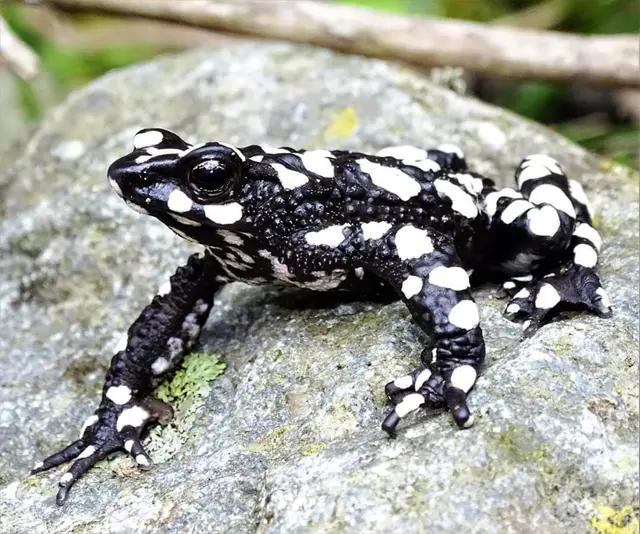
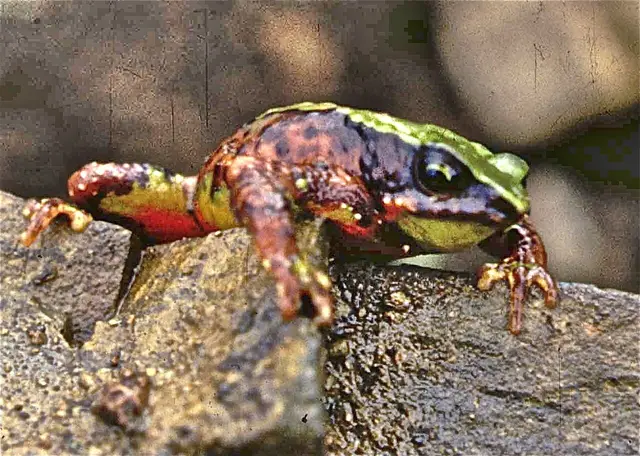
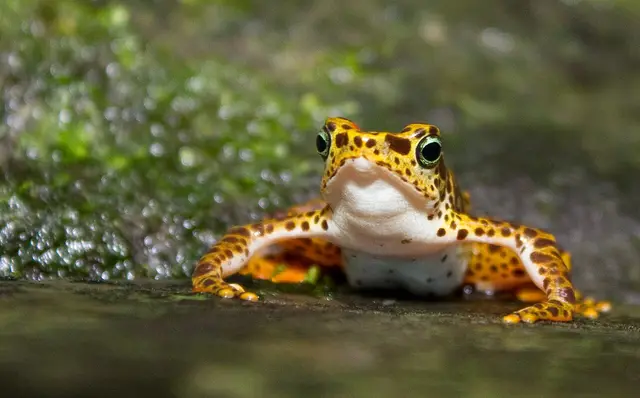
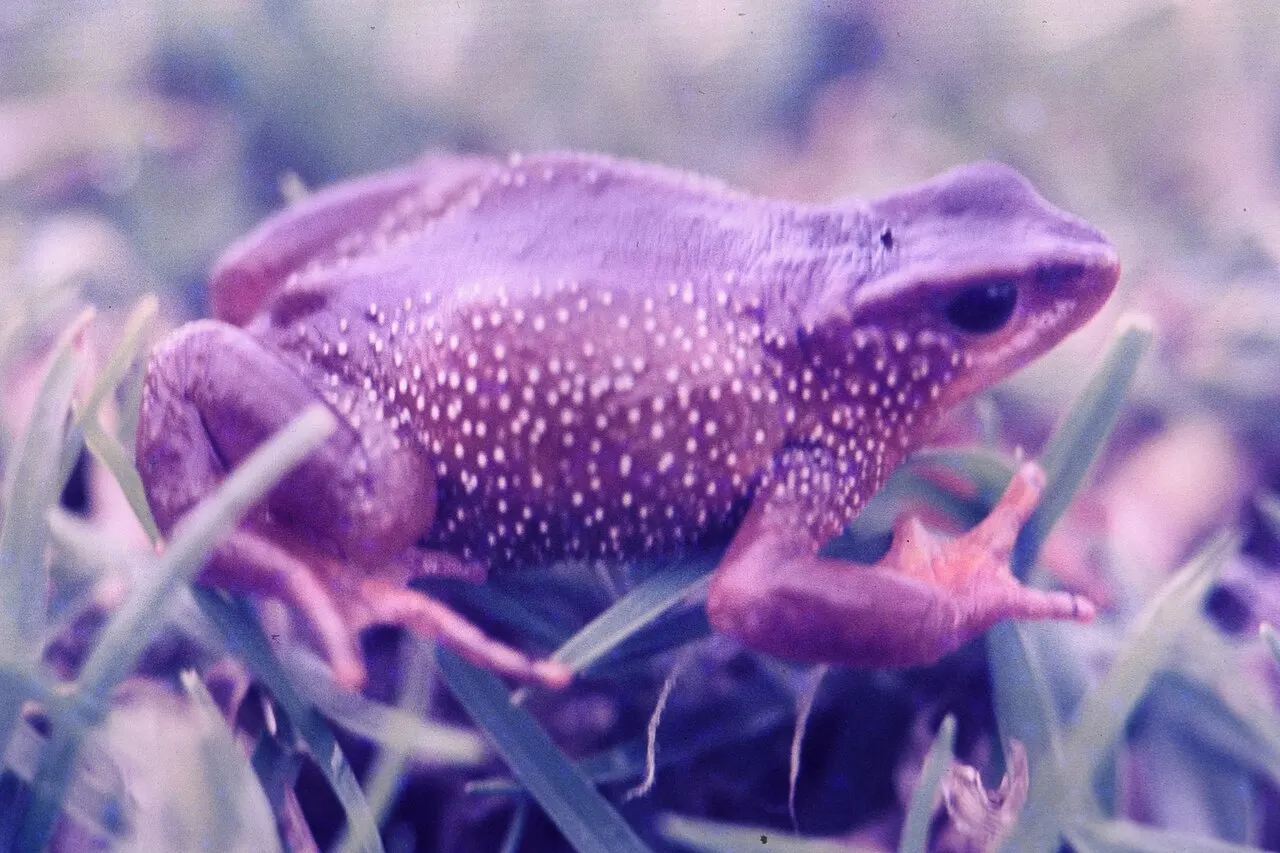
The puca sapo or Guanujo stubfoot toad (Atelopus guanujo) is a harlequin toad from the high Andes of Ecuador. The IUCN Red List assessed it in 2018 as Critically Endangered and possibly extinct, with a population of 0 to 49 adults. A lone male turned up in 2021, more than three decades after the last record.
Where it lives
Atelopus guanujo is found only in Ecuador. The IUCN places it at roughly 2,600 to 2,923 m above sea level, in moist montane forest and along permanent streams. It was described as a species in 2002 by Luis Coloma.
The assessment records that it does not occur in any protected area.
Pins are Wikidata “endemic to” fields. Orange dots, when present, are GBIF occurrence tiles — survey bias included.
The 2021 rediscovery
The last confirmed record was in 1988, and the toad was widely assumed gone. In 2021 a resident of Simiátug, in Ecuador, recognised a male frog in a pasture. A priest had been showing local people photos of lost species since 2018, which is how the find reached Luis Coloma, director of the Jambatu Center for Amphibian Research.
The male was identified by its nuptial pads. It was darker than earlier specimens, which were bright orange, and the team raised the possibility that it was a hybrid with Atelopus ignescens. Researchers will treat it as A. guanujo until DNA from old preserved specimens could be compared.
A search that ran out of money
Searches at the site found no other toads. Researcher Terán-Valdez won a grant of only 700 dollars and trained local young people to search, including under rocks at pasture edges. Three months turned up nothing. About a month after that, a community member sent a message about a larger frog, a female, but poor cell reception delayed it by two weeks. When no reply came, the community released her. The search ended when funding ran out.
The male has since died, but his sperm was frozen in case a female is found and in vitro fertilization becomes possible. Environmental DNA samples from local creeks in 2022 tested positive for the species, which suggests a few survivors exist at very low density.
Why it is in trouble
Like many harlequin toads, A. guanujo was hit by the chytrid fungus, which causes chytridiomycosis. The IUCN also lists conversion of habitat to small farms, grazing, plantations and housing, with the extent of its habitat still shrinking. Climate change has also been named as a contributor. The assessment lists captive breeding and habitat and site protection as conservation actions.
Sources
Written for this catalog in our own words from the sources below, checked against them on 12 November 2026. Population figures are estimates and carry the year they were made. Status and assessment year: IUCN. 2026. The IUCN Red List of Threatened Species. Version 2026-1. iucnredlist.org.