Endangered
Salado Springs Salamander
Eurycea chisholmensis
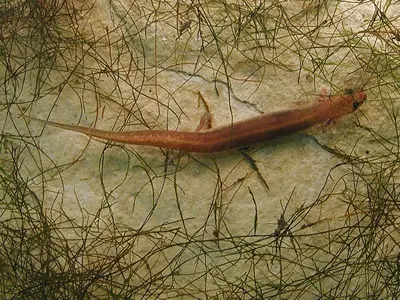
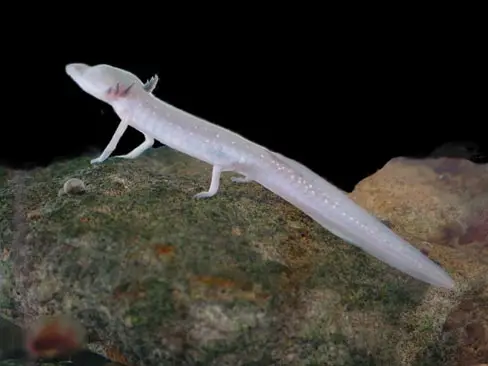
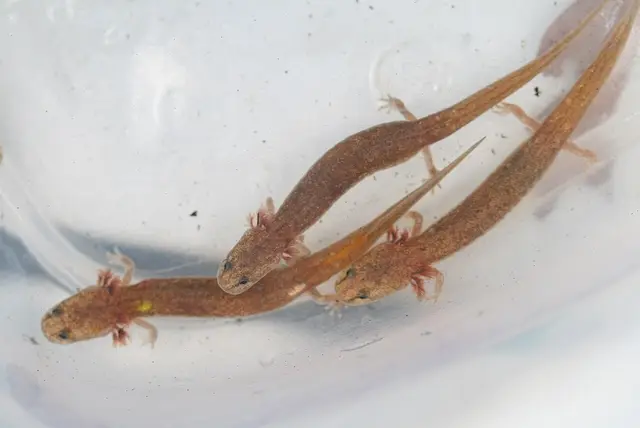
The Salado Springs salamander (Eurycea chisholmensis) is a fully aquatic, pinkish-grey salamander found only at a handful of springs in and around the village of Salado, in central Texas. The IUCN Red List classed it as Endangered in 2023. Drought and groundwater pressure have dried out some of its home springs.
How to recognise it
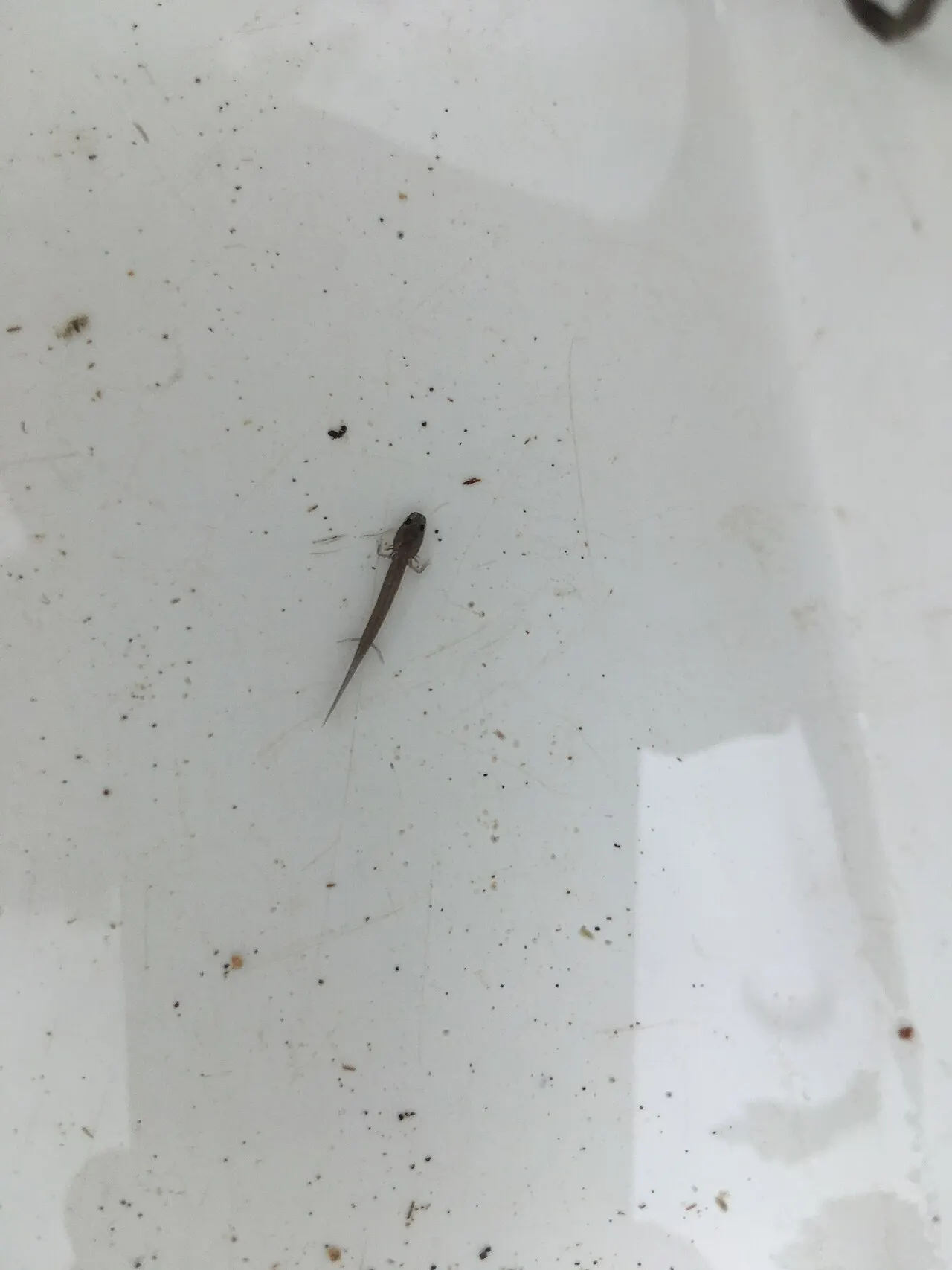
It keeps external gills for life. Adults are pinkish-grey with yellow speckling on the back, and have a wide, flat head and well-developed legs with long toes. Its gills are not especially bushy. Like related central Texas spring salamanders, it is paedomorphic, which means it stays in a larval body form even as an adult. Natural metamorphosis is unknown.
Monitoring at one spring on Solana Ranch recorded an average length of about 52.7 mm across 608 animals detected between 2017 and 2023. The largest recorded to date was 87 mm, caught in October 2020.
Where it lives
The species was formally described in 2000 and is found nowhere else. The Red List counts two locations and an extent of occurrence of about 900 square kilometres. Known sites are springs that feed Salado Creek, including the Downtown Spring Complex in the village (Big Boiling, Side and Anderson springs), Robertson Springs, springs on Solana Ranch, and Kings Garden, which lies just south of the Bell County line in Williamson County. A new site, Keeta Spring, was added in 2023, where two animals have been found in total.
All of these springs are fed by the northern segment of the Edwards Aquifer. The salamander lives in gravel and cobble near spring outlets, and some animals seem to spend more time underground, in the aquifer itself.
Pins are Wikidata “endemic to” fields. Orange dots, when present, are GBIF occurrence tiles — survey bias included.
How it lives
It eats small aquatic invertebrates. In one study, seed shrimp (ostracods) were the most common prey, followed by amphipods, aquatic snails and mayfly and caddisfly larvae. Survey data point to a fall and winter breeding season, with small juveniles turning up at the surface in spring.
Surface numbers are low. A 2023 monitoring report cites an estimate of only around 10 animals at the surface at the Downtown Spring Complex and Robertson Springs, though more were found in 2023 at other sites, with 68 individuals at Solana Ranch and 44 at Kings Garden.
Why it is in trouble
Everything depends on steady, clean water from the aquifer. The Red List population trend is decreasing, and it lists groundwater pumping for domestic, commercial and agricultural use, drought, temperature extremes and housing development among the threats. The U.S. Fish and Wildlife Service also points to changes in spring flow and water quality and to disturbance of spring sites.
The drought is plain on the ground. Robertson Springs stopped flowing around June 2022 and was still dry through 2023, and in that year only one salamander was found at the Downtown Spring Complex. A 2020 study of this and two related species found higher contaminant levels in the animals' tissues at heavily developed sites.
What is being done
The species was listed as threatened under the U.S. Endangered Species Act on 21 February 2014. In August 2021 the Service designated critical habitat for it and the Georgetown salamander, covering 583 acres for the Salado species in Bell and Williamson counties. Solana Ranch, with three springs known to hold the salamander, is protected by a perpetual conservation easement and was left out of the designation. Biologists from the U.S. Fish and Wildlife Service, with state and city help, have monitored the springs every year since 2015.
Sources
Written for this catalog in our own words from the sources below, checked against them on 12 November 2026. Population figures are estimates and carry the year they were made. Status and assessment year: IUCN. 2026. The IUCN Red List of Threatened Species. Version 2026-1. iucnredlist.org.
- IUCN Red List assessment, Eurycea chisholmensis (2023)
- Wikipedia, Salado Springs salamander
- Salado Salamander Monitoring Final Report 2023 (Texas Fish and Wildlife Conservation Office, TPWD)
- Herpedia, Salado Salamander
- U.S. Fish and Wildlife Service, critical habitat press release (2021)
- Federal Register final rule 2021-17600 (govinfo copy)