Endangered
Giant wrinkled frog
Nyctibatrachus karnatakaensis
The giant wrinkled frog (Nyctibatrachus karnatakaensis) is the largest night frog, a rare stream dweller known only from Kudremukh National Park in the Western Ghats of Karnataka, India. The IUCN Red List rated it Endangered in 2023, with a decreasing population suspected to number under 1,000 adults. Even its scientific name is disputed.
How to recognise it
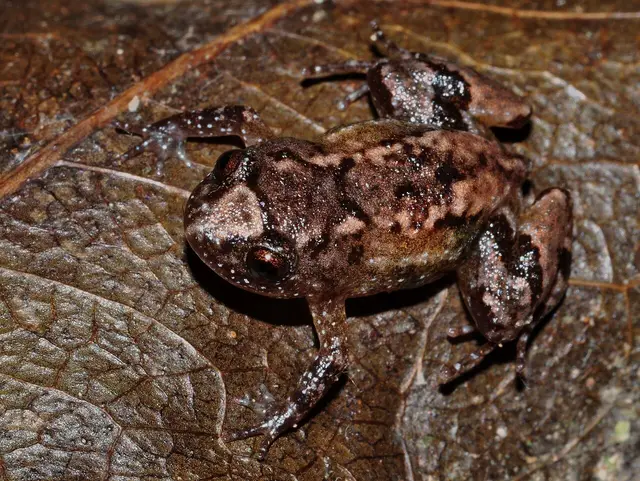
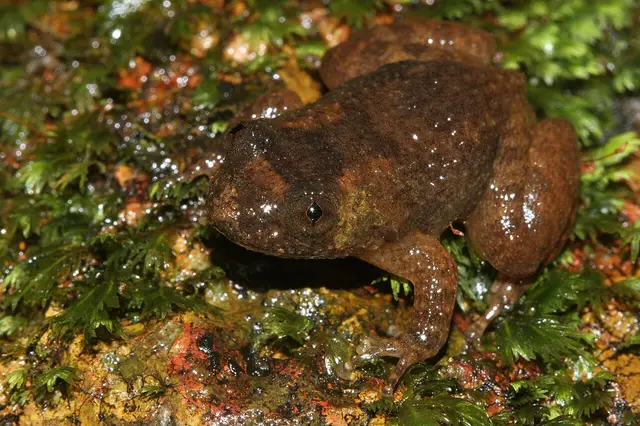
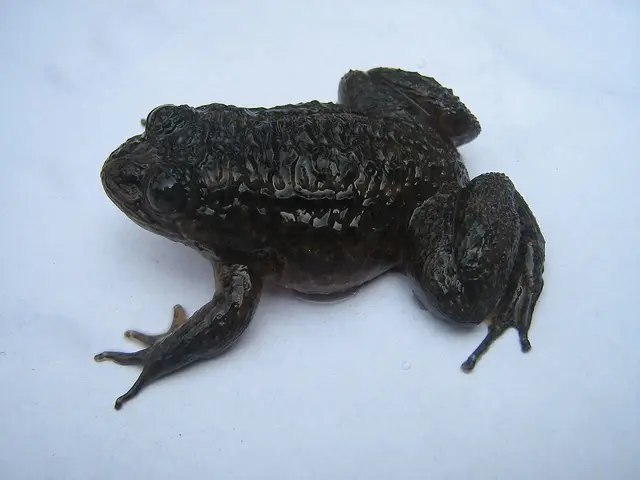
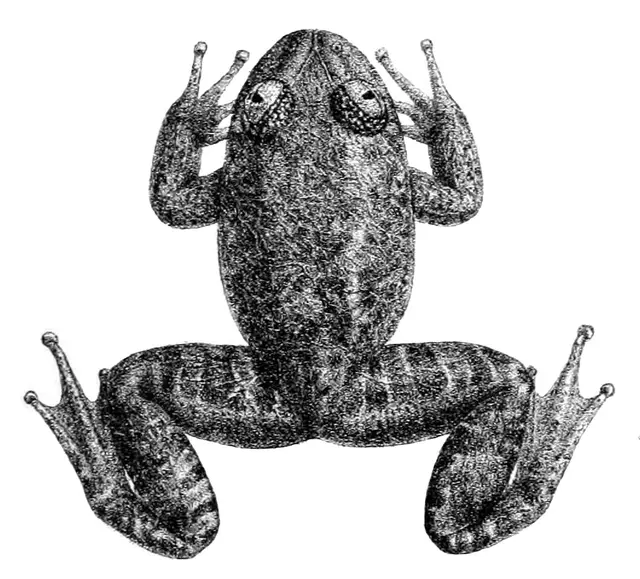
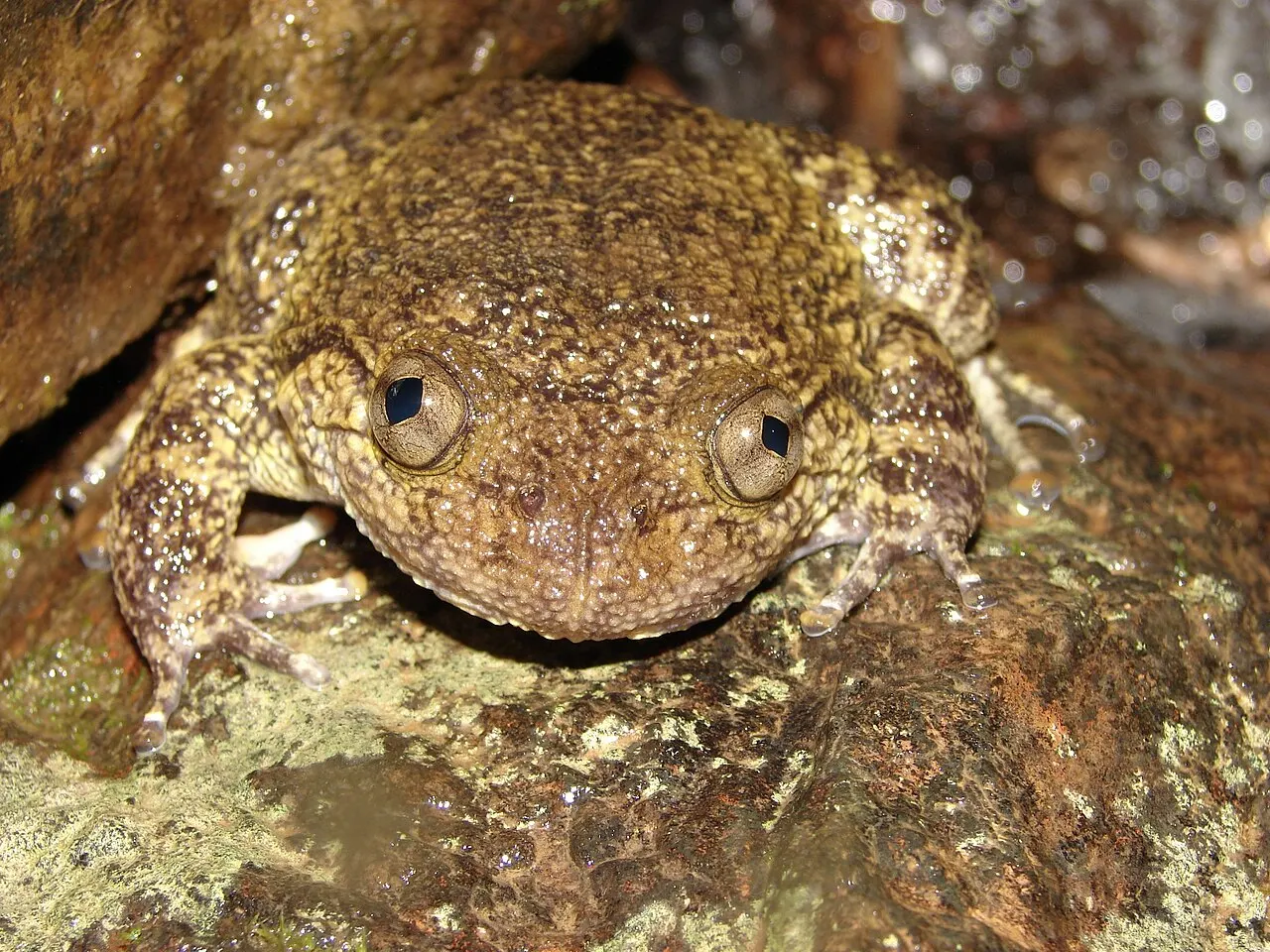
It is the largest species in Nyctibatrachus, the night frogs, a genus found in the Western Ghats. The common name refers to its rough, wrinkled skin. Its size is part of why it is hard to protect: a big frog needs a fair amount of undisturbed habitat.
Field identification is not simple. The IUCN notes confusion between this frog and two relatives, N. kumbara and N. grandis, and says genetic and call studies would help settle where each one really lives.
Where it lives
The species is endemic to the Western Ghats and is known only from Kudremukh National Park, at roughly 750 to 900 m above sea level. It may turn up a little more widely inside the park or just outside it. The IUCN counts it as one location and puts its extent of occurrence at 1,131 square kilometres.
It has been recorded in torrential hill streams within tropical evergreen forest, typically in the fast riffle zone, where it shelters in cavities under boulders. The IUCN says it is not known from disturbed habitat, and the whole known range lies inside the national park.
Pins are Wikidata “endemic to” fields. Orange dots, when present, are GBIF occurrence tiles — survey bias included.
How it lives
It breeds in streams, and its young develop as tadpoles in the water. Beyond that, little has been published about its breeding or diet.
Photographs on JungleDragon show an individual resting on the edge of a large boulder about a metre above the water, and a clutch of eggs with tadpoles visible inside. The photographer saw around ten frogs on rocks and in a stream over about two hours, mostly sitting still apart from snapping at passing insects. That is more than the usual find: the IUCN says groups are typically only six or seven.
Why it is in trouble
The frog is rare, and the IUCN considers the whole population likely to be under 1,000 animals (a suspicion from expert opinion in 2020, not a count). One survey in July 2003 turned up only three specimens.
Mining in the park, once a worry, was banned in 2006, but the old mined areas remain unsuitable for the frog. Logging by local people is no longer seen as a problem. The main threats now are tourist behaviour such as washing in streams, and possible road deaths.
The chytrid fungus has been confirmed in the genus. Infected frogs have shown illness but no deaths so far, and its effect on this species still needs study.
What is being done
The frog is covered by national protection laws, and its whole known range is inside Kudremukh National Park. It is also part of a long-running field study by Addoor, which has run since 1997.
The IUCN calls for continued management of the park and for education of tourists to stop them washing in the streams. It also asks for more research on where the frog lives, how many there are and its ecology.
A disputed name
The frog was first described in 2001 as Nyctibatrachus hussaini, honouring the ornithologist S. A. Hussain. That description gave no information on a type specimen, so the name's status was questioned.
In 2007 Dinesh and colleagues proposed N. karnatakaensis as a replacement name. The move was reportedly criticised over peer review and the zoological naming code, and some authors treat karnatakaensis as a junior synonym of hussaini. The IUCN and GBIF both accept karnatakaensis and list hussaini as its synonym.
Sources
Written for this catalog in our own words from the sources below, checked against them on 12 November 2026. Population figures are estimates and carry the year they were made. Status and assessment year: IUCN. 2026. The IUCN Red List of Threatened Species. Version 2026-1. iucnredlist.org.