Critically Endangered
Oedipina gephyra
Oedipina gephyra
The La Fortuna worm salamander (Oedipina gephyra) is a slender, lungless salamander known only from cloud forest in north-central Honduras. The IUCN Red List rated it Critically Endangered in 2020. Very little has been published about it beyond its original description, and its forest home is shrinking.
How to recognise it
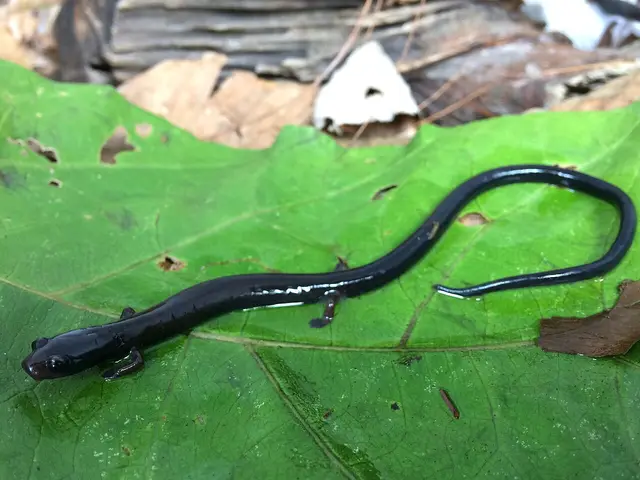
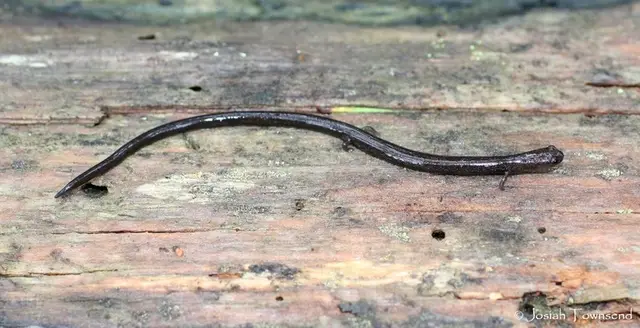
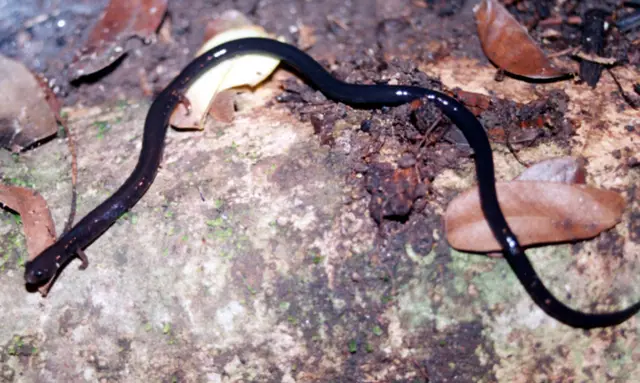
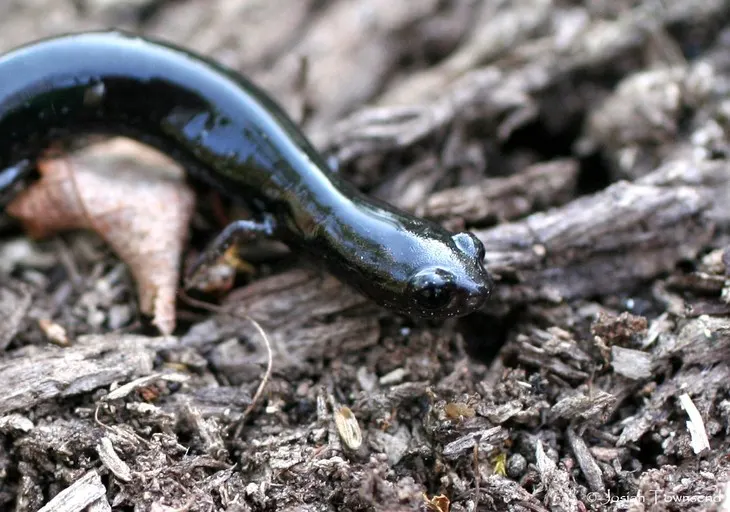
Worm salamanders are long and thin with tiny limbs, and this one fits the pattern. Adults measure about 52 to 58 mm from snout to vent, not counting the tail. The head, body and limbs are uniformly blackish brown and the tail is black.
The feet are extensively webbed. Under magnification, tiny reflective cells called iridophores can be seen on every surface of the skin.
James McCranie, Larry Wilson and Williams described the species in 1993. The name gephyra comes from a Greek word for bridge, chosen because the animal combines traits of two groups within the genus.
Where it lives
The species is endemic to Honduras. The type locality is about 2.5 km north-north-east of La Fortuna, in the Cordillera Nombre de Dios, Yoro department, at 1,690 m above sea level. Other specimens in the original series came from up to 1,810 m.
They were found inside rotten logs and stumps and under a plank in hardwood cloud forest. Its natural habitat is subtropical or tropical moist montane forest.
A close relative, Oedipina petiola, was described in 2011 from Pico Bonito National Park, also in Honduras. It is known from a single specimen found under a log in cloud forest.
Pins are Wikidata “endemic to” fields. Orange dots, when present, are GBIF occurrence tiles — survey bias included.
How it lives
Almost nothing is recorded about its diet, breeding or lifespan. Like other plethodontid salamanders it has no lungs and breathes through its skin and the lining of its mouth.
At the type locality it shared rotting logs with another small salamander, Nototriton barbouri, while Bolitoglossa conanti was common higher up in the vegetation.
Why it is in trouble
The species is threatened by habitat loss. It is known from very few records in one small part of one mountain range, so clearing or degrading that forest could remove much of what exists.
No population estimate has been published. Its Critically Endangered listing reflects a very small range and declining habitat quality.
What is being done
No species-specific conservation programme has been found. Protecting the remaining cloud forest of the Cordillera Nombre de Dios is the most direct help, and surveys to learn how many sites still hold the salamander would fill the biggest gap.
Sources
Written for this catalog in our own words from the sources below, checked against them on 12 November 2026. Population figures are estimates and carry the year they were made. Status and assessment year: IUCN. 2026. The IUCN Red List of Threatened Species. Version 2026-1. iucnredlist.org.