Critically Endangered
Wolterstorffina parvipalmata
Wolterstorffina parvipalmata
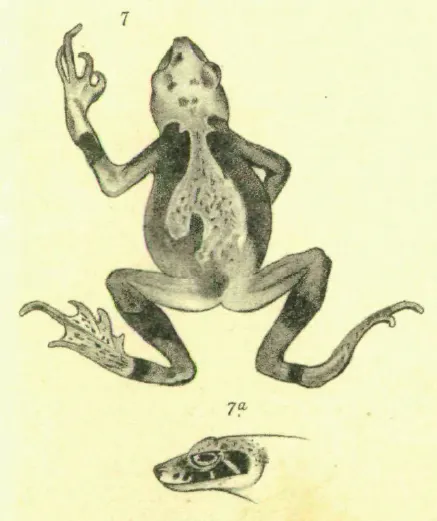
The Cameroon Wolterstorff toad (Wolterstorffina parvipalmata) is a small forest toad of wet mountain slopes in Cameroon and eastern Nigeria, also recorded on the island of Bioko. The IUCN Red List rated it Critically Endangered in 2019, and its numbers are expected to fall as montane forest is cleared.
Where it lives
This toad was described by Werner in 1898 and belongs to the true toad family, Bufonidae. It is also called the montane forest tree toad. It is found on the western and southern slopes of the Cameroon Range, including Mount Cameroon, in the Yaounde Hills of Cameroon, and on the Obudu Plateau in eastern Nigeria.
The Red List also names Equatorial Guinea. There the toad was recorded on Bioko, near the Moka cascades along the Illadji River, and a Bioko specimen collected in 2015 has been sequenced. The IUCN gives its extent of occurrence as roughly 50,000 square kilometres, but that is the outer outline of known sites, not the area the toad actually occupies, and the assessment says its population is severely fragmented.
Pins are Wikidata “endemic to” fields. Orange dots, when present, are GBIF occurrence tiles — survey bias included.
Habitat and habits
It lives in closed-canopy montane forest close to streams and small waterfalls, at elevations of 800 to 2,000 m. It does not migrate.
The name tree toad fits. A 2018 study in PLoS One on chytrid fungus in Cameroon's highlands called it semi-arboreal and said it lays its eggs in water-filled tree holes rather than ponds. The same study found it at comparatively high abundance at a Mount Cameroon site between about 1,935 and 2,075 m. Its authors suggested that a toad breeding in small pools of water could help the fungus persist where few other amphibian hosts live. The paper does not say whether this toad was infected.
The IUCN assessment estimates a generation at about 3 years. Little else is recorded about diet, calls or lifespan.
Why it is in trouble
The main threat is the loss and degradation of its forest. The assessment lists small-holder farming and grazing, housing, roads, herbicides and pesticides, and wider habitat alteration as ongoing or future pressures. Forest is still being lost across its range and the population trend is decreasing.
The Critically Endangered listing rests on criterion A3ce. The assessment projects a future population reduction of about 80%, based on shrinking habitat quality and on effects such as pollutants, pathogens or other introduced factors. No population size has been estimated.
What is being done
The toad occurs inside at least one protected area, Cross River National Park in Nigeria. The IUCN assessment, however, records that conservation sites for it have not been formally identified, and it lists site management, habitat protection, training and captive breeding among the actions needed.
Sources
Written for this catalog in our own words from the sources below, checked against them on 12 November 2026. Population figures are estimates and carry the year they were made. Status and assessment year: IUCN. 2026. The IUCN Red List of Threatened Species. Version 2026-1. iucnredlist.org.
- IUCN Red List assessment, Wolterstorffina parvipalmata (2019)
- Wikipedia, Wolterstorffina parvipalmata
- Miller et al. 2018, PLoS One, Distribution modeling and lineage diversity of Bd in a central African amphibian hotspot (PMC)
- Zenodo, Wolterstorffina parvipalmata treatment (Sanchez-Vialas et al. 2020)
- GBIF species record




