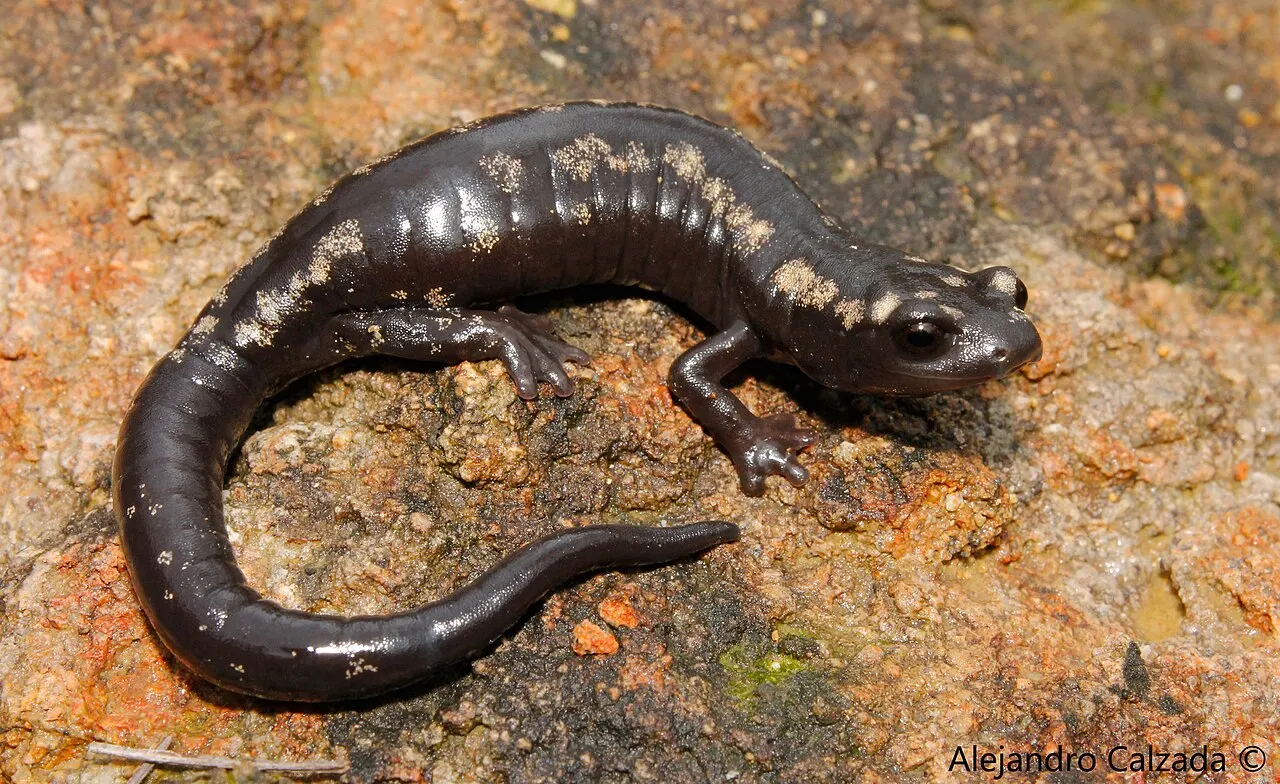
Endangered
Zapotec Salamander
Bolitoglossa zapoteca
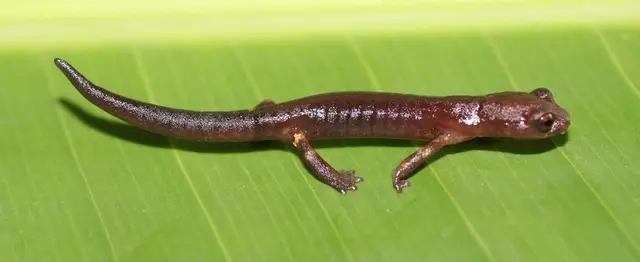
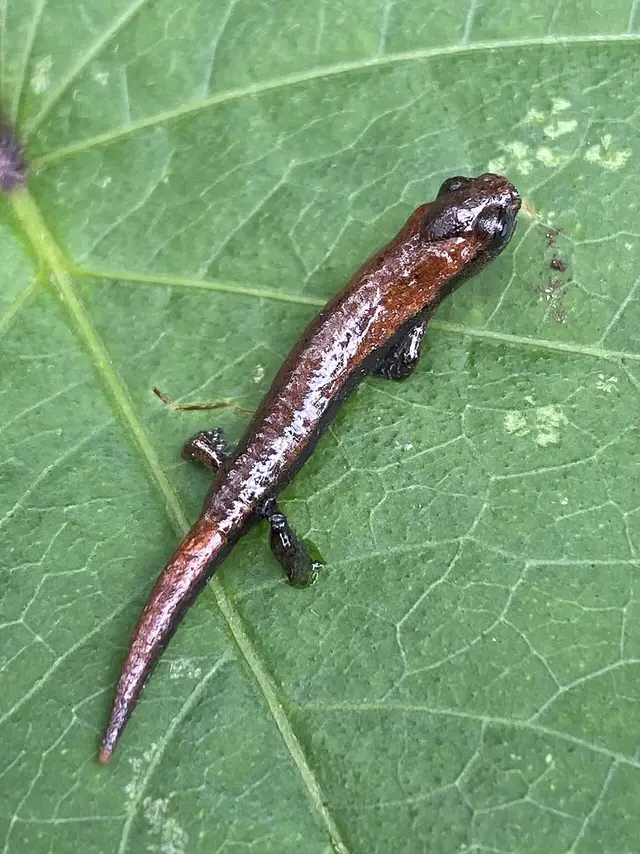
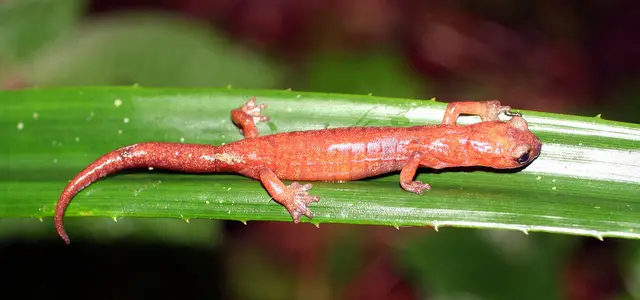
The Zapotec salamander (Bolitoglossa zapoteca) is a small lungless salamander known from just two places in the mountains of Oaxaca, southern Mexico. The IUCN Red List assessed it as Endangered in 2020. Its forest home is being cleared, and a salamander-killing fungus is a feared future threat.
What it is
Bolitoglossa zapoteca belongs to the family Plethodontidae, the lungless salamanders. Gabriela Parra-Olea, García-París and David Wake described it in 2002, in a Journal of Herpetology paper on the Bolitoglossa macrinii group that named two new species from Oaxaca.
The genus Bolitoglossa is the largest of all salamander genera, with about 140 species. Its members range from northern Mexico to Bolivia and are known for projecting their tongues to catch prey. Little has been published on this species' size, colour or habits.
Where it lives
The species is endemic to the eastern Sierra Madre del Sur in Oaxaca, Mexico. It is known from two locations, near Quiegolani and on Cerro Piedra Larga, both at around 1,875 m. The IUCN puts its extent of occurrence at only 435 square kilometres.
Its habitat is described as montane pine and oak forest, and heavily degraded former forest. The Red List habitat entries also include subtropical or tropical moist montane forest and temperate forest.
Pins are Wikidata “endemic to” fields. Orange dots, when present, are GBIF occurrence tiles — survey bias included.
Why it is in trouble
The forest in this small range is shrinking. The 2020 assessment records a continuing decline in the area where the species lives, and it lists small-holder farming, shifting agriculture and housing as ongoing pressures, along with large-scale unintentional effects of harvesting. Each of these is rated as a low impact on its own.
The larger worry is disease. The assessment scores a future threat, rated medium impact, from Batrachochytrium salamandrivorans, or Bsal, a chytrid fungus first detected in the Netherlands around 2012. It killed salamanders in lab tests, among them fire salamanders and several newts. It has not been confirmed in North America, and no detection in Mexico has been reported, but the assessment rates it as one that could cause rapid declines across the whole range.
What is being done
Very little is in place. The species is not known to occur in any protected area. The IUCN lists habitat protection, site protection and habitat restoration as the actions needed, and research on its life history and ecology, and on its population size, distribution and trends.
The Red List record has shifted over time. The species was Data Deficient in 2004 and 2008, Critically Endangered in 2015, and Endangered in 2020. The IUCN gives no population estimate and lists the trend as unknown.
Sources
Written for this catalog in our own words from the sources below, checked against them on 12 November 2026. Population figures are estimates and carry the year they were made. Status and assessment year: IUCN. 2026. The IUCN Red List of Threatened Species. Version 2026-1. iucnredlist.org.