Endangered
Lyciasalamandra antalyana
Lyciasalamandra antalyana
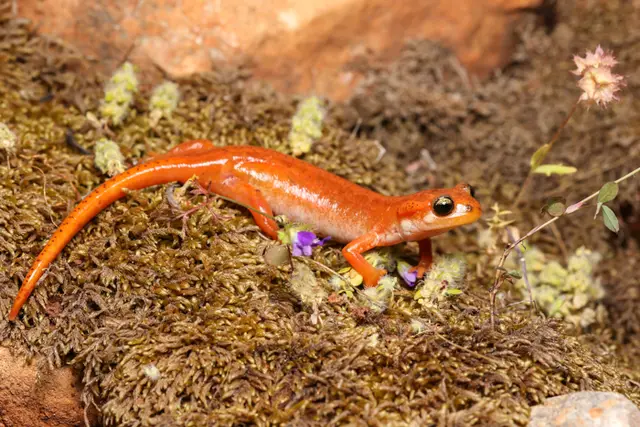
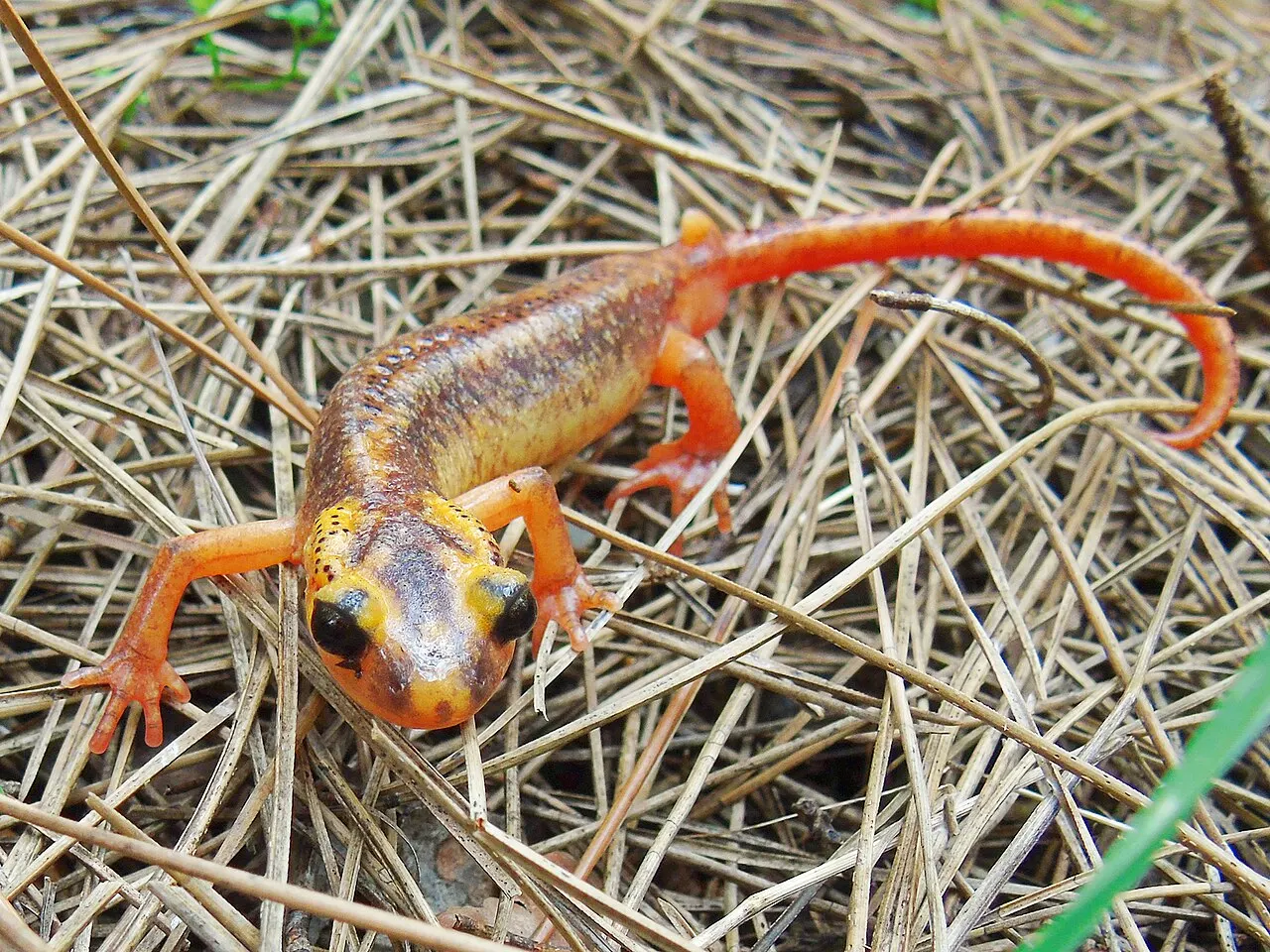
The Anatolia Lycian salamander (Lyciasalamandra antalyana) is a slow-moving, yellow-patterned salamander found only in southwestern Turkey, around Antalya. The IUCN Red List assessed it as Endangered in 2023, with a range of about 850 square kilometres, a fragmented population and a decreasing trend.
How to recognise it
This is a stout salamander about 12 to 15 cm long, depending on the source, and females are larger than males. Mert Karış, a Turkish herpetologist, describes it as easy to identify because of an intense yellow pattern on the head and body. The head is flattened and long, with a fold of skin across the throat and visible glands at the back of the head.
Muhtar Başoğlu and İbrahim Baran formally named it in 1976. The Austrian herpetologist Josef Eiselt had first found it a decade earlier, in 1966, in Gedeller village in Antalya.
Where it lives
The species is endemic to Turkey. It lives in a scattered population from Hisarçandır village in Antalya province to Kocaaliler village in Burdur province, in karst limestone forest and clearings. The Red List lists temperate forest, Mediterranean-type scrub and rocky ground as its habitats and gives an elevation range of 40 to 880 metres, though another account cites about 100 to 650 metres.
Animals in the Gülük mountains and to their north are treated as a separate subspecies, Lyciasalamandra antalyana gocmeni, named for the zoologist Bayram Göçmen. A visiting herpetology team in early March 2020 found the nominate form in a small pine forest fragment on a slope near Antalya, and reported the salamanders very active and moving about at night.
Pins are Wikidata “endemic to” fields. Orange dots, when present, are GBIF occurrence tiles — survey bias included.
How it lives
It's nocturnal and slow. In hot summers it waits out the dry weather among rocks or a few metres underground, and it becomes active when the rainy season brings humidity. Winter is its busy season and the time when it breeds. According to Karış, it gives birth to live young that develop inside the mother's body, a trait that is rare among Lycian salamanders.
Why it is in trouble
The Red List trend is decreasing and the population is severely fragmented. Housing and urban development, more frequent fires, drought and collection of the animal are all recorded as low-impact threats. Karış, speaking in 2020, added new stone and marble quarries and logging under forest plans that ignore endemic species, and warned that a warming climate is a poor fit for such a slow animal that can't easily move elsewhere.
A salamander-killing chytrid fungus, Batrachochytrium salamandrivorans, is listed as a possible future threat, rated negligible for now.
What is being done
The Red List records site management, habitat protection, awareness work, national-level laws and wider policies and regulations as actions in place, and says the species occurs in at least one protected area. Karış called in 2020 for tighter control of quarries, checks before new quarries are licensed, searches for further populations and wider public information about the species.
Sources
Written for this catalog in our own words from the sources below, checked against them on 12 November 2026. Population figures are estimates and carry the year they were made. Status and assessment year: IUCN. 2026. The IUCN Red List of Threatened Species. Version 2026-1. iucnredlist.org.