Endangered
Boophis lilianae
Boophis lilianae
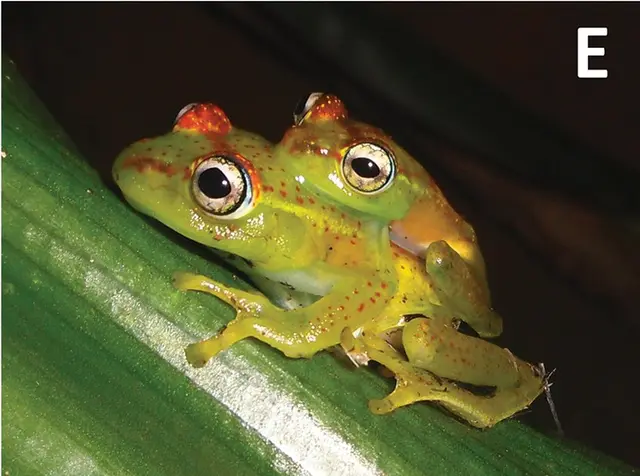
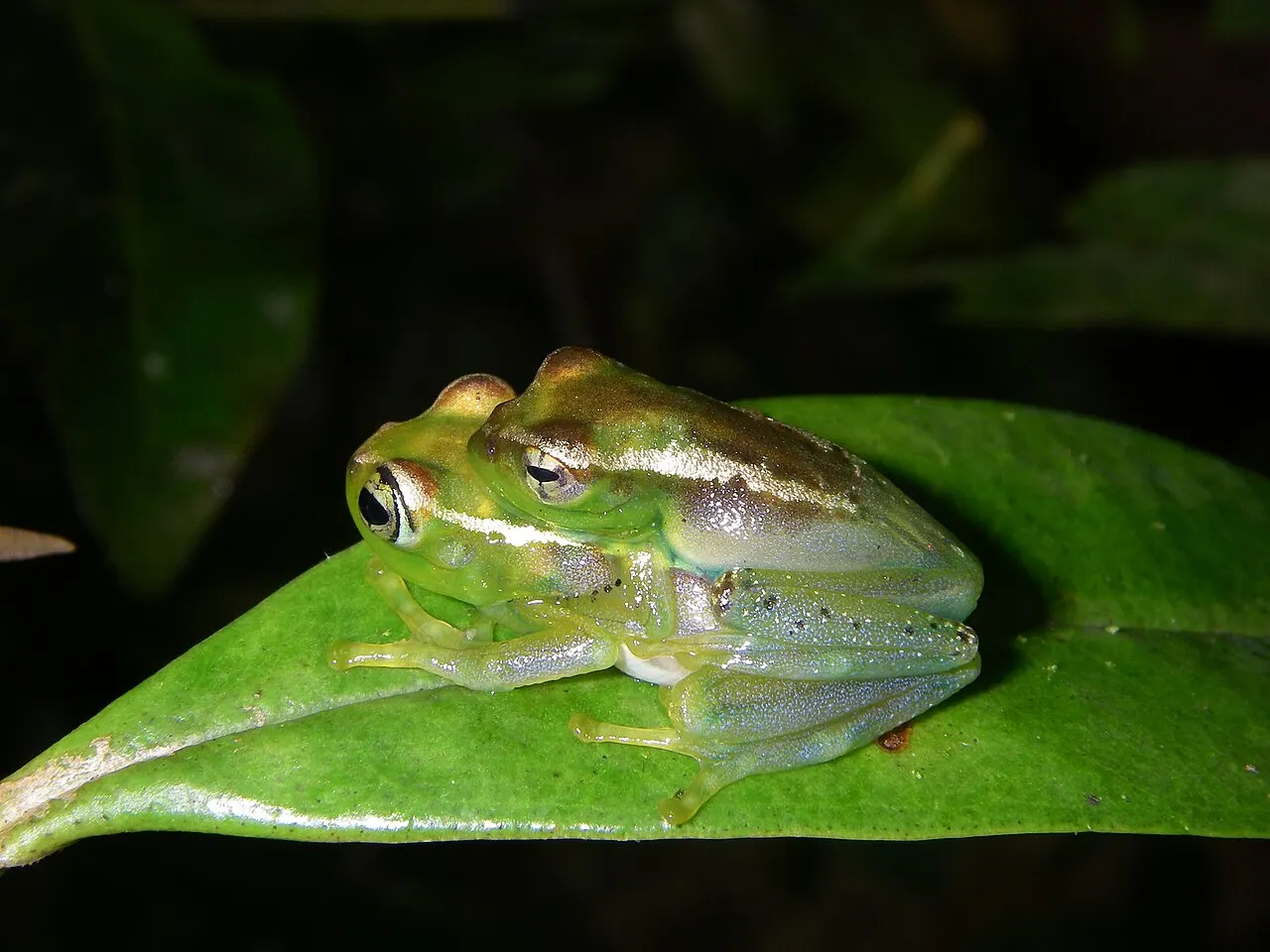
Boophis lilianae is a tiny Madagascan treefrog, the smallest known member of its genus, with pink-streaked, translucent green skin and a silvery eye. It lives in eastern rainforest and is known from only four locations. The IUCN Red List lists it as Endangered (2025 assessment).
How to recognise it
This is a very small frog. The male used to describe the species measured 18.3 mm from snout to vent, and a female carrying eggs measured 20.0 mm. That makes it the smallest Boophis scientists have described. Males and females differ less in size than in most green Boophis.
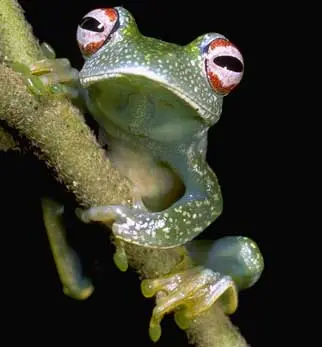
Alive, the back is translucent yellowish green with reddish stripes along the snout and sides. The limbs and chest are turquoise green, the belly is white with a turquoise tint, and the inner part of the eye is silvery grey. Females have red side stripes edged with silvery white blotches. Its closest lookalike, Boophis ulftunni, is larger (males 21 to 24 mm) and has a purple inner iris.
Where it lives
The species is found only in Madagascar. It was described in 2008 from a spot beside the road between Ifanadiana and Tolongoina, in Fianarantsoa Province, at 468 m above sea level. That site was a swampy patch where a slow stream flooded dense palm forest next to degraded rainforest.
A pair was also photographed in January 2008 at Imaloka, in Ranomafana National Park, at roughly 900 to 1,000 m (the identification is tentative). The frogs sat about 1.5 m up on a shrub over a slow, sandy-bottomed stream. The Red List assessment gives an elevation range of 468 to 1,000 m, counts four locations, and puts the area the frog actually occupies at about 24 square kilometres.
Pins are Wikidata “endemic to” fields. Orange dots, when present, are GBIF occurrence tiles — survey bias included.
How it lives
Very little is known. The first two frogs were collected at night in February 2006 while mating, and the female carried yellowish eggs about 1.6 mm across, which suggests breeding in the rainy season. Researchers searched the site on at least five other occasions and found no more adults. They proposed that the frog is either very secretive or calls only in certain seasons, and no call that could belong to it was heard. Tadpoles were collected in 2007.
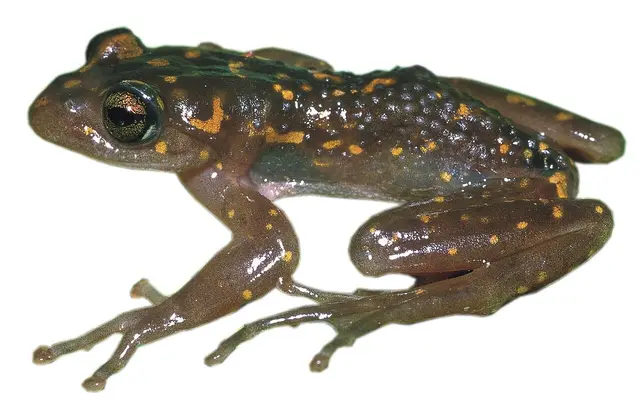
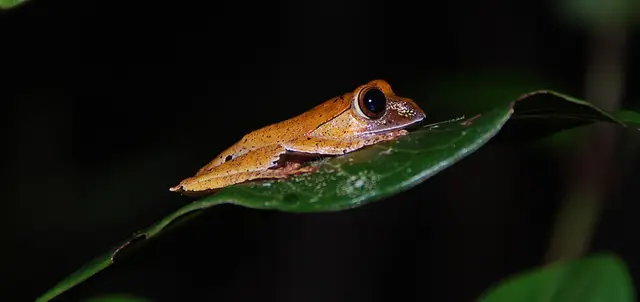
It shares its habitat with several other treefrogs, including Boophis madagascariensis, B. opisthodon and B. pyrrhus.
Why it is in trouble
The Red List records the population as decreasing and its habitat as still shrinking. The threats it lists are small-holder farming and grazing, mining and quarrying, and droughts. Habitat conversion and degradation are the main stresses, and the assessment also records reduced breeding success and deaths linked to them.
The frog was rated Data Deficient in 2009 and 2015. It moved to Endangered in 2025 under criteria B1ab(iii)+2ab(iii), which rest on a small range and ongoing loss of habitat quality.
What is being done
The 2025 assessment records that the frog occurs in at least one protected area. The conservation needs it lists are site protection, site management and awareness work. No species-specific programme has been reported.
Sources
Written for this catalog in our own words from the sources below, checked against them on 12 November 2026. Population figures are estimates and carry the year they were made. Status and assessment year: IUCN. 2026. The IUCN Red List of Threatened Species. Version 2026-1. iucnredlist.org.