Endangered
Platypelis mavomavo
Cophyla mavomavo
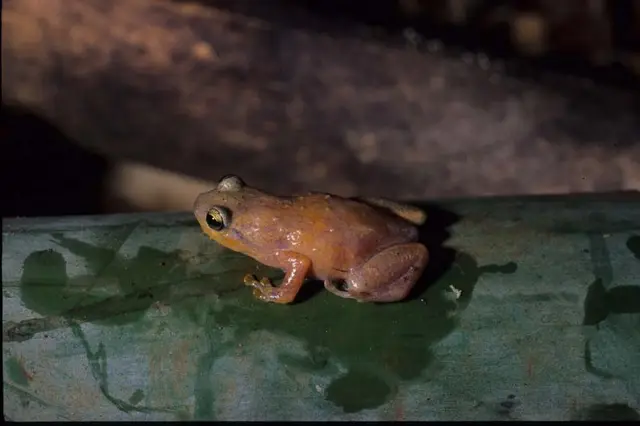
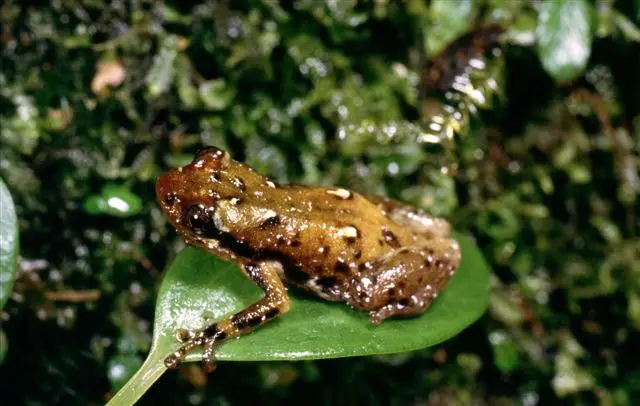
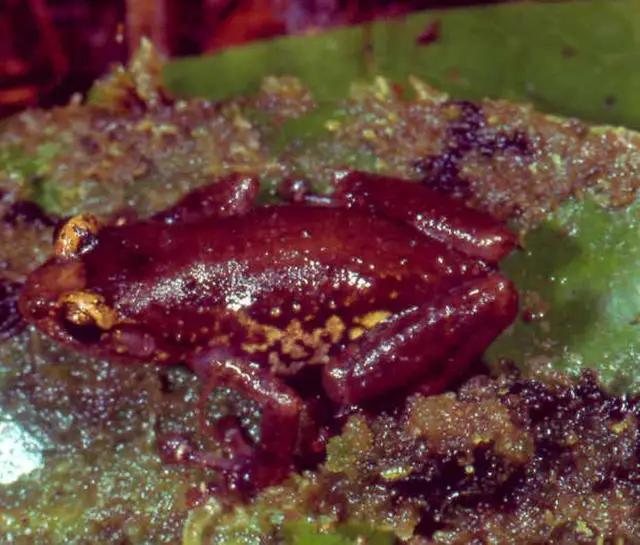
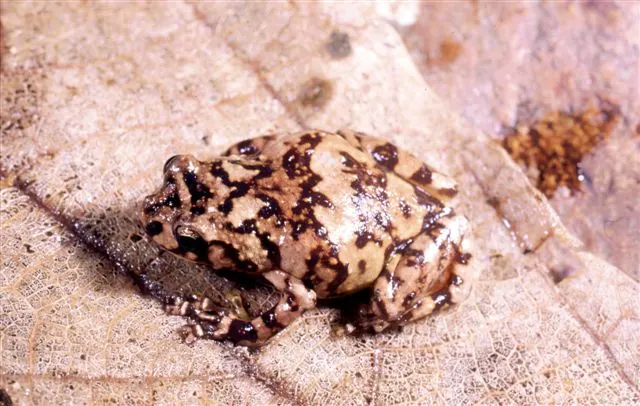
The yellowish tree cophyline frog (Cophyla mavomavo, listed by the IUCN as Platypelis mavomavo) is a tree-climbing microhylid frog from the rainforests of northern Madagascar. The IUCN Red List rated it Endangered in 2016. A 2023 study found it more widespread than once thought, so a reassessment is called for.
How to recognise it
It is an arboreal frog of about 30 mm from snout to vent, larger than its small relative Platypelis tetra, which measures about 20 mm. Scientists described it in 2003 from a yellowish underside and a back marked with a network of dark spots on a beige-yellow background.
Colour alone can mislead. A 2023 study in Zootaxa concluded that frogs with a gray belly, found at Andranomapanga in the north-central east, are a colour variant of the same species. The yellow-bellied form is restricted to Ambolokopatrika and Makira in the northeast. Some yellow-bellied Platypelis frogs from other areas had earlier been wrongly assigned to this species, because the original specimens lacked DNA sequences.
Where it lives
The species is endemic to Madagascar. The original description knew it from only two places, Ambolokopatrika and the Anjanaharibe-Sud massif, in the Andapa area. The 2016 Red List entry records it between 875 and 975 m, from fewer than five threat-defined locations, with an extent of occurrence of about 1,014 square kilometres. It was then known from only six specimens.
The IUCN describes its habitat as transitional forest of tall trees rich in epiphytes, where the frog climbs small trunks 2 to 4 m above the ground and probably hides in tree holes, under bark and at the base of epiphytes.
The 2023 work widened the picture. The frog is fairly widespread across the northeast and the north-central east, with populations bordering the northwest (Ambohitantely) and the Sambirano region (Ampotsidy).
Pins are Wikidata “endemic to” fields. Orange dots, when present, are GBIF occurrence tiles — survey bias included.
Why it is in trouble
The IUCN gives its population trend as decreasing and records continuing loss of forest area. The listed threats are small-holder farming, small-holder grazing and housing development. The assessment text adds timber extraction, charcoal making, invasive eucalyptus and fires. It was rated Endangered on the basis of a small range split across few locations, using the narrower distribution known in 2016.
Little is known about its population. The IUCN presumes it breeds through larvae developing out of water, without direct evidence.
What is being done
The frog occurs in Anjanaharibe-Sud Special Reserve. The IUCN lists site and area protection and management among the actions needed, including better protection of forests inside protected areas, and calls for research on population size, ecology and threats. The 2023 study concluded that the larger known range means the conservation status needs reassessment, which could change how the species is ranked.
Sources
Written for this catalog in our own words from the sources below, checked against them on 12 November 2026. Population figures are estimates and carry the year they were made. Status and assessment year: IUCN. 2026. The IUCN Red List of Threatened Species. Version 2026-1. iucnredlist.org.